Fishing the Outer Banks means fishing in some of the most productive saltwater on the East Coast — but it also means following North Carolina’s saltwater fishing regulations. This guide covers the 2026 rules: licenses, size and bag limits, special rules, and how to check for regulation updates.
Do You Need a License?
In North Carolina, anyone 16 or older who fishes in coastal waters needs a Coastal Recreational Fishing License (CRFL). This applies to both residents and non-residents and covers fishing in:
- The Atlantic Ocean out to 3 miles
- Coastal sounds, bays, and rivers
- Inlets and passes
You do not need a CRFL when:
- Fishing from a pier that holds a blanket pier license (most commercial piers — including Jennette’s Pier and Nags Head Pier — carry this, but check before you go)
- Fishing on a licensed for-hire vessel (charter boats)
- Fishing on free fishing days designated by the NC Division of Marine Fisheries (DMF)
You can purchase your license online at the NC Wildlife Resources Commission website or at any tackle shop on the OBX. See our licenses page for more details.
License Types and Costs (2026)
- Resident Annual CRFL: ~$16
- Non-Resident Annual CRFL: ~$32
- 10-Day Resident: ~$7
- 10-Day Non-Resident: ~$12
- Lifetime Resident: ~$500
Prices are set by the NCWRC and may change. Verify current pricing at the time of purchase.
Size and Bag Limits — Key Species
North Carolina uses size limits (minimum length) and bag limits (daily creel) for most recreational species. Below are the most commonly targeted species on the OBX and their 2026 regulations. Always verify current limits — the NC DMF can change regulations mid-season.
Red Drum
- Minimum size: 18 inches
- Maximum size: 27 inches (slot limit — fish outside this range must be released)
- Bag limit: 1 per person per day
- Notes: Red drum are managed under a slot limit to protect breeding stock. Bull drum over 27 inches must be released. See our red drum species guide.
Cobia
- Minimum size: 36 inches (fork length)
- Bag limit: 1 per person per day, 3 per vessel per day
- Season: Open year-round, but targeted May–September
- Notes: Cobia regulations have tightened significantly in recent years. See our cobia species guide.
Flounder (Southern, Summer, and Gulf)
- Minimum size: 15 inches
- Bag limit: 4 per person per day
- Season: Open year-round in ocean waters; sounds may have seasonal closures
- Notes: Flounder regs are complex and subject to change. Check for sound-specific closures. See our flounder species guide.
Spanish Mackerel
- Minimum size: 12 inches (fork length)
- Bag limit: 15 per person per day
- Notes: One of the most popular and accessible species on the OBX. See our Spanish mackerel guide.
Bluefish
- Minimum size: No minimum size (historically)
- Bag limit: 10 per person per day
- Notes: Bluefish are managed cooperatively with Atlantic states. See our bluefish species guide.
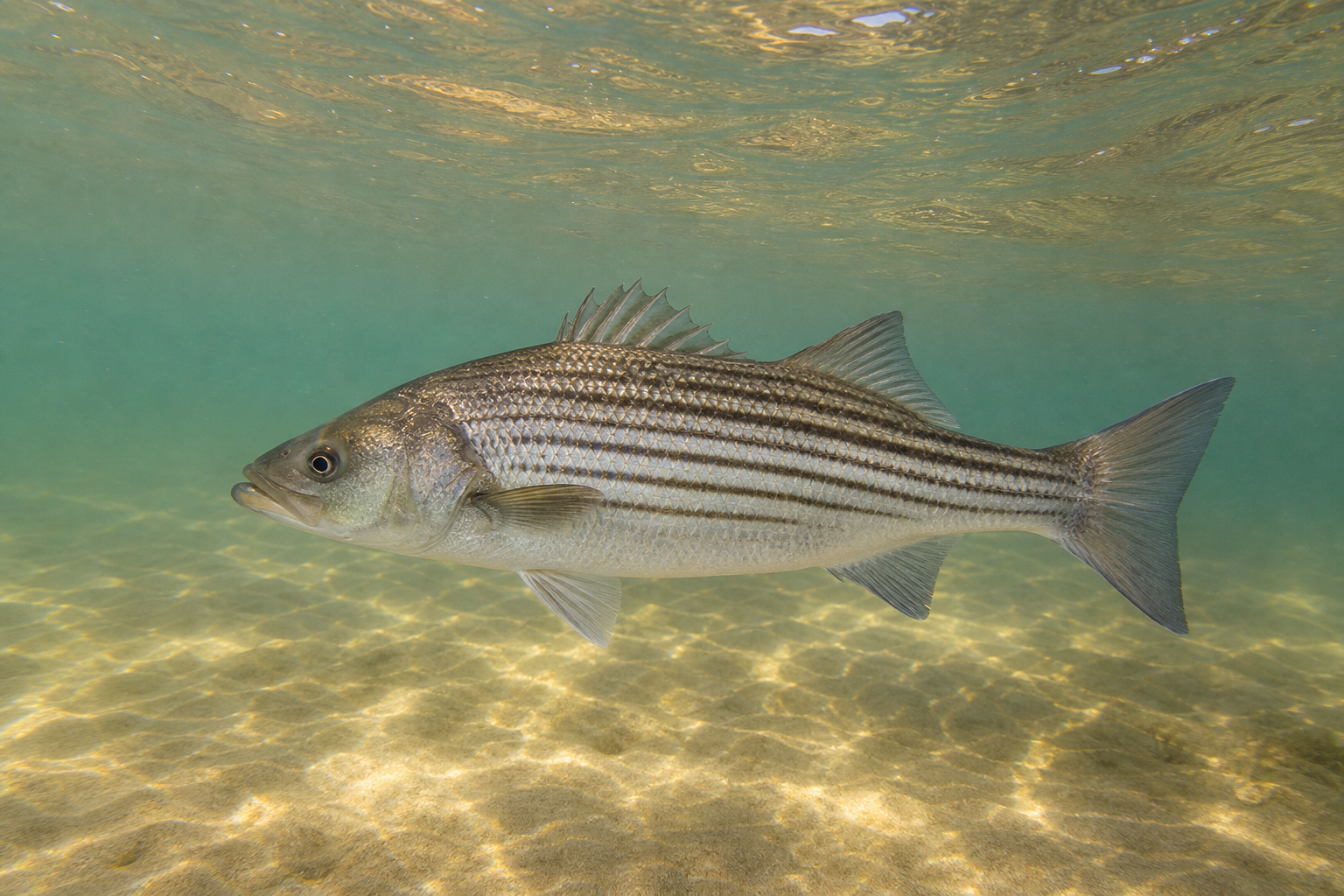
Striped Bass (Ocean)
- Minimum size: 28 inches
- Bag limit: 1 per person per day
- Season: Open in ocean waters; sound regulations vary by area
- Notes: Striped bass regulations are among the most complex. Always check the current DMF proclamation. See our striped bass guide.
Speckled Trout (Spotted Seatrout)
- Minimum size: 14 inches
- Bag limit: 4 per person per day
- Notes: Popular winter target in the sounds. See our speckled trout guide.
Mahi-Mahi (Dolphinfish)
- Minimum size: None federally; 20 inches fork length recommended
- Bag limit: 10 per person per day (recreational)
- Notes: Primarily an offshore species. See our mahi-mahi guide.
Wahoo
- Minimum size: None
- Bag limit: No recreational bag limit (but reasonable harvest expected)
- Notes: See our wahoo species guide.
Special Regulations and Closures
Cape Hatteras National Seashore
Fishing within the National Seashore is subject to both NC state regulations and federal rules. Beach driving requires an ORV permit — see our OBX beach driving guide for details. Seasonal wildlife closures (primarily for nesting birds and sea turtles) can close sections of beach to vehicles and pedestrians.
Size and Bag Limit Changes
The NC DMF issues proclamations that can change regulations mid-season. These are typically driven by:
- Annual stock assessments
- Atlantic States Marine Fisheries Commission (ASMFC) rulings
- Federal fisheries management council decisions
Always check the NC DMF proclamations page before your trip. You can also call the DMF at 252-726-7021.
Speckled Trout Closures
North Carolina has implemented temporary closures for speckled trout following cold-stun events. When water temps drop rapidly, trout can die off in large numbers, and the DMF may close the fishery to allow recovery. These closures are announced by proclamation.
Federal Waters (Beyond 3 Miles)
If you’re fishing beyond 3 nautical miles, you’re in federal waters managed by the South Atlantic Fishery Management Council (SAFMC). Key differences:
- Snapper-grouper complex: Many species have closed seasons and strict bag limits
- Atlantic migratory species: Tuna, billfish, and sharks are managed by NOAA Fisheries
- Highly Migratory Species (HMS) permit: Required for tuna, billfish, and swordfish
Check NOAA Fisheries regulations for federal water fishing. The HMS permit is separate from the NC CRFL.
How to Check Current Regulations
Regulations change — sometimes with little notice. Here’s how to stay current:
- NC DMF website: deq.nc.gov — check proclamations
- NOAA Fisheries: fisheries.noaa.gov — for federal waters
- Local tackle shops: OBX tackle shops are some of the best sources of up-to-date info. They hear about regulation changes immediately.
- Our site: We update our species pages and regulations pages as regulations change.
Enforcement and Penalties
NC Marine Fisheries officers patrol the waters and can check your catch at any time. Penalties for violations include:
- Fines (typically $50–$500 depending on the violation)
- License suspension
- Confiscation of catch and gear
Always carry your license and know the limits for the species you’re targeting. If in doubt, release the fish.
Best Practices for Compliance
- Measure your fish before you keep it. A flat measuring board is a cheap investment.
- Keep a copy of the current regulations on your phone or printed.
- When in doubt, release. A released fish can be caught again. A kept fish that’s undersized can cost you hundreds of dollars.
- Use circle hooks when fishing with natural bait for species with minimum size limits. They reduce deep hooking and improve survival of released fish.
Summary
NC saltwater fishing regulations are designed to keep fisheries sustainable for future generations. The rules aren’t overly complicated, but they do change — especially for high-profile species like cobia, flounder, and striped bass. Before every trip:
- Verify your license is current
- Check the latest DMF proclamations
- Know the size and bag limits for your target species
- Carry a measuring device
For more information on licenses, see our licenses page. For species-specific regulations, browse our species guides. Tight lines and tight regulations.