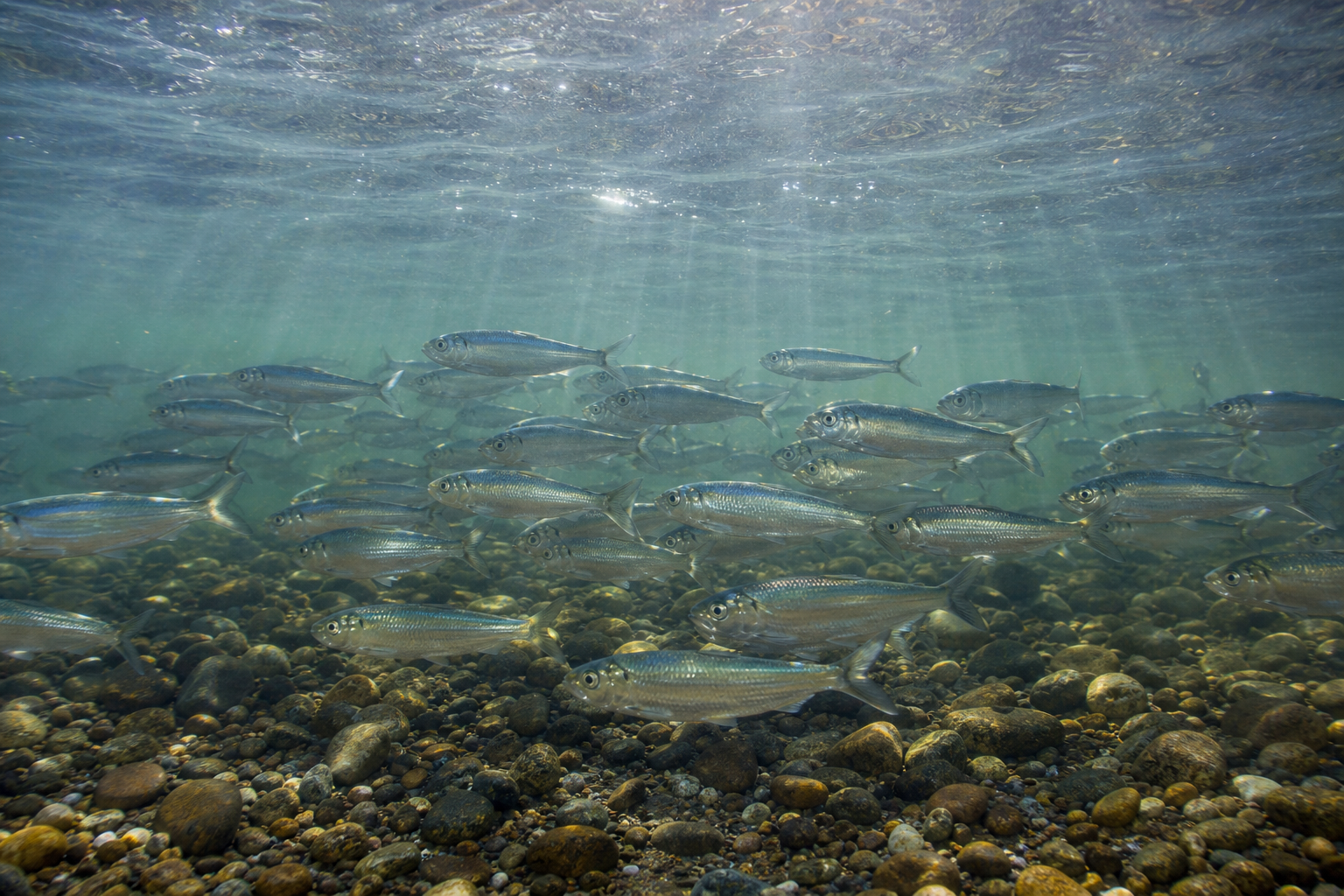
Alewife and Blueback Herring (River Herring)
Identification
Alewife and blueback herring are collectively known as “river herring” — two closely related anadromous species that are nearly identical in appearance. Both are silver-sided, laterally compressed fish with deeply forked tails, typically 8-12 inches long. The key distinguishing feature is the eye: alewife have a larger eye relative to their body, with a diameter greater than the snout length. Blueback herring have a smaller eye and a darker, bluish-gray back. The peritoneum (lining of the body cavity) is pale in alewives and dark in bluebacks — a definitive ID feature that requires internal inspection.
Habitat and Behavior
River herring are anadromous, living in the Atlantic Ocean and returning to freshwater rivers and creeks to spawn each spring. In OBX waters, they run into the Albemarle Sound tributaries — particularly the Chowan River, Roanoke River, Perquimans River, and Pasquotank River systems — starting in March when water temperatures approach 55°F. They also use smaller tidal creeks throughout the sounds. After spawning, adults return to the ocean, while juveniles spend the summer in the sounds before migrating seaward in fall. River herring travel in schools and are a critical forage base for striped bass, largemouth bass, red drum, and other predators in the sound ecosystem.
Fishing Techniques
River herring are primarily caught with cast nets during their spawning runs, when they congregate in shallow creeks and around creek mouths. Anglers also catch them on small sabiki rigs and tiny jigs when they school in deeper sound water. Dip netting at culverts and creek crossings during peak run is an old OBX technique — herring pile up at narrow passages on their way upstream. For use as bait, snagging with small treble hooks into visible schools is also effective. In the ocean near Hatteras Inlet, river herring can sometimes be caught on small flies and jigs during their coastal migration phase.
Baits and Lures
River herring are filter-feeders and plankton-eaters, so they are not caught with conventional bait. However, as bait, they are excellent. Live river herring are prime bait for striped bass in the Albemarle Sound, particularly around the mouths of rivers during spring. Cut herring chunks are used for catfish and red drum in the sounds and rivers. Frozen herring sold at bait shops around the OBX are a staple for surf anglers targeting drum and bluefish. The oily flesh is similar to menhaden in its scent-dispersing qualities, though slightly less potent.
Best Times and Locations on the OBX
The river herring run peaks in March and April in the Albemarle Sound tributaries. The Chowan River near Edenton is a classic herring run destination — fish stack up at creek mouths and narrow passages. The Pasquotank River and tributaries around Elizabeth City also see good runs. In the Currituck Sound, herring runs were historically enormous but have declined significantly. The Alligator River and its tributaries still receive runs. For using herring as bait for striped bass, the Albemarle Sound near the mouths of the Chowan and Roanoke Rivers in April and May is the sweet spot. Bait shops from Nags Head to Wanchese typically carry frozen herring through the season.
Regulations
River herring populations have declined dramatically along the Atlantic coast, and NC has implemented significant restrictions. In many NC inland and joint waters, possession of alewife and blueback herring is prohibited or subject to very limited harvest. The NCWRC and NCDMF have established moratoriums and limited-open seasons in specific water bodies. Regulations change frequently as managers respond to population assessments. Always check current regulations before keeping any river herring. Using purchased frozen herring from licensed bait dealers is generally acceptable, but wild-caught possession rules vary by water body and season.