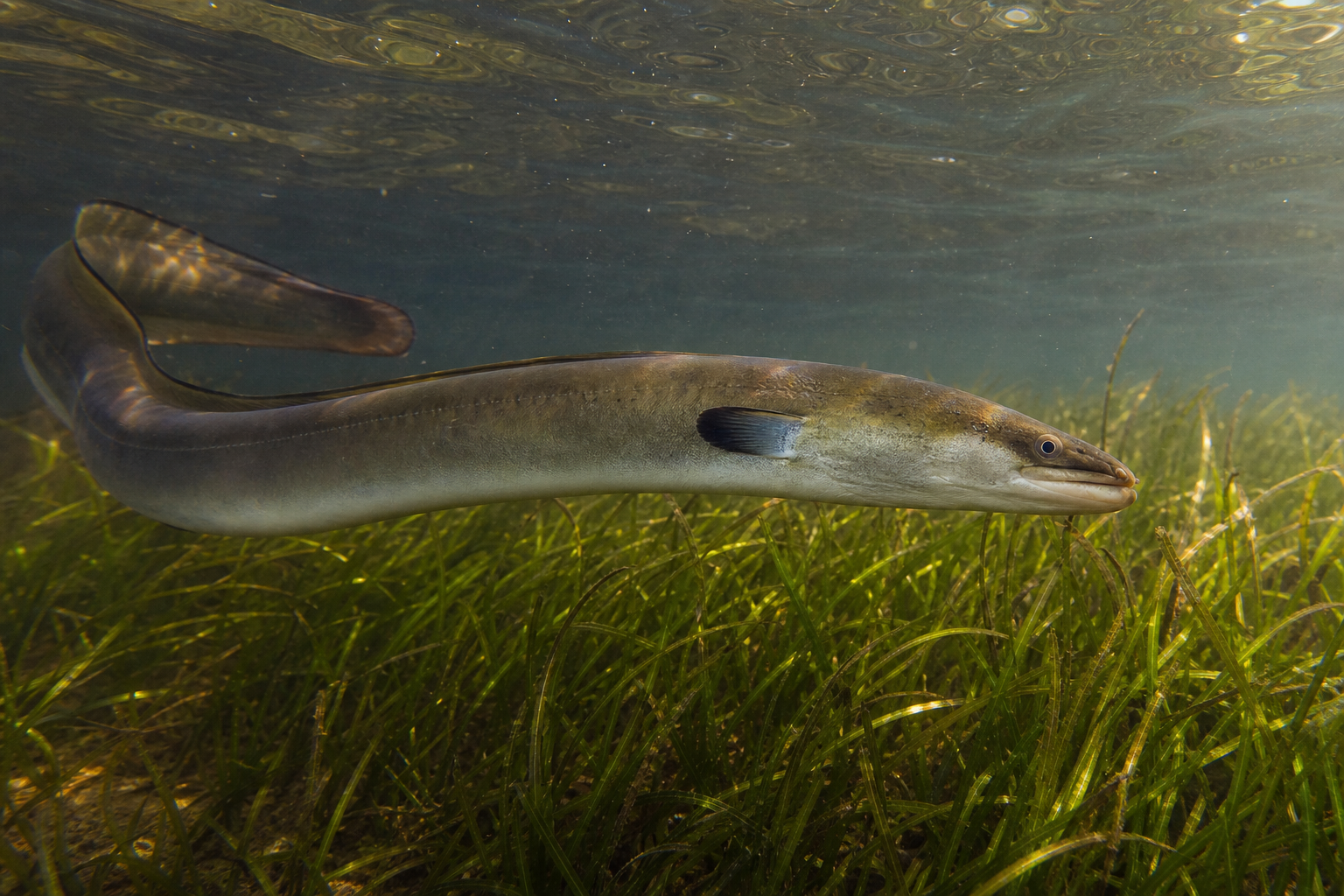
American Eel
Identification
The American eel is a long, snake-like fish with a continuous dorsal, caudal, and anal fin that forms a single fringe around the rear two-thirds of its body. They have small, paired pectoral fins just behind the head and a relatively small mouth with a protruding lower jaw. Their coloration varies by life stage and habitat — yellow eels (the most common stage caught on the OBX) are typically olive-brown to yellowish-green on the back with a pale yellow to white belly. When they mature into silver eels for their spawning migration, they darken significantly. American eels can grow to 4 feet in length and weigh several pounds, though most caught on the Outer Banks are in the 1 to 3-foot range.
Habitat and Behavior
American eels are catadromous, meaning they live most of their lives in freshwater and estuarine environments but migrate to the ocean to spawn. They are born in the Sargasso Sea and drift as larvae to the Atlantic coast, where they transform into eels and then elvers before moving into estuaries, rivers, and creeks. On the Outer Banks, yellow-stage eels are abundant in Pamlico Sound, its tidal tributaries, drainage ditches, and brackish creeks throughout the sound side of the barrier islands. They are bottom-dwelling, nocturnal fish that hide in mud, under rocks, and in vegetation during the day, emerging at night to feed. Eels are opportunistic feeders, consuming insects, crustaceans, small fish, and worms. They are most active during the cooler months of fall and winter.
Fishing Techniques
Eel fishing on the OBX is a low-tech, patient endeavor. The most common method is bait fishing on the bottom using a simple hook-and-sinker rig. Use a medium-light spinning rod with 10 to 15-pound test line, a small hook (size 4 to 1/0), and just enough weight to hold the bait on the bottom. Fish at night or during low-light conditions for the best results. Eel pots and traps are the traditional commercial method and can be highly effective in tidal creeks. For recreational anglers, fishing drainage ditches and tidal creeks on the sound side of the islands during an outgoing tide can produce good numbers. Eels are slimy and difficult to handle — bring a rag or gloves. When targeting eels specifically, look for muddy bottoms in calm, shallow water.
Baits and Lures
Live and fresh bait is the way to go for American eels. Bloodworms are the top bait, as eels key in on the scent and movement. Nightcrawlers and garden worms also work well. Cut bait — small strips of spot, mullet, or menhaden — can attract larger eels. Fresh shrimp is another reliable option, particularly in brackish water. Bait should be fished on the bottom, as eels are bottom feeders that use their keen sense of smell to locate food. Small pieces of bait are more effective than large chunks, as eels have relatively small mouths. When fishing with worms, thread several onto the hook to create a scent trail. Avoid artificial lures — eels are not visual predators and rarely strike anything that doesn’t smell like food.
Best Times and Locations on the OBX
American eels are present year-round in the Pamlico Sound system, but the best fishing occurs during fall and winter when eels are more active and congregating before their spawning migration. The sound side of the Outer Banks from Kitty Hawk to Hatteras offers numerous access points. Tidal creeks and drainage ditches along NC-12 on the sound side of the islands are prime eel habitat. The area around Wanchese, Stumpy Point, and the backwaters behind Roanoke Island are productive. In the southern OBX, the creeks and ditches behind Hatteras and Ocracoke villages are good spots. Fish at night during a falling tide for the best action. Eels are also commonly caught as bycatch by anglers targeting other species in the sound, particularly when bottom fishing with bloodworms or cut bait.
Regulations
In North Carolina, American eels are managed as both a recreational and commercial species due to population concerns. The recreational bag limit is 50 fish per day with no size limit for hook-and-line anglers. Commercial harvesting with eel pots requires a valid NC commercial fishing license and an eel pot permit. The eel (elver) fishery is heavily restricted and requires specific permits. American eels are currently under review for potential listing under the Endangered Species Act, and regulations may change. Always check current NC Division of Marine Fisheries regulations before harvesting eels. A recreational fishing license is required for hook-and-line eel fishing in NC coastal waters.