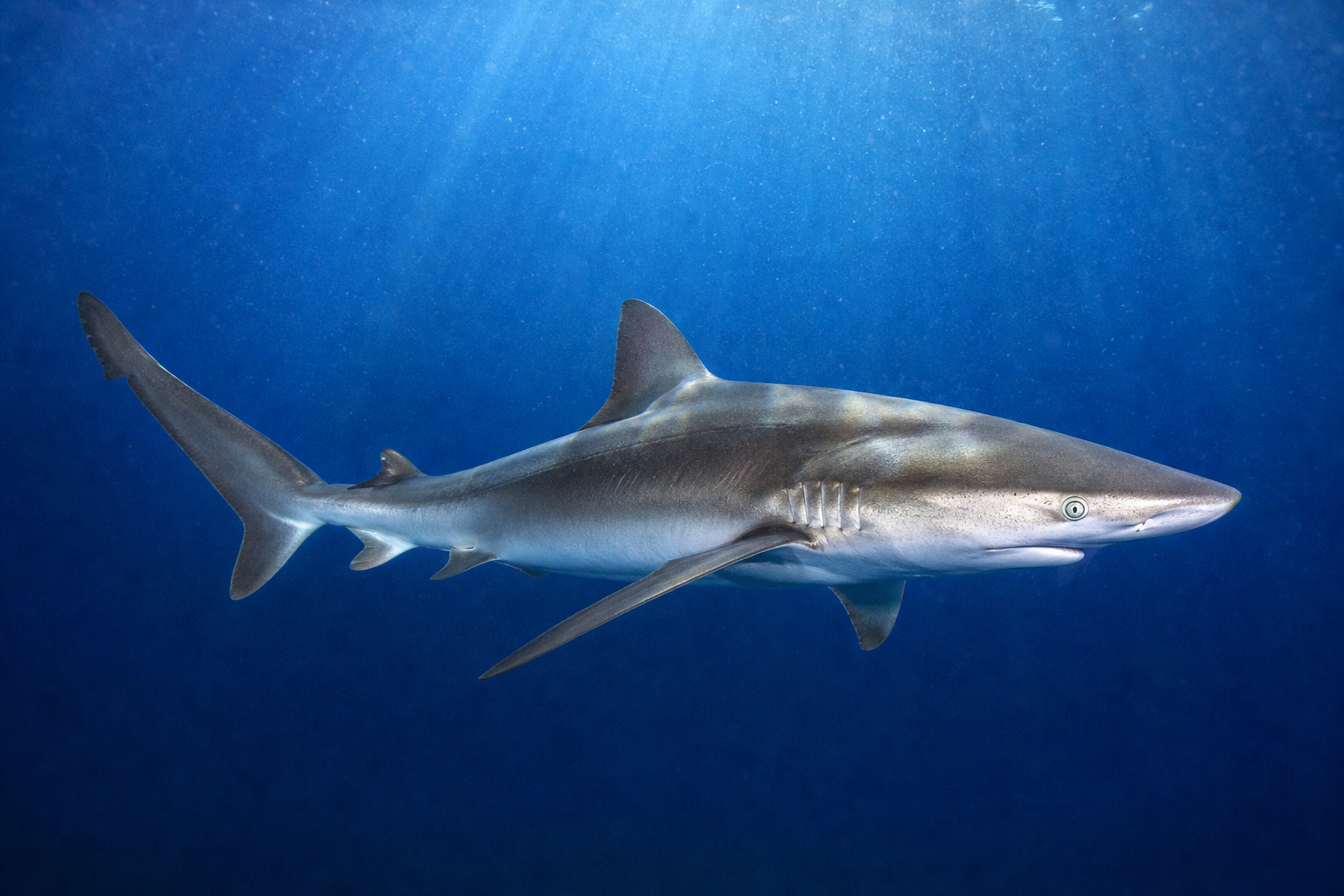
Atlantic Sharpnose Shark
Identification
The Atlantic sharpnose shark is one of the most common sharks caught by OBX surf fishermen. It is a small, slender requiem shark typically reaching 3 to 4 feet in length. The body is brown to grayish-brown on top, fading to a white or pale underside. White dashes may appear along the flanks. The snout is long and pointed, and the first dorsal fin originates behind the pectoral fins. Young sharpnose often show dusky margins on the dorsal and caudal fins, which fade with age. They are frequently confused with small blacknose sharks, but sharpnose lack the dark snout blotch and have a noticeably longer, more tapered nose.
Habitat and Behavior
Sharpnose sharks inhabit shallow coastal waters from the surf zone out to about 60 feet in depth. They are highly abundant along the Outer Banks from late spring through early fall, especially in the sloughs and gutters just beyond the sandbar. These sharks are opportunistic feeders that prey on small fish, shrimp, crabs, and squid. They often travel in schools segregated by size and sex. Sharpnose are active feeders at night and during tide changes, when they move into the wash zone to hunt baitfish pushed around by currents.
Fishing Techniques
Sharpnose sharks are the bread-and-butter catch for OBX surf shark fishing. Use a medium-heavy surf rod in the 8 to 11 foot range paired with a 5000 to 6000 size spinning reel spooled with 20 to 30 lb braid. A fishfinder rig with a 4 to 6 oz sinker and 40 to 60 lb monofilament or wire leader works well. Cast baits just beyond the sandbar into the slough where sharks patrol the drop-off. Kayak delivery of baits is popular in areas like Cape Point and the northern beaches, allowing anglers to place baits in deeper gutters. Fish at night or during the two hours on either side of tide change for the best action. Keep rods in sand spikes and pay close attention to the rod tip — sharpnose are not subtle strikers but their relatively small size can make bites look like skate or ray pickups.
Baits and Lures
Fresh cut bait outperforms everything else for sharpnose. Mullet chunks, spot fillets, and fresh squid are the top producers. Bluefish chunks and bunker also work well when available. The key is fresh, bloody bait — sharpnose key in on scent trails in the wash. Keep baits relatively small, about 2-inch chunks, since these sharks have modest mouths. Live spot or mullet pinned on a circle hook can also produce, especially during daylight hours. Avoid old or frozen bait whenever possible; the difference in catch rate is significant.
Best Times and Locations on the OBX
The Atlantic sharpnose shark is arguably the most accessible shark species on the Outer Banks. They show up in late May and remain through October, peaking in July and August. The best surf fishing spots include Cape Point at Hatteras (the premier shark fishing beach on the East Coast), Ocracoke Inlet, and the beaches around Oregon Inlet. Northern beaches like Duck and Corolla also produce sharpnose in the summer sloughs. Fish the early morning hours or dusk through dark for peak activity. A calm surf with moderate tide movement produces the best feeding conditions.
Regulations
Atlantic sharpnose sharks are managed under the NC Division of Marine Fisheries and Atlantic States Marine Fisheries Commission. There is no closed season and no minimum size in state waters. The recreational bag limit is 1 shark per person per day with a vessel limit of 1 sharpnose per vessel per day. All sharks must be landed with the head, tail, and fins naturally intact. Practice catch and release whenever possible — sharpnose are prolific but play a key role in the nearshore ecosystem. Use circle hooks to reduce gut-hooking, keep the shark in the water as much as possible during release, and minimize handling to ensure survival.