Blue Crab
Identification
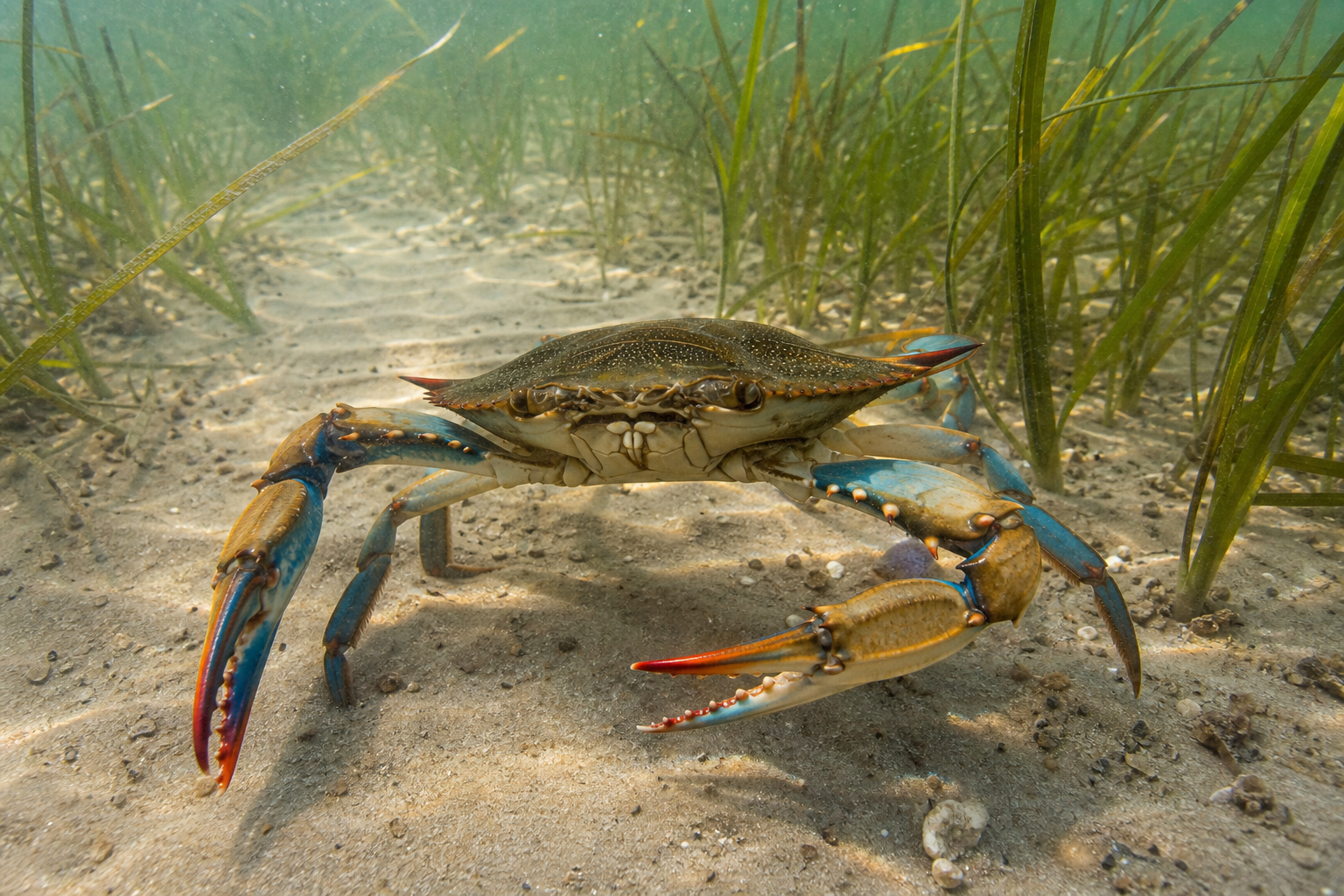
The blue crab is one of the most recognizable and sought-after crustaceans on the East Coast. Named for the brilliant blue coloration on its claws and legs, the blue crab has a wide, olive-green to dark brown carapace (shell) with a distinctive shape — the carapace is wider than it is long, with nine marginal teeth on each side and a sharp, prominent lateral spine. Females have red-tipped claws, while males have fully blue claws. The underside ranges from white to a pale blue. A mature blue crab, known as a “jimmy” (male) or “sook” (female), can reach a carapace width of 9 inches point-to-point, though most caught on the OBX are in the 5 to 7-inch range. Blue crabs are excellent swimmers, using their last pair of legs as paddle-like appendages.
Habitat and Behavior
Blue crabs thrive in the brackish waters of the Pamlico Sound estuary system, which is one of the most productive blue crab habitats on the entire Atlantic coast. They prefer shallow to mid-depth waters with muddy or sandy bottoms, and they are particularly abundant in tidal creeks, grass flats, and around the marsh edges of the sound side of the Outer Banks. Blue crabs are opportunistic omnivores, feeding on anything they can find — dead fish, worms, small crustaceans, and even vegetation. They are most active during warm months, with peak activity from May through October. Molting occurs throughout the season, and soft-shell crabs — which have just shed their hard shell — are a prized catch. Crabs move into deeper water during winter and become less active.
Fishing Techniques
Crabbing on the OBX is accessible to anglers of all skill levels. The simplest method is the hand line: tie a piece of chicken neck or fish head to a length of string, toss it into the water, and wait for a crab to grab on. Slowly pull the line in and scoop the crab with a dip net before it lets go. Crab pots are the most productive method — wire traps baited with fish parts that allow crabs to enter but not exit. Pots are set in creeks and along the sound shore and checked daily. Trotlines — a long line with multiple baited drops — are another effective method for covering more water. Wading the shallow grass flats with a dip net and scooping crabs directly off the bottom is a fun, active method that works well on calm, clear days.
Baits and Lures
Blue crabs are not picky eaters, which makes bait selection simple. Chicken necks are the classic OBX crabbing bait — cheap, durable, and effective. Raw chicken parts, particularly backs and wings, work just as well. Fish heads and frames from cleaned fish are excellent, as the strong scent attracts crabs from a distance. Menhaden (bunker) is one of the best natural baits due to its oily, strong-smelling flesh. Any fresh or slightly aged fish will work. The key is using bait with a strong scent that will disperse in the water. For pot fishing, use a bait container or stuff the bait directly into the pot’s bait chamber. Replace bait every day or two to keep it fresh and effective.
Best Times and Locations on the OBX
The Pamlico Sound is blue crab paradise, and the sound side of the Outer Banks offers outstanding crabbing from Oregon Inlet all the way south to Ocracoke. The tidal creeks behind Kitty Hawk, Kill Devil Hills, and Nags Head are productive and easily accessible. The backwaters around Wanchese and the marshes behind Hatteras Island are prime crabbing grounds. Public sound-side access points along NC-12 provide shoreline crabbing opportunities. The best time of year is May through October, with the peak in July and August when water temperatures are warmest. Early morning and late afternoon are the most productive times. After a rain event, crabs often move into the shallows. Soft-shell crabs are most commonly available during the peak molting period in late spring and early summer.
Regulations
North Carolina recreational crabbing regulations require a minimum carapace width of 5 inches for hard crabs and 3.5 inches for peeler crabs (crabs that are about to molt). There is no daily recreational bag limit for personal-use crabbing with standard gear (hand lines, dip nets, and up to two recreational crab pots per person without a license). A NC recreational fishing license is required for crabbing with certain gear types. Commercial crabbing requires a license and is subject to pot limits and seasonal restrictions. Taking egg-bearing females (sponge crabs) is prohibited in some areas and seasons. Always check current NC Division of Marine Fisheries regulations before crabbing, as rules regarding size limits, gear types, and closed areas can change seasonally.