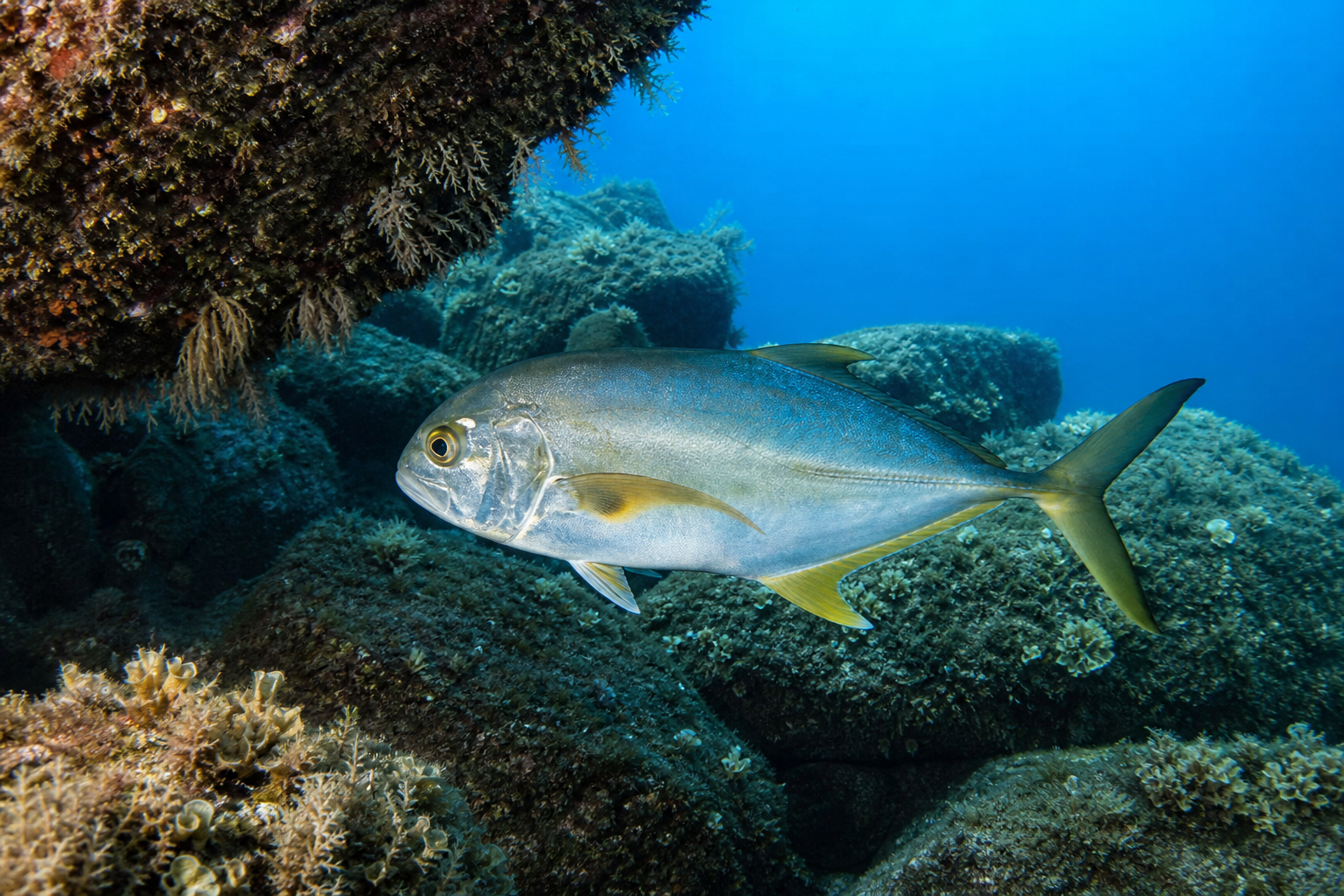
Blue Runner
Identification
Blue runners, also called hardtails, are a sleek, fast member of the jack family commonly found off the Outer Banks. They typically run 1/2 to 2 pounds, with larger fish pushing 3-4 pounds. Blue runners have an elongated, torpedo-shaped body with a blue-green to olive back, silver to brassy sides, and a yellowish tail. The key identifier is the dark spot on the lower margin of the gill cover (opercle), though this can be faint. They look similar to crevalle jack but are more slender and lack the prominent black spot on the pectoral fin base that crevalle jacks have. Blue runners have a deeply forked tail built for speed.
Habitat and Behavior
Blue runners are a nearshore and offshore species found around reefs, wrecks, floating structure, and hard-bottom areas off the OBX. They are one of the most common baitfish species for offshore anglers — live blue runners are premium baits for king mackerel, amberjack, cobia, and tuna. Blue runners school tightly around structure, often visible on the surface as silver flashes near channel markers, buoys, and reef structure. They are fast, active predators that feed on small baitfish, shrimp, and squid. Blue runners are also known to follow larger predators and pick off scraps from feeding activity.
Fishing Techniques
Catching blue runners is typically done with Sabiki rigs — multi-hook flasher rigs that catch multiple baitfish at once. Drop a Sabiki rig near channel markers, buoys, or over reef structure and jig it up and down. Blue runners will often load up the rig quickly. Small jigs (1/4 to 1 oz) in white, silver, or pink also catch blue runners when cast into visible schools. For live bait collection, have a round livewell ready — blue runners are delicate and need good water circulation to stay alive. When targeting blue runners for food rather than bait, use light spinning tackle with small jigs or cut bait for sporty action.
Baits and Lures
Sabiki rigs (size 8-10 hooks) are the standard tool for catching blue runners around structure. Small metal jigs (1/4 to 1 oz) in silver, white, and pink catch blue runners when casting to visible schools. Small soft plastic swimbaits in pearl or silver also work. For bait fishing, small strips of squid or cut bait on size 1 or 2 hooks catch blue runners from reefs and wrecks. When using blue runners as live bait, hook them through the nose or just ahead of the dorsal fin on a live bait rig with a circle hook. Blue runners stay alive well in a round livewell with good aeration.
Best Times and Locations on the OBX
Blue runners are available from May through October off the Outer Banks, with peak abundance in July and August. They are found on nearshore reefs, wrecks, and around floating structure throughout the OBX. Prime collection spots include channel markers and buoys near Oregon Inlet and Hatteras Inlet, the nearshore reefs off both inlets, and Sargassum weed lines in offshore waters. Blue runners are easy to locate around any visible structure — look for them schooling near the surface around markers, buoys, and floating debris. They are often the first fish caught on an offshore trip as anglers collect bait before heading to deeper water.
Regulations
Blue runners have no federal bag limit and no minimum size requirement. They are not subject to specific management measures in the South Atlantic. In North Carolina state waters, there are no specific recreational regulations for blue runners. Most blue runners caught off the OBX are used as live bait for larger species, though they are also good table fare when fresh. Check with NCDFW for any regulation changes before your trip.