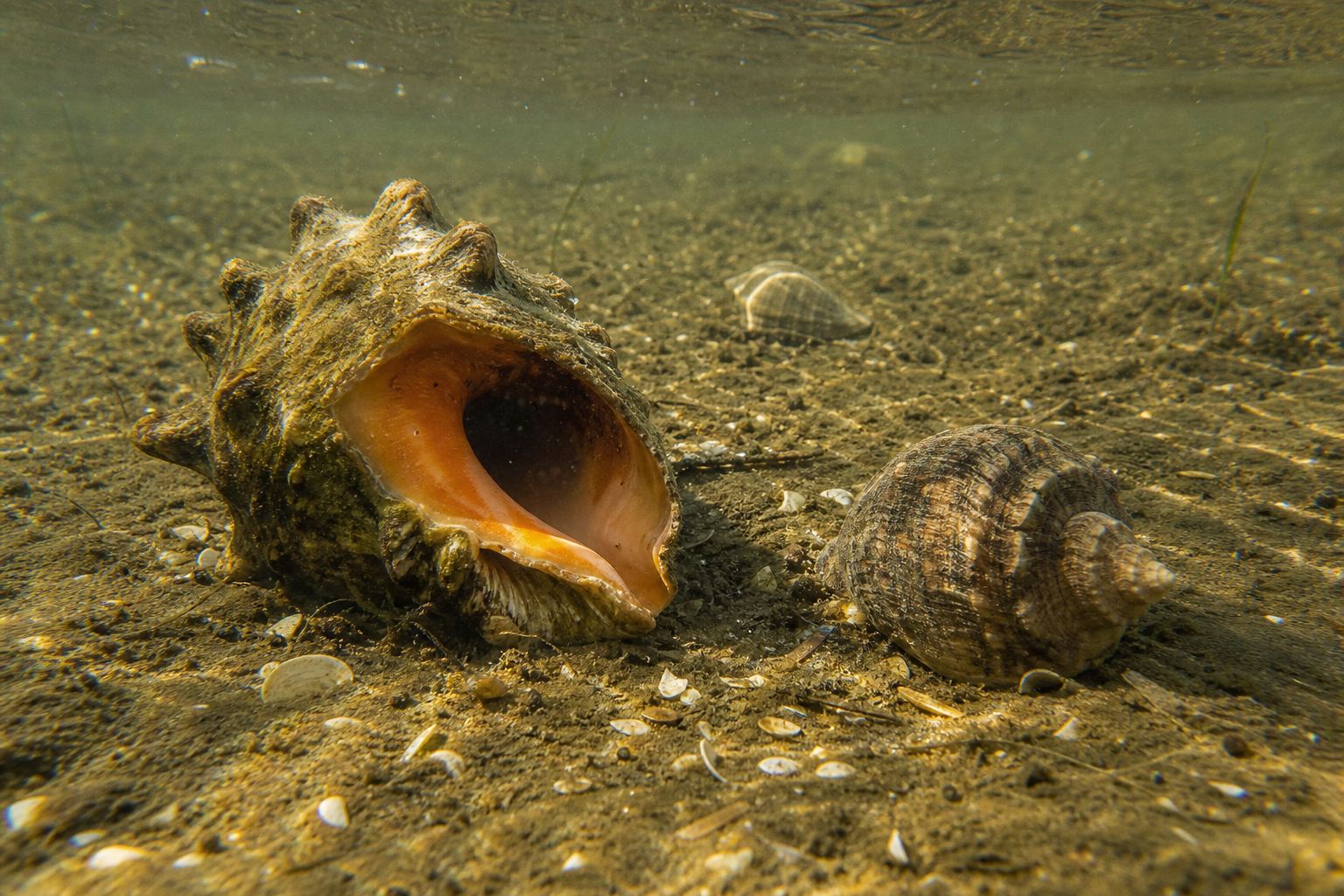
Conchs and Whelks
Identification
Several species of large gastropods inhabit OBX waters, collectively called whelks or conchs. The knobbed whelk (Busycon carica) is the most common and recognizable — a heavy, cream-colored shell with knob-like projections on the shoulder of each whorl, reaching 6–9 inches. The channeled whelk (Busycotypus canaliculatus) has a smooth shell with a deep channel along the whorl and grows to 7+ inches. The lightning whelk (Busycon sinistrum) is the rarest, with a left-opening (sinistral) shell and a distinctive lightning-bolt pattern on juvenile shells. All are predatory snails with a large muscular foot and a proboscis they use to bore into bivalve shells. The meat is firm, slightly chewy, and used in chowders, fritters, and scungilli-style dishes.
Habitat and Behavior
Whelks are bottom-dwelling predators that roam sandy and mud-sand bottoms in search of bivalves — clams, oysters, and mussels. They use their muscular foot to hold prey while boring a hole through the shell with their radula (a rasping tongue), then consume the soft tissue inside. On the OBX, whelks are found in Pamlico Sound, nearshore ocean waters, and inlet channels. They prefer firm sand and shell-hash bottoms where clams are abundant. Whelks are more active in cooler months and move to deeper water in summer. They are often caught incidentally by anglers bottom-fishing, as they will grab a baited hook resting on the bottom. Egg cases — the familiar flat, papery “sea necklaces” found washed up on OBX beaches — are laid by whelks in long strings anchored in the sand.
Harvesting Techniques
Conch pots are the primary harvesting method. These are typically wire or wooden traps baited with horseshoe crab (the premier conch bait), fish heads, or mullet chunks. Pots are set in channels and on sand flats in 5–20 feet of water and soaked for 24–48 hours. Whelks crawl in through funnel openings and cannot escape. Recreational harvesters without pots can collect whelks by hand at low tide on exposed sand flats in the sounds, particularly after storms when they may be washed up. Incidental catch by hook and line is common — bottom rigs baited with squid or cut bait in Pamlico Sound and Hatteras Bight frequently pick up whelks. Some anglers specifically target whelks by leaving bottom rigs on the sand overnight, weighted heavily, and checking them at dawn.
Best Times and Locations on the OBX
Whelks are available year-round but are most active and accessible from October through May when water temperatures are cooler. The Pamlico Sound channel edges and sloughs are the primary whelk grounds on the OBX. The deeper channels near Oregon Inlet and Hatteras Inlet are productive for potting. The Hatteras Bight — the nearshore ocean just south of Hatteras — holds whelks on the sandy bottom in 20–40 feet of water. The shallows of Pamlico Sound near the mainland shore (Engelhard, Stumpy Point) have whelks on the sand flats. After strong nor’easters, walk the sound-side beaches and inlet shorelines — displaced whelks can often be collected from the tide line. The beach strand from Cape Point southward toward Hatteras Inlet is a good spot for finding live whelks washed ashore after storms.
Regulations
Whelks are less heavily regulated than oysters and clams in NC. There is no specific recreational bag limit for whelks, but standard NC Division of Marine Fisheries rules apply. The commercial conch pot fishery requires a Standard Commercial Fishing License (SCFL) and gear must meet specifications. Some species may have minimum size requirements — check current NCDEQ regulations. Whelks should not be harvested from waters closed by shellfish sanitation advisories. Egg-case strings found on beaches should be left in place or returned to the water if live, as they represent the next generation. Some states have begun implementing whelk management measures due to population pressure; NC rules should be verified before each season.