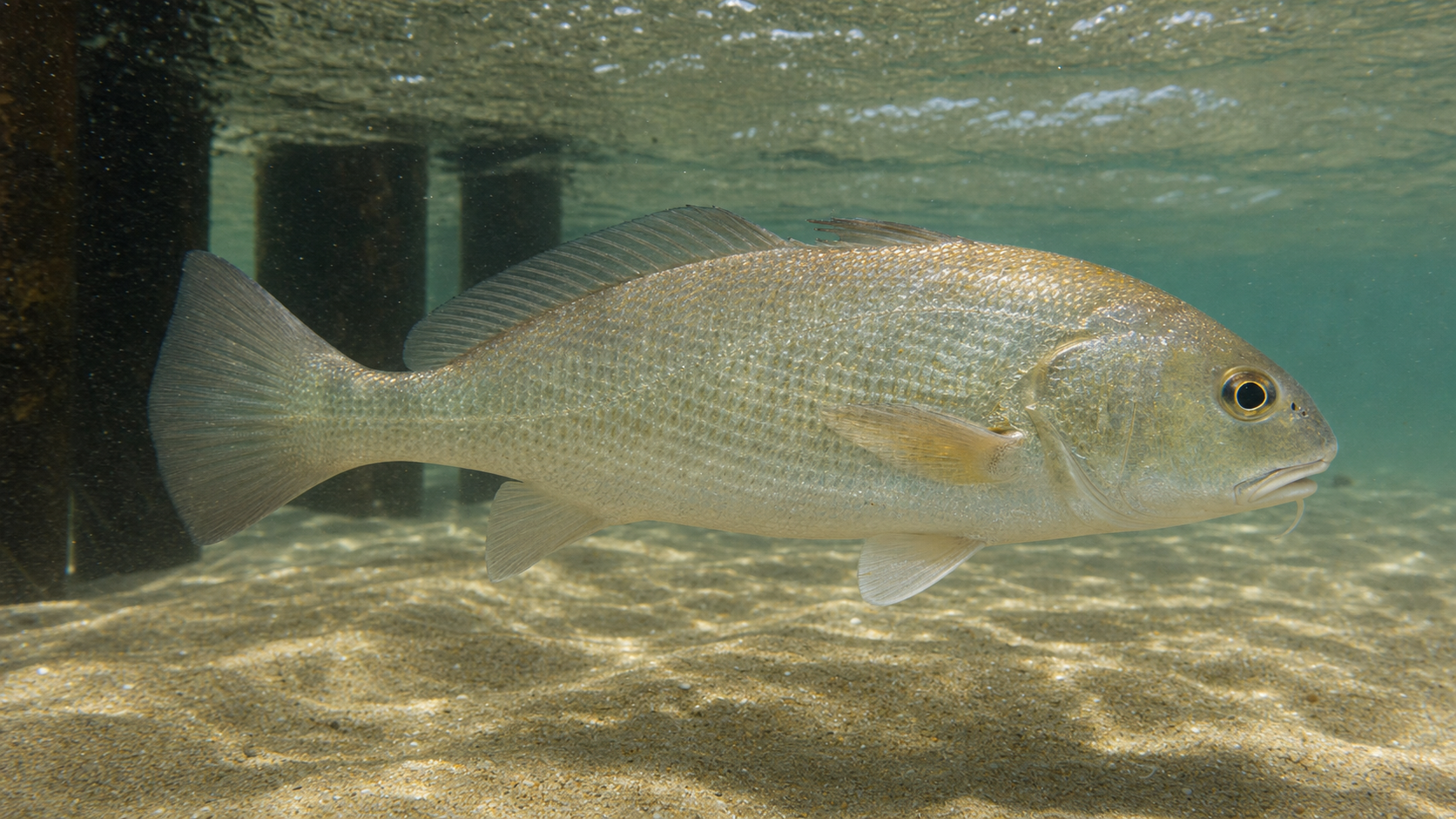
Atlantic Croaker
Identification
Atlantic croaker are members of the drum family (Sciaenidae), typically ranging from 10 to 18 inches and weighing up to 2-3 pounds, though most caught on the OBX are in the 10-14 inch range. They have an elongated, slightly compressed body with a silvery-bronze coloration, often with a pinkish or golden hue on the sides. The back is darker with faint vertical bars or mottling. The belly is white. Croaker have 3-5 pairs of small barbels on the lower jaw, which distinguishes them from spot. They produce a distinctive croaking or grunting sound by vibrating their swim bladder — the reason for their common name. The pectoral fin has a dark spot at its base, but it is less prominent than on spot.
Habitat and Behavior
Croaker range from Cape Cod, Massachusetts down through Florida and into the Gulf of Mexico. They are bottom-dwelling fish that prefer muddy or sandy bottoms in shallow coastal waters, estuaries, and the surf zone. Croaker use their barbels to detect food along the bottom, feeding on small crustaceans, mollusks, worms, and small fish. They are schooling fish, often found in mixed schools with spot, pigfish, and other small sciaenids. Croaker are highly tolerant of varying salinities and water temperatures. They move into shallow OBX waters in late spring and summer, then migrate offshore and southward in fall as water temperatures drop.
Fishing Techniques
Croaker are caught using the same basic bottom-fishing approach as spot. A two-hook bottom rig with small hooks (size 4 to 2) fished on the bottom is the standard setup. Use 1 to 2 ounce sinkers depending on current and surf conditions. Croaker have slightly larger mouths than spot, so slightly larger hooks and bait pieces can be effective. Float rigs fished near pier pilings or along the surf can also produce croaker, particularly when crabs or small skates are pestering baits on the bottom. Light spinning tackle in the 8-15 lb test range is ideal for the typically modest-sized croaker found on the OBX.
Baits and Lures
Bloodworms and Fish Bites are top producers for croaker, just as they are for spot. Squid strips are also very effective — the tough texture of squid stays on the hook well and croaker seem to like the taste. Fresh shrimp pieces will work too. Slightly larger bait pieces than those used for spot are appropriate, as croaker have bigger mouths. Some anglers tip small jigs or spec rigs with shrimp or squid strips and bounce them along the bottom for croaker, which can be more engaging than soaking baits on a bottom rig.
Best Times and Locations on the OBX
Croaker arrive in OBX waters in late spring (May-June) and remain abundant through October. Summer is prime time, with July and August producing consistent action. OBX piers — particularly Avalon, Nags Head, and Jennette’s — are excellent for croaker throughout the summer and into fall. The surf from Duck to Hatteras can be productive, especially near inlets and in the wash zone just past the breaking waves. Oregon Inlet and Hatteras Inlet areas are also strong producers. Croaker fishing tends to be best on the slack of the tide and during the first hour of the incoming tide. Night fishing from piers can produce some of the largest croaker, as bigger fish move in to feed under cover of darkness.
Regulations
Atlantic croaker are managed by the Atlantic States Marine Fisheries Commission (ASMFC) and the NC Division of Marine Fisheries. There is no closed season and no minimum size limit in North Carolina recreational waters. The recreational daily bag limit is 50 fish per person combined with spot and other unregulated sciaenids. Always verify current NC DMF regulations before fishing, as management measures can be updated.