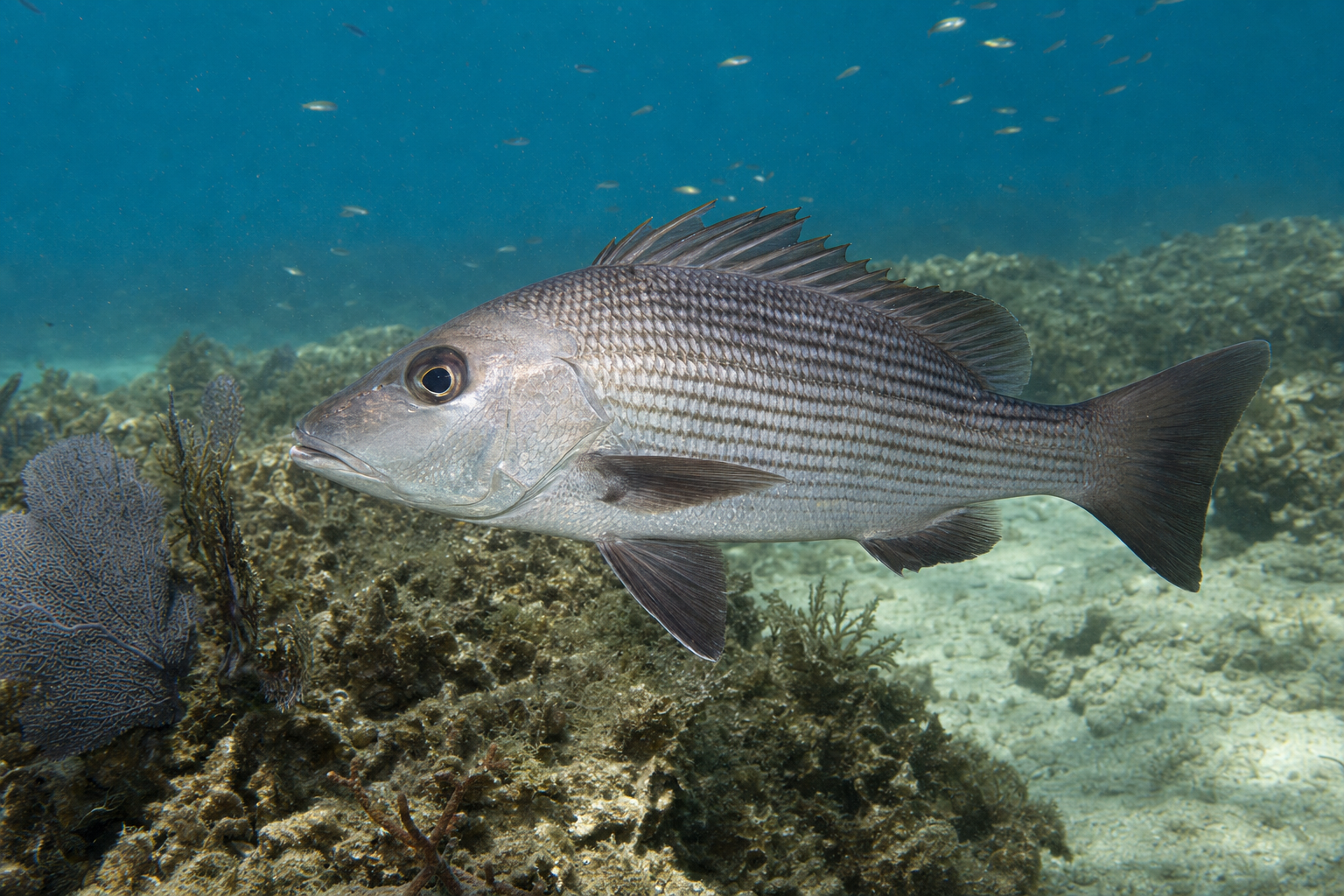
Gray Snapper
Identification
Gray snapper, also known as mangrove snapper, have a grayish-brown to dark gray body with a lighter belly. They have a relatively slender, streamlined body compared to red snapper, and the tail is slightly forked. A distinctive dark band runs across the eye, and juveniles may show a dark lateral line. When feeding or excited, they can display vertical bars on the sides. They typically run 1 to 5 pounds off the OBX, with larger fish reaching 10+ pounds. Their mouth is large relative to body size, making them effective predators.
Habitat and Behavior
Gray snapper are structure-oriented fish found on offshore wrecks, reefs, and hard bottom in 60 to 250 feet of water. Unlike vermilion snapper, which school above structure, gray snapper hold tighter to the structure itself, often positioned near the base of wrecks or in crevices. They are more cautious and selective feeders than other snapper species, which can make them challenging to catch. Gray snapper feed at night and during low-light periods, making evening and night fishing particularly productive. They eat small fish, shrimp, crabs, and squid.
Fishing Techniques
Bottom fishing with live bait is the most effective gray snapper technique, but they can be finicky. Lighter leaders (30-40 lb fluorocarbon) and smaller hooks (2/0 to 4/0) improve success with these cautious fish. Chumming is critical — a steady slick of ground menhaden or sardine chunks brings gray snapper out of the structure and into a feeding mode. Free-lining a live shrimp or small minnow in the chum slick is a deadly technique. Night fishing with submerged lights draws baitfish and gray snapper, creating fast action.
Baits and Lures
Live shrimp are the premier gray snapper bait — irresistible to them and easy to present naturally. Live minnows, pinfish, and small croaker also produce. Cut squid on small hooks is reliable for numbers. Sardine chunks fished in the chum slick work well. Small jigs tipped with shrimp or squid strips can draw strikes. The key with gray snapper is natural presentation and lighter tackle — they are more leader-shy than red or vermilion snapper.
Best Times and Locations on the OBX
Gray snapper are available year-round, with May through October being the most productive period. They are found on the same offshore structure as other snapper and grouper — wrecks, reefs, and hard bottom in 60-250 feet. The Triangle Wrecks, artificial reef sites off Oregon Inlet, and hard bottom along the shelf edge all hold gray snapper. They are often caught on mixed bottom-fishing trips. Night trips and sunset-to-dark fishing windows are especially productive for this species.
Regulations
Gray snapper are managed under the South Atlantic Fishery Management Council. The minimum size is 12 inches total length. The recreational bag limit is 10 per person per day within the snapper aggregate (which includes vermilion and other snapper species). The season is open year-round. Commercial harvest is subject to quota management. Check current NC Marine Fisheries Commission and SAFMC regulations before fishing.