Margate
Identification
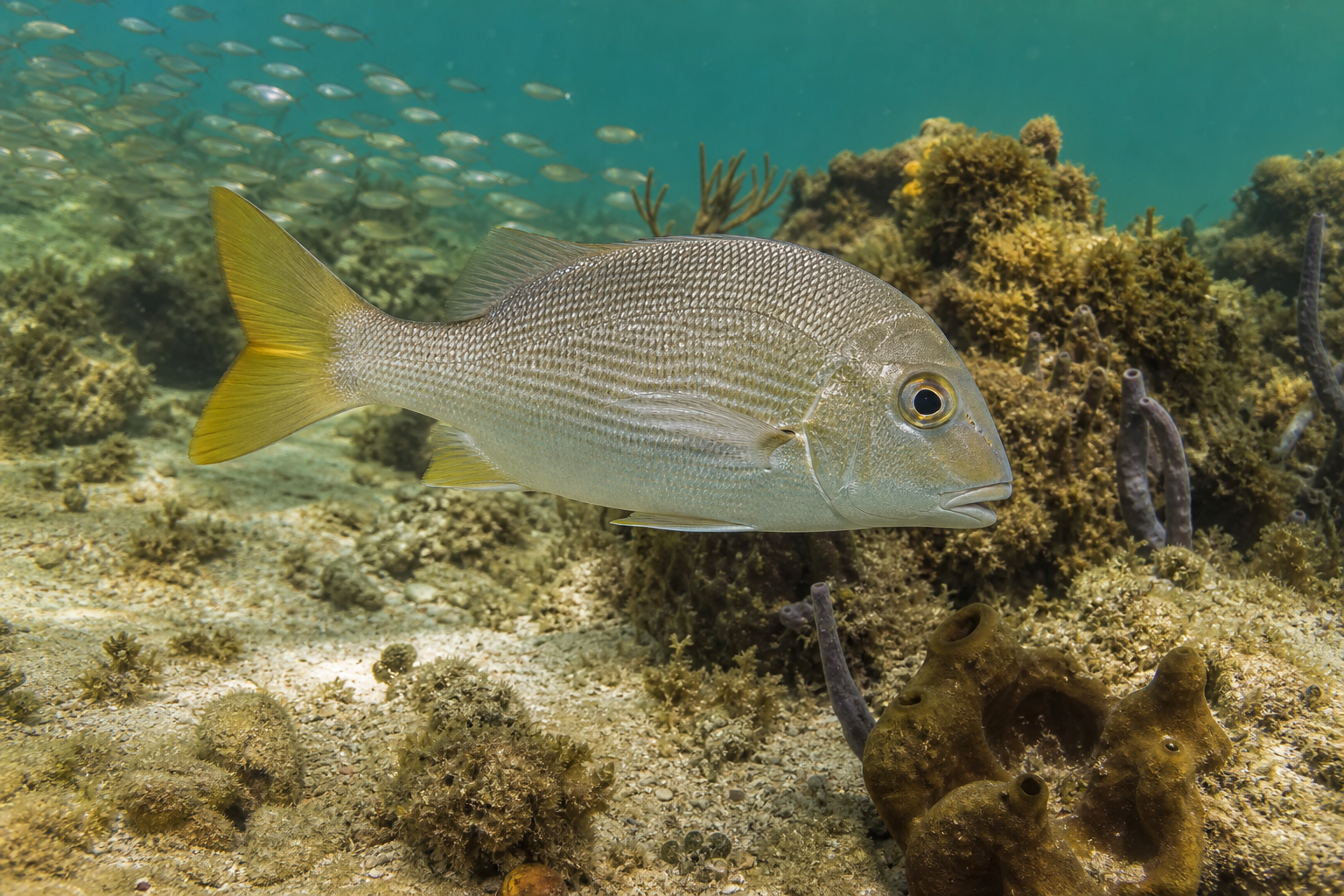
Margate (Haemulon album) are the largest species in the grunt family, commonly reaching 15 to 22 inches and 2 to 5 pounds, with larger specimens pushing 8+ pounds. They have a deep, thick body that is silvery-white to pale gray overall, sometimes with a faint yellowish tint on the upper body and fins. Unlike other grunt species, margate lack the prominent horizontal stripes seen on white grunt or bluestriped grunt. They have a large mouth well-suited for feeding on bigger prey, and the inside of the mouth is reddish. Their overall pale, thick-bodied appearance distinguishes them from other grunt species on the reef.
Habitat and Behavior
Margate are found on deeper hard-bottom reef structure, wrecks, and rocky ledges. Off the Outer Banks, they prefer the deeper reef zones in 80 to 180 feet of water — deeper than where white grunt are typically encountered. They are a Caribbean and southern Atlantic species that reaches the northern edge of its range on the OBX, making them a less common but prized catch. Margate are solitary or found in small groups rather than large schools. They feed on crustaceans, small fish, and mollusks, using their size and strength to dominate smaller reef fish around structure.
Fishing Techniques
A two-hook bottom rig or a single-hook bottom rig with 4- to 8-ounce sinker is the standard approach, depending on depth and current. Use larger hooks (size 2/0 to 4/0) to match the margate’s bigger mouth and to handle their powerful fight. Heavier leaders (40–50 lb) are recommended since margate are strong fish that will test light gear around structure. Circle hooks in 3/0 to 5/0 are effective. Drift fishing over deep hard bottom covers more water. When a margate is hooked, be prepared for a strong, steady pull — they fight harder than most reef fish their size.
Baits and Lures
Squid strips work, but margate respond well to larger bait offerings — cut bait strips from mullet, menhaden, or bonito are effective for targeting bigger fish. Shrimp and crab pieces also produce, especially when margate are feeding on crustaceans. Because of their larger mouths, don’t be afraid to use bigger bait presentations than you would for other grunt or porgy species. A whole small crab or a substantial strip of fresh cut bait on a 3/0 hook is a good margate-targeting rig.
Best Times and Locations on the OBX
Margate are a warm-water species most commonly encountered from May through October on the OBX. They are primarily found on the southern OBX reefs off Hatteras and Ocracoke, particularly on the deeper drops in 100–180 feet. Full-day charter trips to the deeper reef zones offer the best chance at margate. They are not a common catch — encountering one is a pleasant surprise on a bottom trip — but the southern OBX reefs in late summer provide the best opportunity. Party boats occasionally pick up margate on deep-water drops.
Regulations
Margate fall under NC unclassified reef fish regulations with no specific federal bag limit in the South Atlantic. State regulations may apply, and reef fish rules are subject to change. Check current NC DMF regulations for any applicable size or bag limits before fishing.