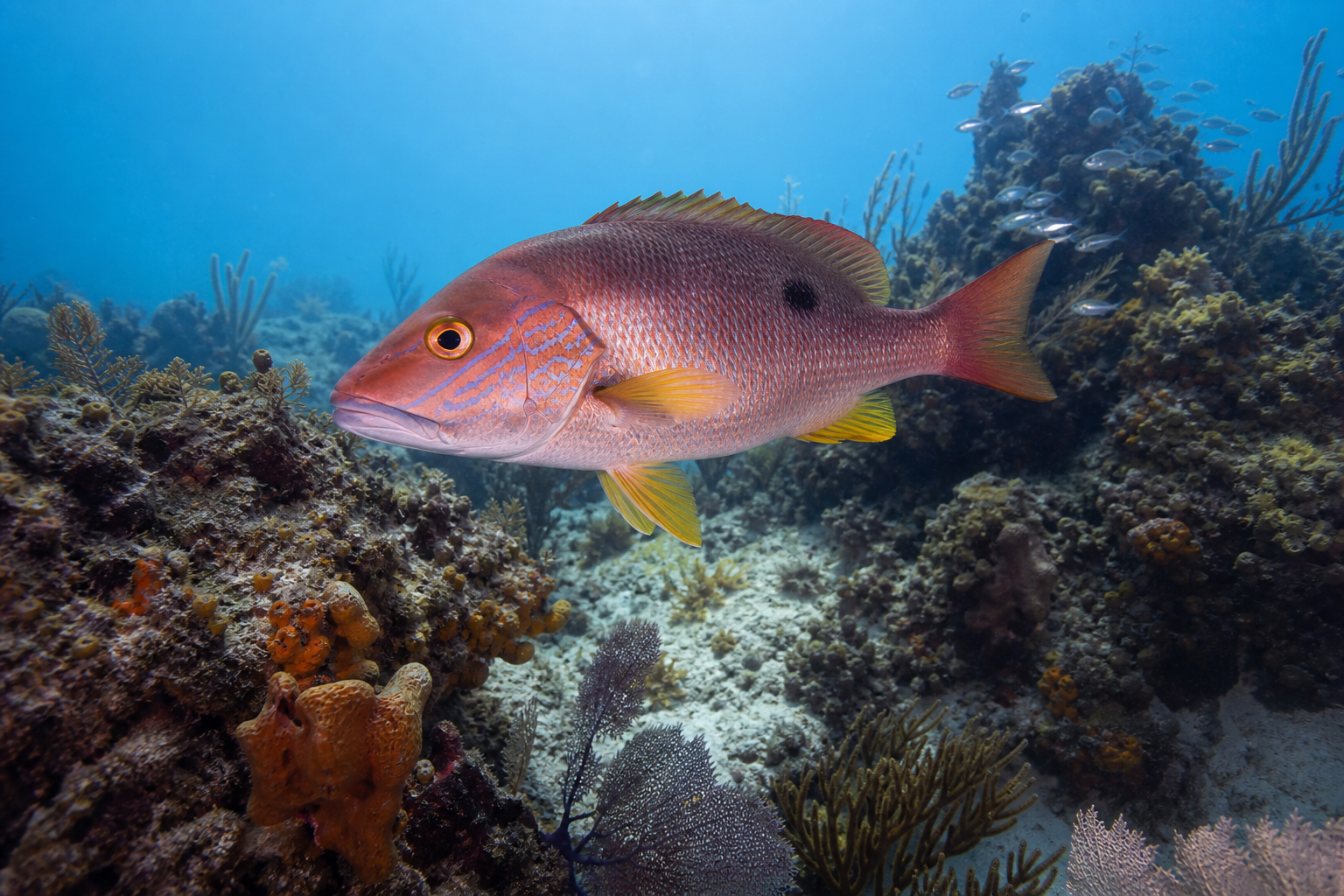
Mutton Snapper
Identification
Mutton snapper have an olive-green to reddish back with a somewhat elongated, streamlined body. A distinctive blue line runs from below the eye to the snout. They have a black spot below the dorsal fin (similar to lane snapper but larger) and the tail often has a reddish margin. Mutton snapper are larger than most other OBX snapper species, typically running 5 to 15 pounds with fish over 20 pounds possible. Their flesh is excellent eating, considered by many to be among the best of the snapper family.
Habitat and Behavior
Mutton snapper prefer reef structure, wrecks, and hard bottom in 80 to 300 feet of water. They are more solitary than vermilion or gray snapper and tend to hold closer to structure, similar to grouper behavior. Mutton snapper are cautious feeders that carefully inspect baits before committing, making them a challenging and rewarding species to catch. They feed on small fish, squid, shrimp, and crabs near the bottom. Mutton snapper are more common in southern waters but are present on OBX offshore structure, particularly in deeper water.
Fishing Techniques
Bottom fishing with live bait is the most effective mutton snapper technique. Live menhaden, pinfish, or small croaker on a Carolina rig with 6-12 oz sinker, 50-80 lb fluorocarbon leader, and 5/0 to 7/0 circle hook is the standard setup. Mutton snapper are leader-shy and cautious, so lighter leaders and longer leaders can improve success. Chumming helps bring mutton snapper out of the structure and into a feeding mood. Deep jigging with butterfly jigs (150-300g) over hard bottom can trigger strikes from mutton snapper, particularly when they are actively feeding.
Baits and Lures
Live menhaden are the top mutton snapper bait off the OBX. Live pinfish and small croaker are equally effective. Cut squid and sardine chunks produce fish, but live bait is significantly more effective for this cautious species. Butterfly jigs in blue/silver and pink patterns in the 150-300g range trigger strikes. Bucktail jigs tipped with strip bait also produce. The key is natural presentation — mutton snapper inspect baits carefully and will reject anything that seems unnatural.
Best Times and Locations on the OBX
Mutton snapper are available year-round but are most commonly caught May through October. They are found on deeper offshore structure in 80-300 feet — wrecks, hard bottom, and reef structure along the shelf edge. The Triangle Wrecks, deep artificial reef sites, and hard bottom along the 30-50 fathom curve hold mutton snapper. They are not abundant off the OBX and are typically caught as a quality incidental catch on mixed bottom fishing trips, often alongside red snapper and grouper.
Regulations
Mutton snapper are managed under the South Atlantic Fishery Management Council. The minimum size is 16 inches total length. The recreational bag limit falls within the snapper aggregate (typically 10 snapper total per person per day, combining species). The season is open year-round. Commercial harvest is subject to quota management. Check current NC Marine Fisheries Commission and SAFMC regulations before fishing.