Nurse Shark
Identification
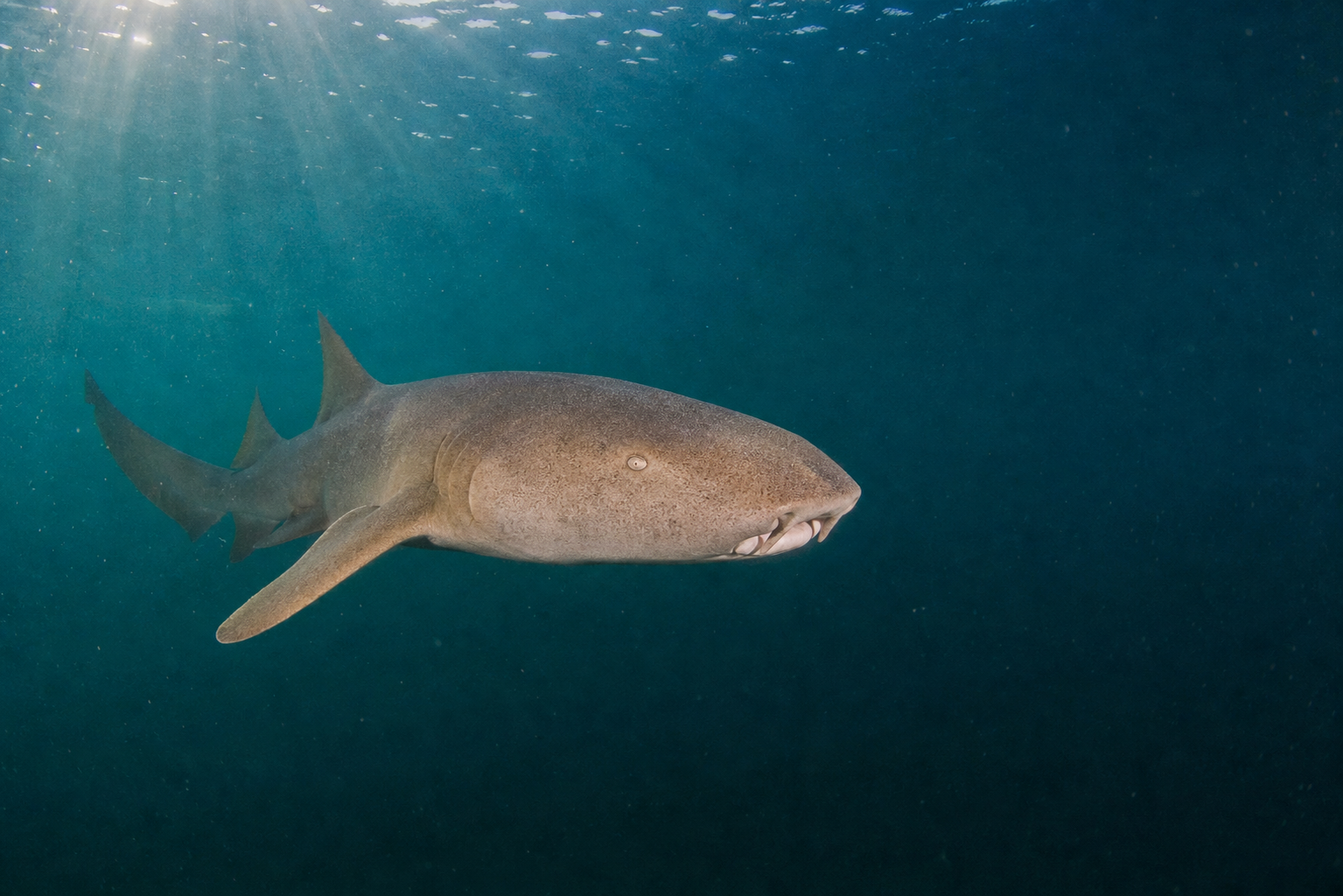
The nurse shark is one of the most distinctive sharks encountered on the Outer Banks. It has a broad, rounded head with small eyes and conspicuous nasal barbels — whisker-like appendages near the nostrils that are unique among OBX shark species. The body is robust and cylindrical, reaching 7 to 10 feet in length. Coloration is a uniform golden-brown to dark brown above, with a lighter underside. The first and second dorsal fins are set far back on the body, and the tail has a long upper lobe. Nurse sharks have small, grasping teeth designed for crushing rather than cutting, reflecting their bottom-dwelling feeding habits.
Habitat and Behavior
Nurse sharks are bottom-dwelling sharks that prefer shallow coastal waters with structure. On the OBX, they are found around hard bottom areas, wrecks, reefs, and in the sounds near rocky or structured bottom. They are nocturnal, spending daylight hours resting under ledges or on the bottom, and becoming active at night to hunt. Nurse sharks feed primarily on crabs, lobster, squid, sea urchins, and small fish. They use their barbels to sense prey on the bottom and their small teeth to crush shells and crustaceans. Nurse sharks are generally sluggish and docile, but can be stubborn fighters when hooked due to their bulk and tendency to lie on the bottom.
Fishing Techniques
Nurse sharks are primarily caught by bottom fishing from boats near structure, though they are occasionally encountered in the surf. For boat fishing, anchor near wrecks, reefs, or hard bottom in the sounds or nearshore waters. Drop a bottom rig with a generous weight (6-10 oz) to keep the bait pinned to the bottom. Nurse sharks are not aggressive strikers — the bite often feels like the line has snagged bottom, followed by a slow, heavy pull. For surf fishing, use a heavy surf rod with a fishfinder rig and fresh cut bait fished on the bottom in the slough. Fish at night when nurse sharks are actively foraging. Be prepared for a stubborn, grinding fight rather than a fast run.
Baits and Lures
Fresh cut baits fished on the bottom are the most effective offering for nurse sharks. Fresh squid is a top producer — nurse sharks feed heavily on cephalopods and the scent of fresh squid is highly attractive. Cut mullet, bluefish chunks, and fresh bunker also work well. Nurse sharks are scent-driven bottom feeders, so oily, fresh baits are essential. Live baits such as spot or small mullet can produce, but cut bait is generally more consistent. Use an 8/0 to 10/0 circle hook on a wire leader. Baits should rest on or very near the bottom — nurse sharks rarely rise in the water column to feed.
Best Times and Locations on the OBX
Nurse sharks are warm-water visitors to the OBX, present from June through October. They are less common than sharpnose, blacktip, or sandbar sharks but are regularly encountered by anglers fishing around structure. The hard bottom areas and wrecks off Hatteras and Oregon Inlet are prime locations for boat-based nurse shark fishing. In the sounds, the deeper channels and rocky areas near inlets can hold nurse sharks. Cape Point at Hatteras occasionally produces nurse sharks in the surf, especially when baits are fished on the bottom at night. The waters around the OBX fishing piers can also produce nurse sharks during summer nights. Fish exclusively at night and during tide changes for the best results.
Regulations
Nurse sharks are prohibited from recreational harvest in NC state waters — catch and release only. If you catch a nurse shark, handle it with care. Despite their docile reputation, nurse sharks have powerful jaws and can deliver a serious bite if provoked. Never put your hands near the mouth. Use a dehooker or cut the leader close to the hook. Keep the shark in the water at all times and support the body during release. Nurse sharks are slow-moving and may require extended revival time. Allow the shark to rest in moving water until it is ready to swim away on its own. These sharks are long-lived and play an important role as bottom-dwelling predators in the nearshore ecosystem.