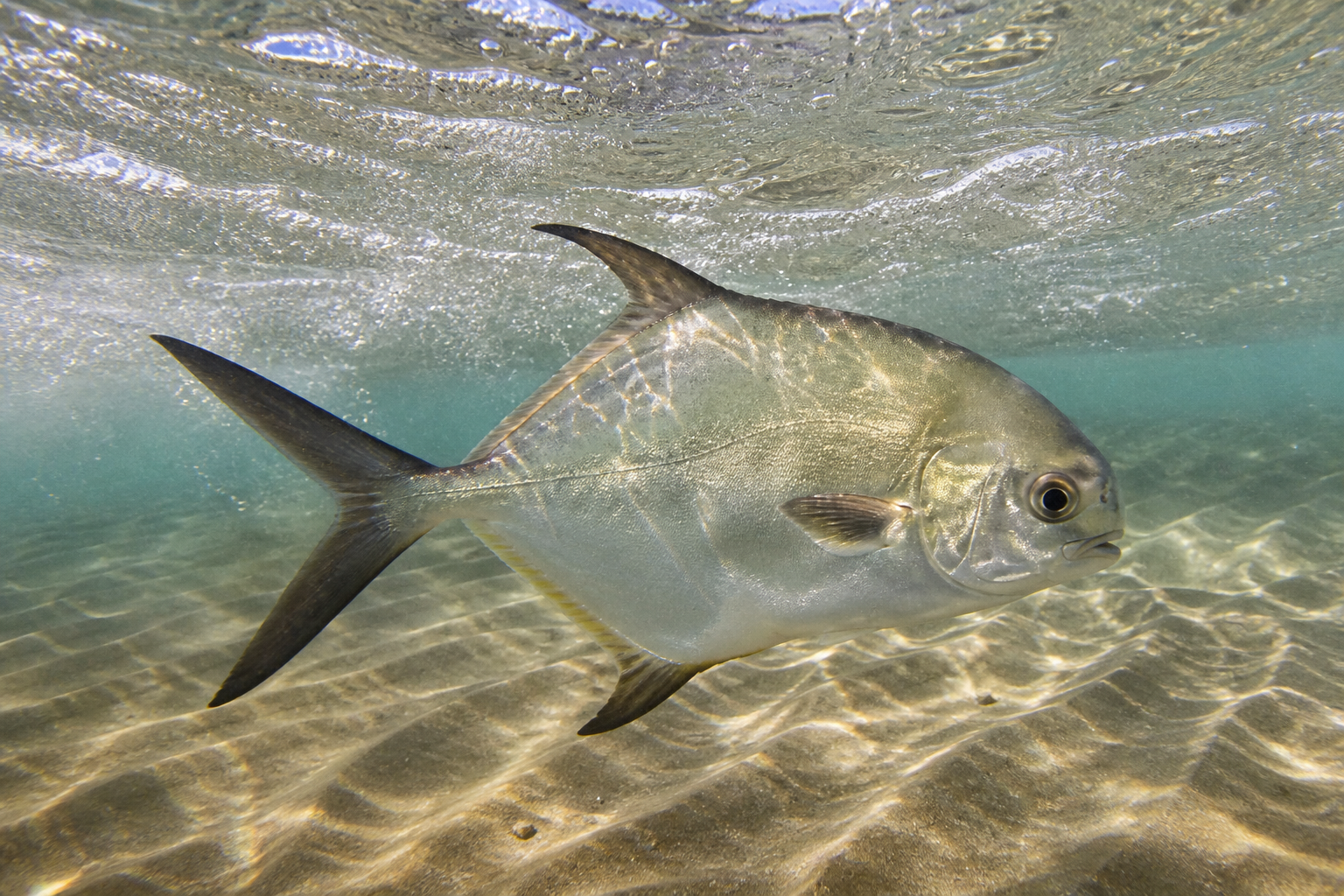
Florida Pompano
Identification
Florida pompano are a prized member of the jack family (Carangidae). They have a deep, compressed, almost oval-shaped body with a silvery coloration that can range from bright silver to a golden-green on the back. The fins are typically dark or dusky, and the anal fin is orange-yellow. Pompano have a very short snout and a blunt, rounded face. They typically range from 12 to 18 inches and weigh 1 to 3 pounds on the OBX, though larger fish are occasionally caught. Pompano are sometimes confused with permit, but pompano have a shorter, more rounded body and lack the elongated dorsal and anal fin rays of permit.
Habitat and Behavior
Florida pompano range from Massachusetts through Florida and throughout the Gulf of Mexico, but they are most abundant in the southeastern US. On the OBX, pompano are primarily a late summer and fall visitor. They prefer warm, clear water and sandy bottoms in the surf zone, particularly around inlets and sandbars. Pompano feed heavily on sand fleas (mole crabs), small crabs, shrimp, and other crustaceans that they root out of the sand. They are schooling fish that move through the surf in groups, often appearing suddenly and then disappearing just as quickly. Pompano are fast, powerful swimmers for their size, which makes them excellent fighters on light tackle.
Fishing Techniques
Pompano are primarily a surf fish on the OBX, targeted from the beach rather than piers. The standard setup is a pompano rig — a two-hook bottom rig with small floats above each hook to keep the bait elevated above the bottom and away from crabs. Use small hooks (size 4 to 1) and a pyramid sinker (2-4 oz) to hold in the surf. Cast into the sloughs and troughs between sandbars where pompano are feeding. Light to medium surf spinning tackle (8-12 lb test) is ideal. Pompano have relatively soft mouths, so avoid horsing them in. Some anglers also catch pompano on small jigs (bucktail or soft plastic) tipped with shrimp or sand flea, bounced along the bottom in the surf.
Baits and Lures
Sand fleas (mole crabs) are the number one bait for OBX pompano, just as they are for sea mullet. Fresh sand fleas collected from the swash zone are far more effective than frozen or preserved ones. When sand fleas aren’t available, small pieces of fresh shrimp work well. Fish Bites in crab or shrimp flavor are a decent alternative, particularly the “Max” formula on a small piece of hook. Clam strips can also produce pompano. The key is using small, fresh bait pieces on small hooks. Pompano are not large fish, and their mouths are modest in size, so keep bait pieces roughly dime-sized or smaller.
Best Times and Locations on the OBX
Pompano are a warm-water species that arrives on the OBX in mid to late summer, typically showing up in July and peaking in August through October. They prefer water temperatures above 75°F. The beaches from Hatteras south to Ocracoke are traditionally the best pompano waters on the OBX, though they are caught as far north as Nags Head and Kitty Hawk during late summer. Cape Point at Hatteras is a legendary pompano spot when conditions are right. The falling tide and early incoming tide tend to be most productive, as wave action exposes sand fleas. Look for clean, warm water with visible sandbars and sloughs — pompano avoid muddy or cold water.
Regulations
Florida pompano are managed by the NC Division of Marine Fisheries. There is no closed season and no minimum size limit in North Carolina recreational waters. The daily bag limit is 50 fish per person combined with other unregulated species. Always verify current NC DMF regulations before heading out.