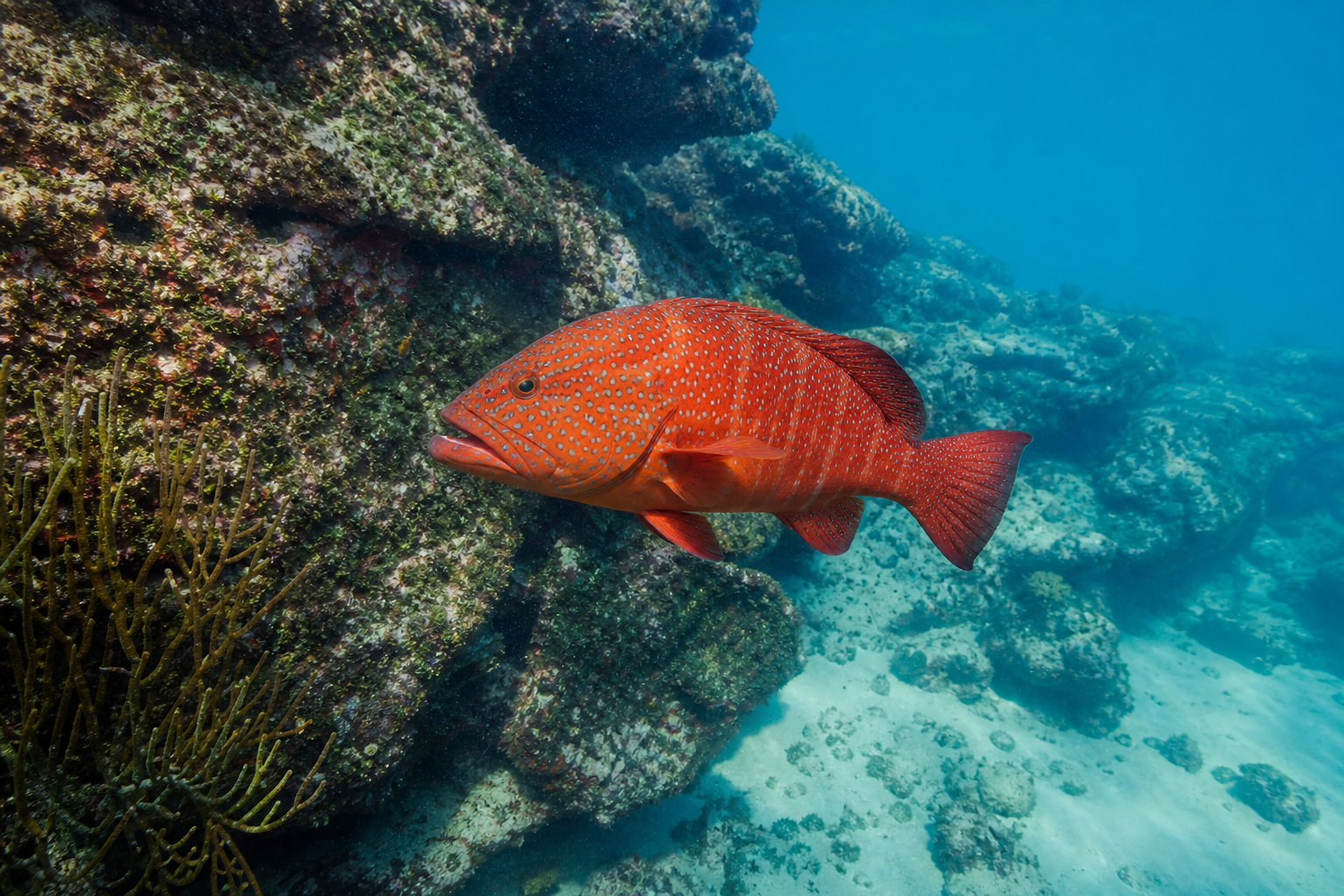
Red Hind
Identification
Red Hind (Epinephelus guttatus) is a species of grouper commonly 14 to 20 inches and 1 to 4 pounds, though larger specimens reach 24+ inches. They have a robust, grouper-typical body shape with a reddish-brown to olive-brown base color covered in small reddish or rust-colored spots scattered across the head, body, and fins. The spots give the fish a speckled appearance that distinguishes it from other OBX grouper species. The margin of the tail fin often shows a darker blackish border. Like other groupers, they have a large mouth with canine teeth and a heavy jaw built for ambushing prey.
Habitat and Behavior
Red hind are structure-oriented reef fish found on hard-bottom reefs, wrecks, rocky ledges, and live bottom areas. Off the Outer Banks, they are found on the mid-to-deep shelf reefs in 70 to 180 feet of water, with larger fish typically in the deeper zones. They are a more southerly species, reaching the northern edge of their common range on the OBX, and are more frequently encountered on the southern OBX reefs off Hatteras and Ocracoke. Red hind are ambush predators that hold tight to structure — ledges, wreck openings, and rocky crevices — darting out to grab passing prey before retreating. They feed primarily on small fish and crustaceans, including crabs and shrimp.
Fishing Techniques
A single-hook bottom rig with a 5- to 8-ounce sinker is the primary setup for targeting red hind. Use sturdy hooks (size 3/0 to 5/0 circle hooks) and heavier leaders (50–80 lb) since grouper have powerful jaws and will try to dive back into structure when hooked. The key to landing grouper is to get the fish’s head turned upward immediately upon hookup — once a grouper gets its head into a hole or crevice, it is nearly impossible to extract. Keep the drag tight and pump the fish up steadily. Drift fishing over hard bottom can produce red hind, but anchoring or holding position over prime structure (ledges and wrecks) is more effective for targeting them specifically.
Baits and Lures
Squid works and will catch red hind, but cut bait from fish — mullet, menhaden, mackerel, or bonito strips — is more effective for targeting grouper. Live baitfish (small grunts, tomtate, or other small reef fish) are the premier bait for larger red hind and will outfish dead bait when the fish are finicky. Crab pieces can also produce, as red hind include crustaceans in their diet. Present baits close to or on the bottom — red hind almost never rise far above structure to feed. A chunk of fresh cut bait fished on the bottom near a ledge or wreck is a classic and effective grouper presentation.
Best Times and Locations on the OBX
Red hind are a warm-season species on the OBX, most commonly caught from May through October. They are primarily found on the southern OBX reefs off Hatteras and Ocracoke, where the warmer water brings more tropical reef species. Target the deeper hard-bottom ledges and wrecks in 100–180 feet for the best chance at red hind. Full-day charter trips to the deeper reef zones off Hatteras offer the most reliable access. Red hind are not an abundant catch on the OBX — they are a bonus fish on bottom trips — but encountering one is a sign of a healthy, diverse reef ecosystem.
Regulations
Red hind are managed under the South Atlantic snapper-grouper complex. The current recreational aggregate bag limit for grouper species is typically 3 fish per person per day, with a 20-inch minimum size for most grouper species. Regulations for grouper are complex and subject to seasonal changes, depth-based closures, and other restrictions. Always verify the current rules with NC DMF and the South Atlantic Fishery Management Council before targeting grouper, as closures and limit changes occur regularly.