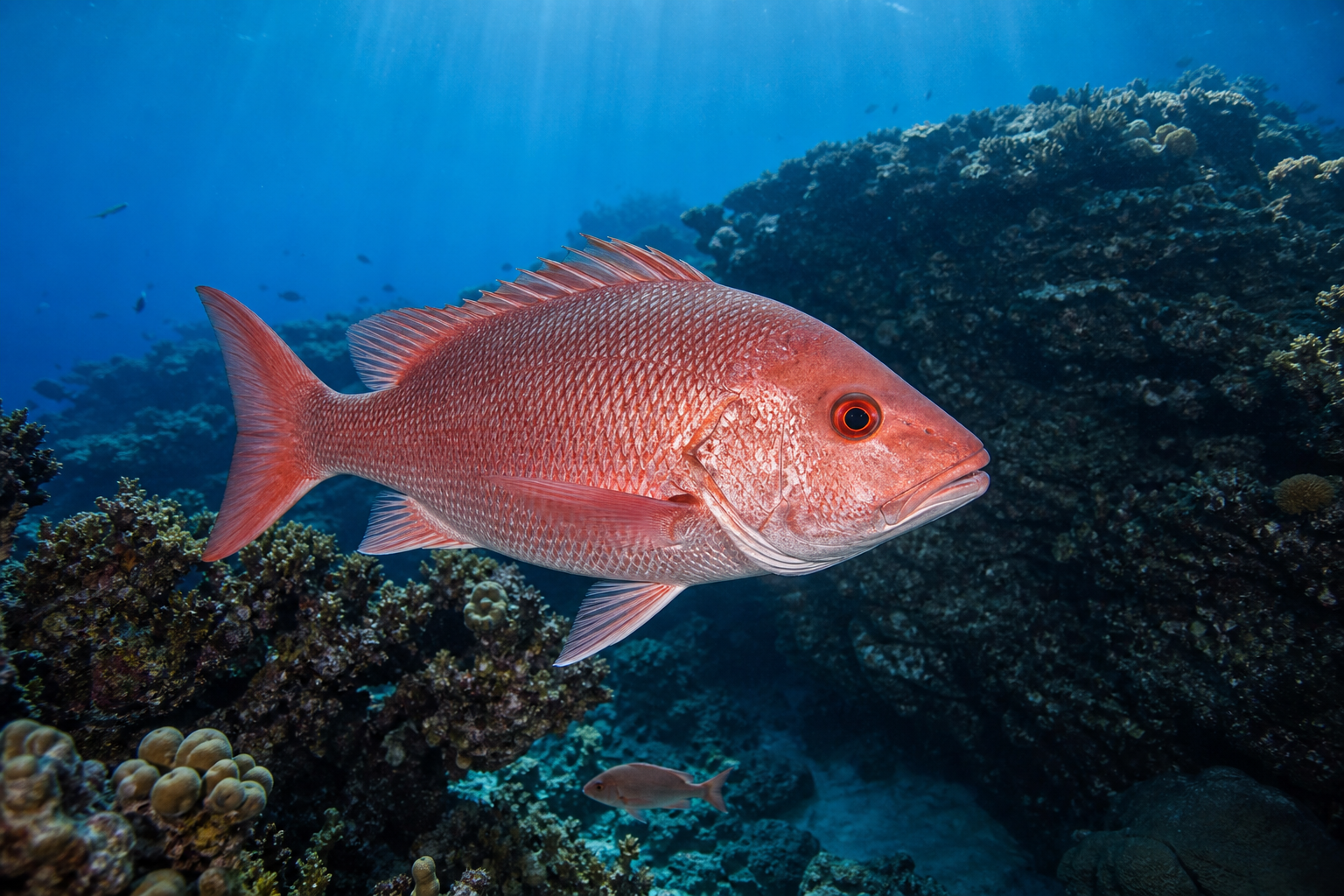
Red Snapper
Identification
Red snapper are one of the most iconic and sought-after fish in the Atlantic. They have a deep, robust body with a brick-red coloration on the back and sides, fading to a lighter pinkish-red on the belly. The eyes are distinctive — bright red, which is the source of their name. Juveniles have a dark spot below the dorsal fin that fades with age. Red snapper can reach 30+ pounds off the OBX, though most caught in the recreational season run 5 to 15 pounds. Their flesh is firm, white, and considered among the finest eating fish in the ocean.
Habitat and Behavior
Red snapper prefer hard bottom structure — wrecks, rocky reefs, live bottom, and artificial reefs in 60 to 300 feet of water. They are structure-oriented but also range above and around structure, often suspending in the water column. Red snapper are long-lived (50+ years) and grow slowly. They are aggressive feeders that eat fish, squid, shrimp, and crabs. They are a heavily managed species due to historical overfishing, resulting in very limited recreational access.
Fishing Techniques
Bottom fishing with live or cut bait over hard structure is the primary red snapper technique. Live menhaden or pinfish on a Carolina rig with an 8-16 oz sinker and 60-80 lb fluorocarbon leader with a 7/0 circle hook is the standard OBX setup. Cut squid and sardine chunks also produce. Because red snapper often suspend above the structure, varying the depth of presentation can be key. Deep jigging with butterfly jigs (150-300g) over structure produces strikes from aggressive fish. Red snapper are powerful fighters that fight hard all the way to the surface.
Baits and Lures
Live menhaden (bunker) are the top red snapper bait off the OBX. Live pinfish, grunts, and small croaker are equally effective. Cut squid and sardine chunks produce consistent action. Butterfly jigs in blue/silver, pink, and amber patterns in the 150-300g range trigger strikes from feeding fish. Bucktail jigs tipped with strip bait also work. The key is presenting the bait near the bottom but not necessarily on it, as red snapper often feed above the structure.
Best Times and Locations on the OBX
Red snapper are present year-round on OBX offshore structure but can only be harvested during the very limited recreational season, typically a few days in July. The best structure includes offshore wrecks in 60-200 feet, the Triangle Wrecks, hard bottom along the 30-fathom curve, and artificial reef sites. The area from Oregon Inlet to south of Hatteras all holds red snapper. During the brief season, charter boats run dedicated snapper trips and fill quickly.
Regulations
Red snapper in the South Atlantic are under extremely strict management due to stock rebuilding. The recreational season is typically only a few days per year (usually in July) and is determined annually by NOAA Fisheries based on the catch limit. The minimum size is 20 inches total length, with a bag limit typically 1 per person per day during the open season. The commercial fishery has separate quotas and trip limits. ALWAYS check current NOAA Fisheries and SAFMC regulations before planning a red snapper trip — the season dates change annually.