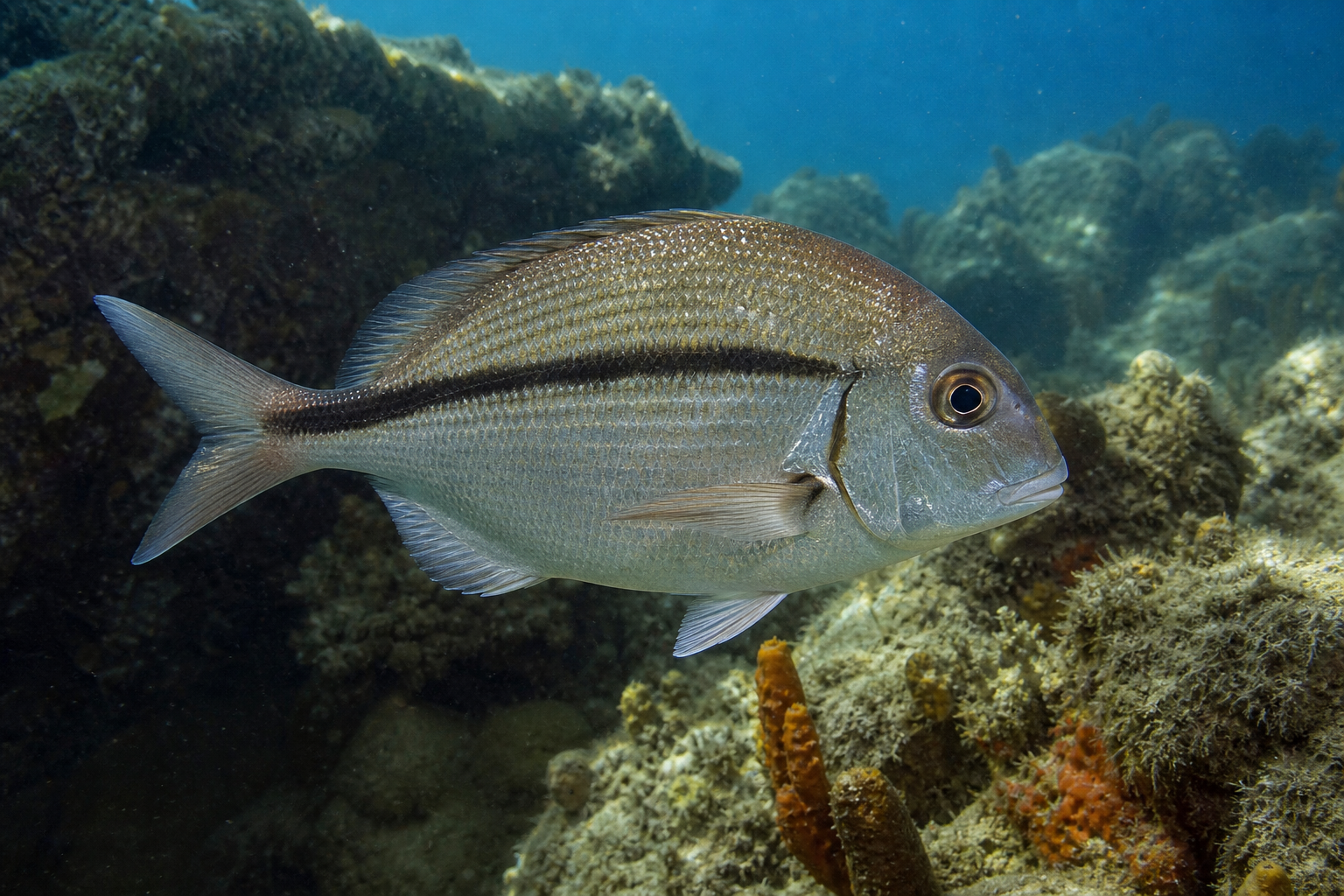
Scup
Identification
Scup (Stenotomus chrysops), also known as northern porgy, are a medium-sized porgy species typically 10 to 16 inches and 1 to 2 pounds. They have a deep, laterally compressed body with a silvery-bronze coloration and subtle dark vertical bars or mottling along the sides. The head is blunt with a small mouth, and the eyes are relatively large. Scup look similar to other porgy species but tend to be more uniform in their bronzy-silver coloring without the pink tones of red porgy or the head knobs of Calamus species. They are a somewhat less common catch on the OBX than the red and Calamus porgies, appearing more frequently on northern reef trips but still showing up on OBX hard-bottom drops.
Habitat and Behavior
Scup prefer hard-bottom habitat — rocky reefs, wrecks, artificial reefs, and areas with a mix of sand, mud, and structure. Off the Outer Banks, they are found on the mid-shelf reefs in 50 to 120 feet of water, often mixed in with other porgy species. They are bottom feeders that forage for crustaceans, polychaete worms, small mollusks, and occasionally small fish. Scup are schooling fish and can appear in large numbers when conditions are right. They tend to be more active during the day and feed most aggressively in the morning and late afternoon.
Fishing Techniques
A simple two-hook bottom rig (high-low or chicken rig) with a 3- to 5-ounce sinker is the standard setup. Scup have relatively small mouths, so use smaller hooks — size 4 to 1 — for best results. The rig should be fished straight down with the weight on the bottom. Drift fishing over hard-bottom structure is effective for covering ground and finding schools. When a school is located, repeated drops in the same area can produce fish after fish. Light tackle (20–30 lb class) makes for more enjoyable fishing and improves bite detection.
Baits and Lures
Squid strips are the top bait for scup, just as with other porgy species. Clam strips are also extremely effective and sometimes outperform squid. Shrimp, bloodworms, and sandworms are excellent alternatives, especially when the bite is finicky. Keep bait pieces small and securely threaded on the hook — scup are notorious bait stealers with their small mouths. Using a small piece of squid threaded up the shank rather than a large strip will produce more hookups.
Best Times and Locations on the OBX
Scup are primarily a summer and early fall species on the OBX, showing up from June through October. They are most commonly caught on the hard-bottom reefs off Oregon Inlet and the central OBX coast in 60–100 feet of water. They tend to be more abundant on the northern OBX reefs than on those south of Hatteras. Party boats running half-day and full-day bottom trips regularly pick up scup as part of the mixed reef catch. Morning trips often produce the best scup action before the fish settle into a midday lull.
Regulations
Scup are included in the NC aggregate porgy regulation, which typically allows 10 fish per person per day with a 10-inch minimum size. As with all reef fish regulations, rules can change. Verify current limits and any seasonal closures with NC DMF and the South Atlantic Fishery Management Council before your trip.