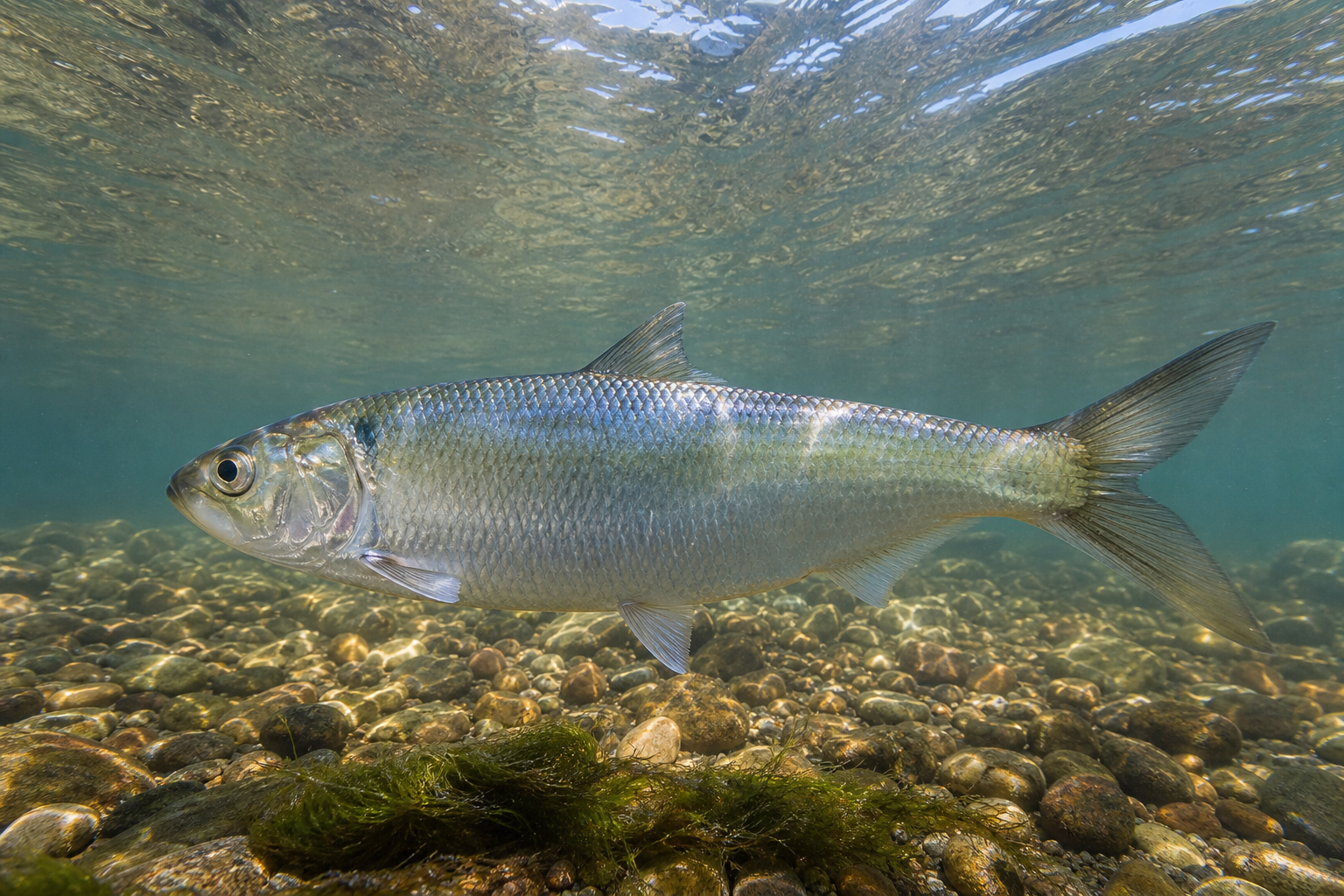
American Shad and Hickory Shad
Identification
American shad and hickory shad are anadromous members of the herring family that run into OBX rivers each spring to spawn. American shad are the larger of the two, reaching 20-24 inches and 4-6 pounds, with a steel-blue back, silver sides, and a row of dark spots along the shoulder. Hickory shad are smaller, typically 12-18 inches and 1-2 pounds, with a more pronounced lower jaw that extends beyond the upper jaw — a key identifying feature. Both species have deeply forked tails and sharp, saw-toothed scales along the belly (scutes).
Habitat and Behavior
Shad spend most of their lives in the Atlantic Ocean, migrating to coastal rivers to spawn in late winter and spring. Around the Outer Banks, the Roanoke River is the premier shad destination, with fish arriving as early as February and peaking in March and April. The Chowan River, Tar River, and tributaries of the Albemarle Sound also see strong runs. Shad move upstream in response to warming water temperatures (around 50-60°F), and males typically arrive before females. After spawning, American shad attempt to return to the ocean (though many die in southern rivers), while hickory shad are more likely to survive the spawn. Juvenile shad rear in the sounds and lower rivers before migrating to the ocean in fall.
Fishing Techniques
Shad fishing is a spring tradition on the OBX. The most popular method is casting shad darts — small, lead-head jigs with a dressed tail — and retrieving them with a slow, steady motion or a gentle jigging action. Trolling a spread of small spoons or shad darts behind a boat is effective in deeper river channels. Fly anglers catch shad using small white or silver streamers on sinking tip lines. In the Roanoke River near Plymouth and Williamston, anglers often anchor and cast darts across current seams. Hickory shad are aggressive strikers and often leap when hooked, making them a fun light-tackle target.
Baits and Lures
Shad darts in sizes from 1/16 to 1/4 ounce are the standard lure, with chartreuse, pink, white, and combinations thereof being top producers. Small silver or gold spoons (like the Kastmaster or Sutton) trolled at varying depths also work well. Fly fishers use small Clouser minnows or bead-chain streamers in white/silver. Live grass shrimp can be effective when fished on a small hook under a float, though lures dominate shad fishing. The key is covering water — shad are constantly moving during the run, so finding the right depth and current seam matters more than precise lure selection.
Best Times and Locations on the OBX
The shad run on the Roanoke River typically begins in February and peaks in March through mid-April. The area around Plymouth, NC, and upstream toward Williamston is the heart of shad country. The Cashie River, running through Windsor, is another excellent shad stream that is easily accessible from the OBX. In the Albemarle Sound, trolling near the mouths of rivers can produce shad before they push upstream. The Chowan River near Edenton also sees good runs of both American and hickory shad. Water temperature is the trigger — 50°F and rising is when things get serious. Plan trips around warming trends following cold fronts.
Regulations
North Carolina manages shad through NCWRC (inland) and NCDMF (coastal) jurisdictions. The recreational creel limit is typically 10 fish per day (American and hickory shad combined) in most waters, but regulations vary by river system and year. Some waters have shorter seasons or reduced limits to protect declining populations. The Roanoke River has specific season dates and limits that may differ from other systems. Always consult the current NCWRC Inland Fishing Regulations and NCDMF Coastal Recreational Fishing Regulations before heading out. A valid NC fishing license is required.