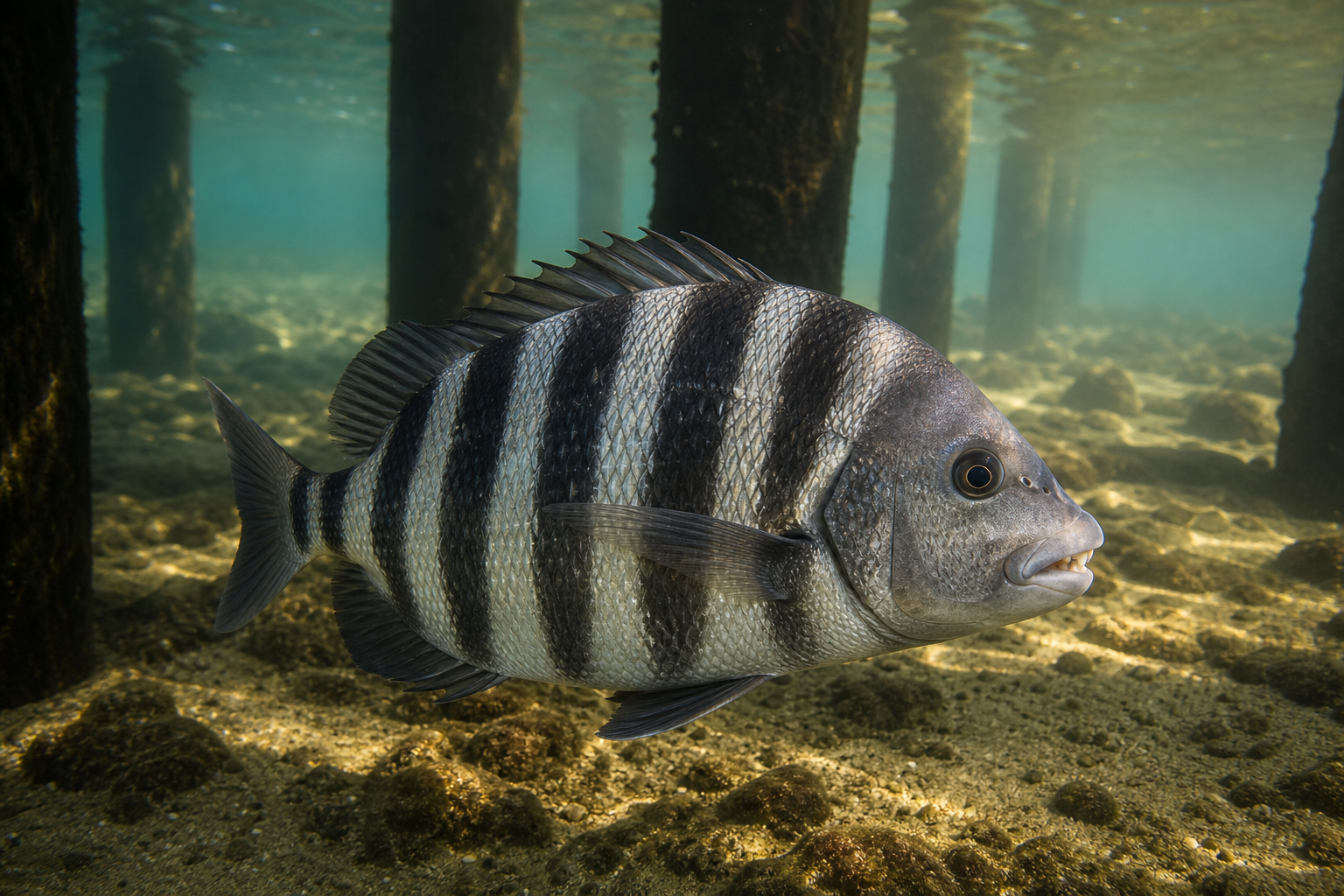
Sheepshead
Identification
Sheepshead are members of the porgy family (Sparidae). They have a deep, compressed, oval-shaped body with a silvery-gray coloration and 5-7 distinctive dark vertical bars running down the sides — earning them the nickname “convict fish.” The back is darker than the belly, and the bars are most prominent in younger fish. Sheepshead have a notably human-like set of teeth: large, prominent front incisors used for scraping and crushing, along with flat, molar-like teeth in the back of the mouth for grinding shells. They typically range from 12 to 20 inches and weigh 1 to 5 pounds on the OBX, though larger fish are caught around inlets and nearshore structure.
Habitat and Behavior
Sheepshead range from Nova Scotia down through Florida and into the Gulf of Mexico, but they are most common from the Carolinas southward. They are structure-oriented fish, almost always found near pilings, jetties, wrecks, reefs, and bridge abutments. Sheepshead feed by scraping barnacles, mussels, and other encrusting organisms from hard surfaces, and they also consume crabs, shrimp, and small fish. Their diet is heavily dependent on hard-shelled prey, which is why their teeth are so specialized. On the OBX, sheepshead are primarily found around pier pilings, inlet jetties, and the pilings of the Bonner Bridge and other bridges. They are somewhat seasonal, appearing in late spring and remaining through early fall.
Fishing Techniques
Sheepshead fishing is a specialized game that rewards anglers who fish tight to structure. The standard setup is a bottom rig or Carolina rig with a small hook (size 1 to 1/0) and just enough weight to get the bait down — often 1/2 to 2 ounces. The key is placing the bait directly adjacent to pilings, rocks, or bridge fenders. Many sheepshead anglers use a float rig to suspend bait at a specific depth next to pilings. Sheepshead are notorious bait-stealers with very subtle bites — they rarely slam the bait, instead lightly mouthing it. The old saying is “you set the hook before you feel the bite.” Anglers who wait for a strong pull will lose their bait every time. Watch the line for subtle movement or the slightest tap and set the hook immediately.
Baits and Lures
Fiddler crabs are the gold standard bait for sheepshead on the OBX. These small crabs can be collected from mud flats and marsh edges, particularly around inlets and sound-side areas. A fiddler crab hooked through the body and fished next to a piling is nearly irresistible to sheepshead. Barnacles scraped from pilings and fished on a small hook are also excellent. Fresh shrimp will catch sheepshead but also attract a lot of unwanted attention from other species. Small pieces of clam can work as well. The key is using small, hard-shelled baits that match what sheepshead naturally eat. Artificial lures are generally not effective for sheepshead.
Best Times and Locations on the OBX
Sheepshead appear on the OBX in late spring (May-June) and remain through October, with July-September being peak months. OBX piers are the most accessible sheepshead grounds — Avalon, Nags Head, and Jennette’s piers all hold sheepshead around their pilings. The key is fishing the pilings, not casting out into open water. Oregon Inlet and the Bonner Bridge pilings are top spots for sheepshead, as are the jetties at Hatteras Inlet. Nearshore wrecks and artificial reefs also hold sheepshead for boat anglers. Fishing the slack tide is often most productive, as sheepshead are more likely to be actively feeding around structure when the current isn’t ripping. Look for pilings and structure that are covered in barnacles — that’s sheepshead habitat.
Regulations
Sheepshead are managed by the NC Division of Marine Fisheries. The minimum size limit is 12 inches total length. The recreational daily bag limit is 10 fish per person. There is no closed season. Always verify current NC DMF regulations, as size and bag limits can be updated.