Shrimp (Brown, White, Pink)
Identification
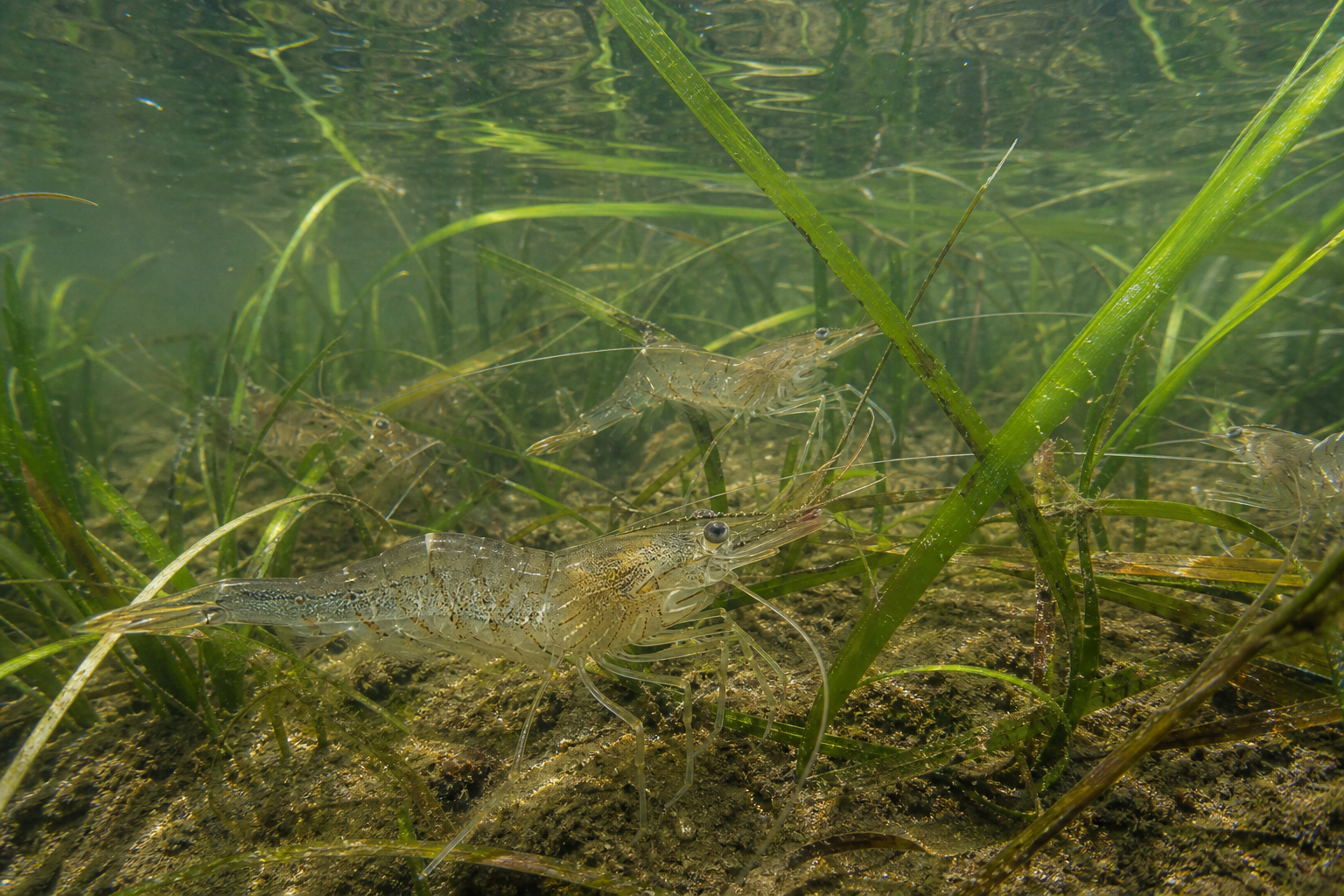
Three species of penaeid shrimp inhabit OBX waters. Brown shrimp (Penaeus aztecus) are the most common, with a brownish to grayish-green body and a distinctive dark band on the tail. White shrimp (Penaeus setiferus) are lighter, pale grayish-green to bluish, with longer antennae and a more slender body. Pink shrimp (Penaeus duorarum) are pinkish-red with a dark spot on the abdomen. All three reach 6–8 inches in the estuaries. Brown shrimp dominate the summer catch, white shrimp appear later in the season, and pink shrimp are the least common but prized for their sweet flavor.
Habitat and Behavior
Shrimp move through a predictable life cycle: adults spawn offshore in winter, post-larvae drift into the estuaries in spring, and juveniles grow in the nutrient-rich marsh creeks and sounds. By summer, adolescent shrimp migrate back toward the inlets, fattening up on their way out. On the OBX, the Pamlico Sound, Roanoke Sound, and the vast marsh systems behind Hatteras and Ocracoke are prime shrimp nursery habitat. Shrimp are bottom-dwellers that bury in mud during the day and become active at night, feeding on detritus, small organisms, and algae. Tide and moon phase strongly influence their movement — shrimp push with the falling tide toward inlet mouths, which is exactly when cast netters intercept them.
Harvesting Techniques
Cast netting is the primary recreational method for catching shrimp on the OBX. A 6–10 foot radius cast net thrown over schooling shrimp in shallow creeks or near inlet edges is highly effective. Baiting is a key technique: fish meal or commercial shrimp bait (like Purina AquaMax) is mixed with clay or sand into balls and tossed into shallow water to attract and hold shrimp, then the area is netted after 15–30 minutes. This “baiting” method is especially popular in the shallows of Pamlico Sound. Drop nets from docks and bridges also work — lower a baited net to the bottom and lift periodically. Commercially, shrimp trawls dragged behind boats in the sounds harvest the bulk of the catch, but this requires a commercial license and gear restrictions apply.
Best Times and Locations on the OBX
Shrimp season on the OBX typically runs from June through November, peaking from August to October when shrimp have reached harvestable size and are migrating toward the inlets. Oregon Inlet, Hatteras Inlet, and Ocracoke Inlet are the three major shrimp funneling points — shrimp concentrate in the channels leading out. The marsh creeks behind Avon, Buxton, and Frisco hold shrimp earlier in the season. The Pamlico Sound flats near Stumpy Point and Engelhard are legendary for bait-and-cast-net shrimp. Nighttime under dock lights around marinas in Wanchese and Oregon Inlet can be outstanding — shrimp are attracted to light and are easy to see and net. An incoming tide pushes shrimp into creeks; a falling tide pulls them out and concentrates them in channels.
Regulations
Recreational shrimp harvesting in NC is regulated by the Division of Marine Fisheries. With a Recreational Commercial Gear License (RCGL), anglers can harvest up to 1 quart of shrimp with heads on (or 2 quarts heads off) per person per day using licensed gear. Cast netting for personal consumption is permitted without a license, but quantities are limited. Commercial shrimping requires a Standard Commercial Fishing License (SCFL) and trawl gear must meet minimum mesh size requirements. NC has implemented trawl bycatch reduction device (BRD) requirements in sounds. Always verify current limits with NCDEQ before harvesting.