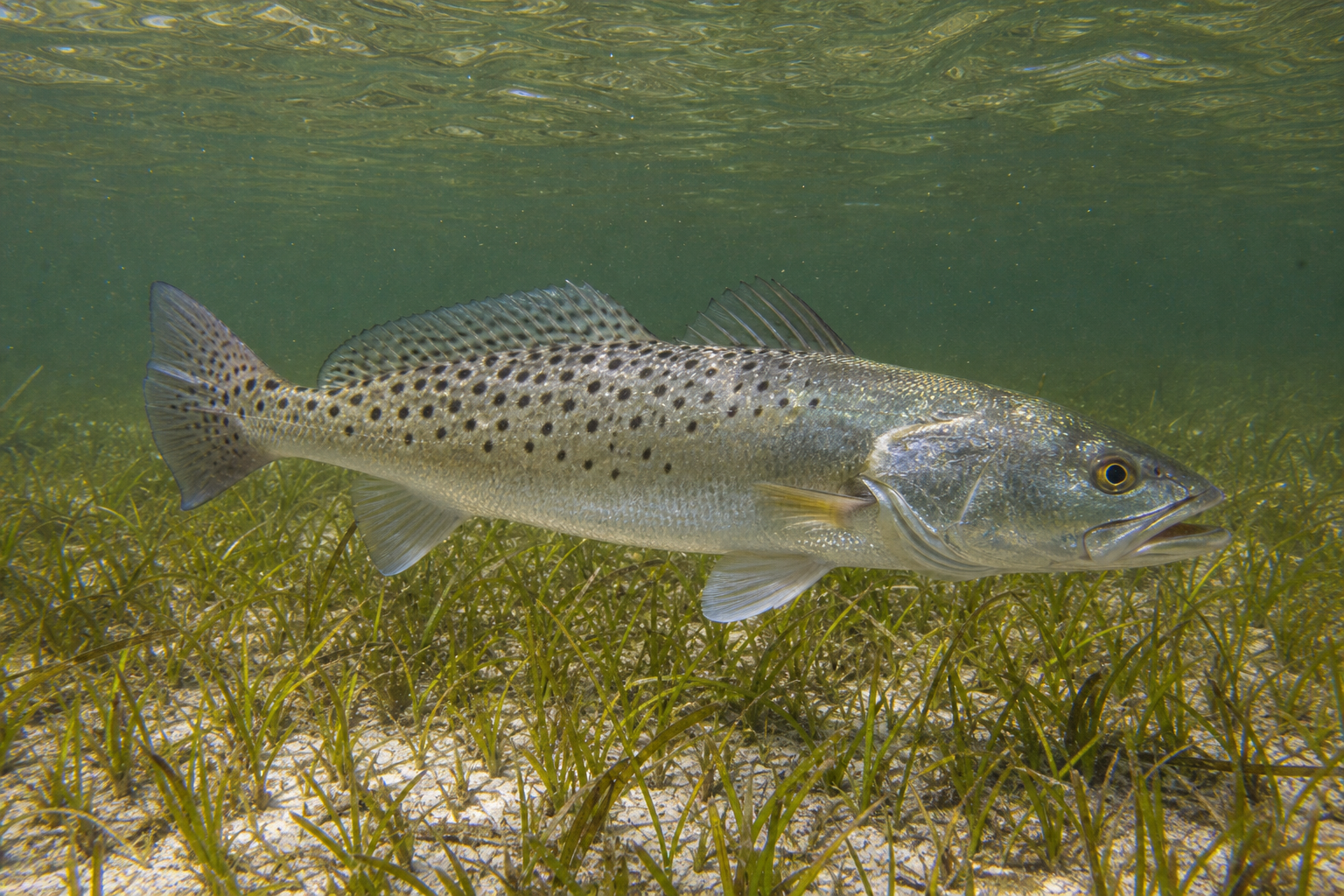
Speckled Trout (Cynoscion nebulosus)
Speckled trout — also known as spotted seatrout — are one of the most popular inshore game fish on the Outer Banks. Their aggressive strikes, willingness to hit a wide variety of lures and baits, and fine table quality make them a staple target for both shore and boat anglers. On the OBX, speckled trout are targeted year-round in the sounds but peak during the spring through fall transition periods.
Identification
Spotted seatrout have an elongated, silvery body with a pale yellowish-green back covered in distinct black spots. Their most identifying feature is the pair of prominent canine teeth in the upper jaw, giving them the “trout” moniker despite being a member of the drum family Sciaenidae. The dorsal and caudal fins are also heavily spotted, and there is often a dark blotch at the base of the pectoral fins. Adults typically range from 14 to 20 inches and 1 to 4 pounds, but gator trout exceeding 24 inches and 6 pounds or more show up every season in Pamlico Sound.
Habitat and Behavior
Speckled trout thrive in estuarine environments throughout the Outer Banks. They are found over grass flats in Pamlico Sound, along the edges of marsh islands, around oyster bars, and near dock pilings. They are ambush predators that use structure to conceal themselves before striking passing prey. Speckled trout favor water temperatures between 68°F and 83°F, and will move to deeper holes and channels during cold snaps — a pattern well known to winter anglers fishing the deep sloughs behind Oregon Inlet and Hatteras.
Speckled trout are most active during low-light periods — dawn, dusk, and under overcast skies. They are prolific surface feeders, and listening for “pops” on a calm morning is one of the best ways to locate actively feeding schools.
Fishing Techniques
Casting Lures: Soft plastics on jig heads are the workhorse lure for speckled trout. A 1/8 to 1/4 oz jig head tipped with a 3-inch Gulp shrimp or curly-tail grub worked slowly along grass flats and oyster bars will outproduce almost anything else. Suspending twitch baits like the MirrOlure 52MR are classic winter producers in deeper water.
Live Shrimp Under a Float: When trout are holding around docks, oyster bars, or grass edges, a live shrimp fished under a popping cork or sliding float is deadly. Set the depth so the shrimp suspends just above the grass or structure and give occasional pops to draw attention.
Jigging: Vertical jigging in deeper holes, inlet sloughs, and around pier pilings with a bucktail or soft plastic jig will catch speckled trout holding near the bottom, especially during winter cold-water periods.
Baits and Lures
Live shrimp are the number-one live bait for speckled trout on the OBX. Rig them on a 1/0 circle hook under a float or free-lined over grass flats. Mud minnows are an excellent alternative, especially in winter when shrimp are scarce. They stay lively on the hook and are a natural prey item in the sounds.
Gulp shrimp in new penny or natural color rigged on a light jig head are the top artificial. They outfish real shrimp in many situations due to their scent dispersion. Topwater plugs like the Heddon Super Spook Jr. in bone or chartreuse produce explosive strikes during summer mornings on the shallow grass flats.
Tackle Recommendations
- Rod: 7-foot light to medium spinning rod for flat and backwater fishing
- Reel: 2500–3000 size spinning reel with 10–15 lb braid
- Leader: 20–30 lb fluorocarbon leader
- Hook: 1/0–2/0 circle hook for live bait; 1/8–1/4 oz jig heads for soft plastics
Best Times and Locations on the OBX
The speckled trout season on the Outer Banks runs from spring through fall, with peak windows in April-May and again September-October. Best locations include:
- Pamlico Sound grass flats behind Oregon Inlet and Nags Head
- Roanoke Sound between Manteo and the Nags Head causeway
- Hatteras Inlet backwaters — especially around oyster bars
- Oregon Inlet bridge pilings during tide changes
- Ocracoke Inlet and surrounding marshes
Regulations
In North Carolina, the recreational bag limit for spotted seatrout is 4 per person per day with a minimum size of 14 inches total length. The fishery is managed by the NC Division of Marine Fisheries and regulations can change seasonally — always check current NC DMF rules before heading out. Speckled trout are a resilient species when handled carefully; use wet hands or a rubber net and release fish quickly to ensure survival.