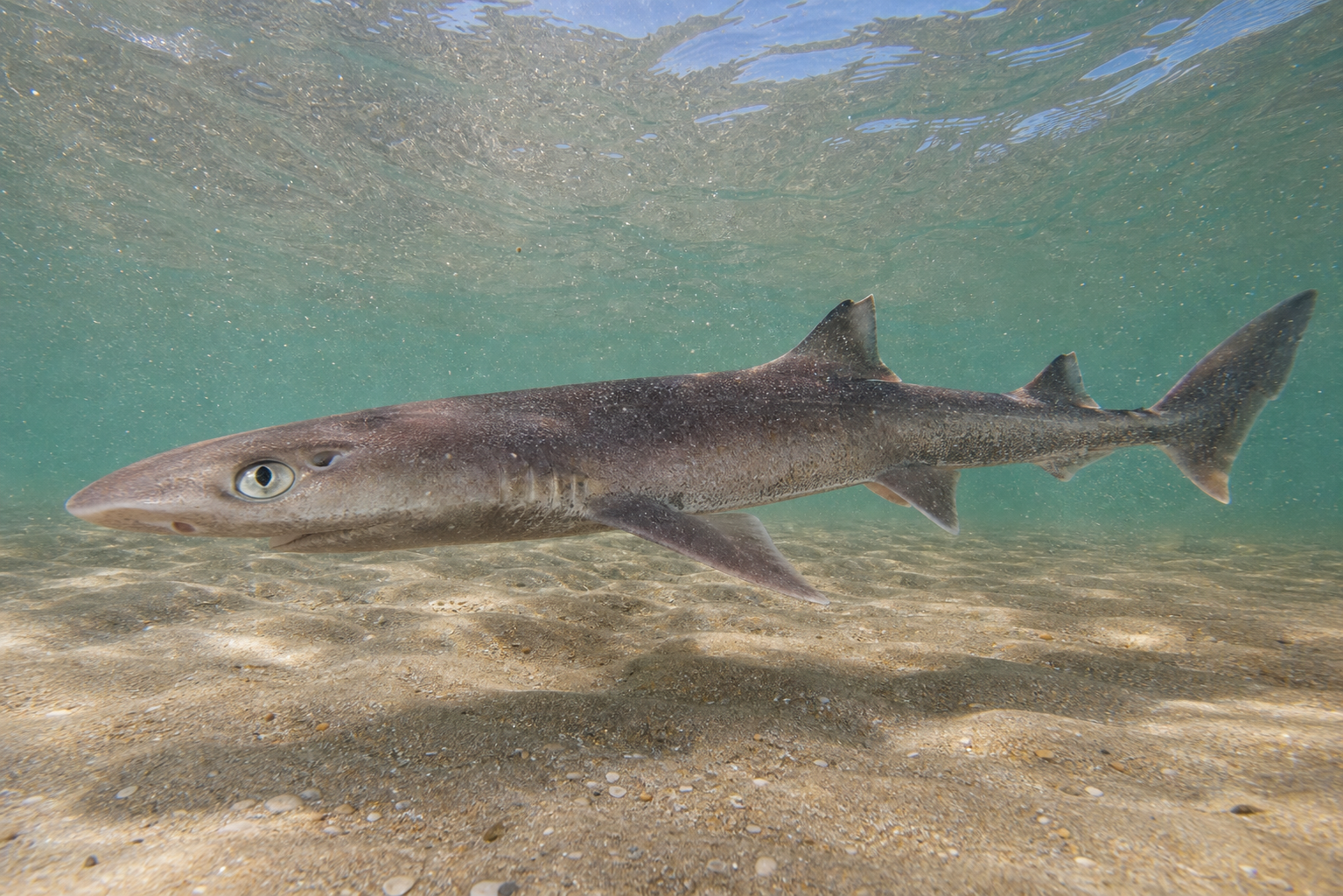
Spiny Dogfish
Identification
Spiny dogfish are small sharks, typically ranging from 2 to 4 feet in length and weighing 5 to 15 pounds on the OBX. They have a slender, streamlined body with a gray to brownish-gray back, fading to a pale white belly. The most distinctive features are the two spines on the dorsal fins — one spine precedes each of the two dorsal fins. The first dorsal fin is larger than the second, and there are no anal fins. Spiny dogfish have a long, pointed snout and small teeth that are similar in both jaws, adapted for gripping rather than tearing. White spots may be present along the sides of younger fish. They are often caught in large numbers when they move through an area, as they travel in massive schools segregated by size and sex.
Habitat and Behavior
Spiny dogfish are one of the most abundant shark species in the world, ranging from the Arctic to temperate waters worldwide. On the OBX, they are primarily a winter and early spring visitor, appearing when water temperatures drop below 60°F. They are highly migratory, moving south in winter and north in summer. Spiny dogfish are schooling fish that travel in large packs, often numbering in the hundreds or thousands. They are predatory, feeding on small fish, squid, crustaceans, and other marine organisms. On the OBX, dogfish are often considered a nuisance by surf and pier anglers, as they can overrun a fishing spot and make it nearly impossible to keep bait on the bottom long enough for more desirable species to find it.
Fishing Techniques
Spiny dogfish are not typically a targeted species on the OBX — they are more often an incidental catch (or nuisance) when bottom fishing for other species. The standard bottom rig — a fish-finder or Carolina rig with a 3-6 oz sinker and a 4/0 to 6/0 circle hook — will readily take dogfish. Cut bait on the bottom is the most effective presentation. Use heavier leader material (40-60 lb test) to prevent the dogfish’s rough skin and teeth from fraying the line. When dogfish are thick in the surf or around a pier, they can make fishing for other species nearly impossible, as they will find and take almost any bait fished on the bottom. Some anglers will switch to float rigs or fish higher in the water column to avoid dogfish when they are abundant.
Baits and Lures
Cut bait is the most effective bait for spiny dogfish — strips of mullet, menhaden, mackerel, or any available fish fished on the bottom will produce. Squid is also very effective and is often what dogfish are caught on when anglers are targeting other species. Shrimp will also take dogfish, though it is less durable than cut bait or squid. The key for dogfish is fresh, smelly bait fished on the bottom — they locate food primarily by scent. Larger bait pieces can help select for larger dogfish and avoid the smallest individuals. Artificial lures are generally not effective for dogfish, as they are scent-oriented bottom feeders.
Best Times and Locations on the OBX
Spiny dogfish are a cold-water species on the OBX, appearing in late fall (November) and remaining through early spring (April). They are most abundant during the winter months of December through February, when water temperatures are at their coldest. All OBX piers can produce dogfish during the winter, though fewer piers are open during this period. Jennette’s Pier in Nags Head and Avalon Pier are typically the most accessible winter piers. The surf from Kitty Hawk to Hatteras can also produce dogfish, particularly during the winter months. Inlets — Oregon Inlet and Hatteras Inlet — can hold concentrations of dogfish as they move through with the tides. Dogfish are more active during the day and tend to feed most aggressively on the moving tide.
Regulations
Spiny dogfish are managed by the Atlantic States Marine Fisheries Commission (ASMFC) and the NC Division of Marine Fisheries. There is no closed season and no minimum size limit in NC state recreational waters. There is no recreational bag limit. However, spiny dogfish have mildly venomous spines that can cause painful wounds — handle them carefully and avoid contact with the spines in front of the dorsal fins. Always check current NC DMF regulations, as commercial quotas and management measures can affect recreational rules.