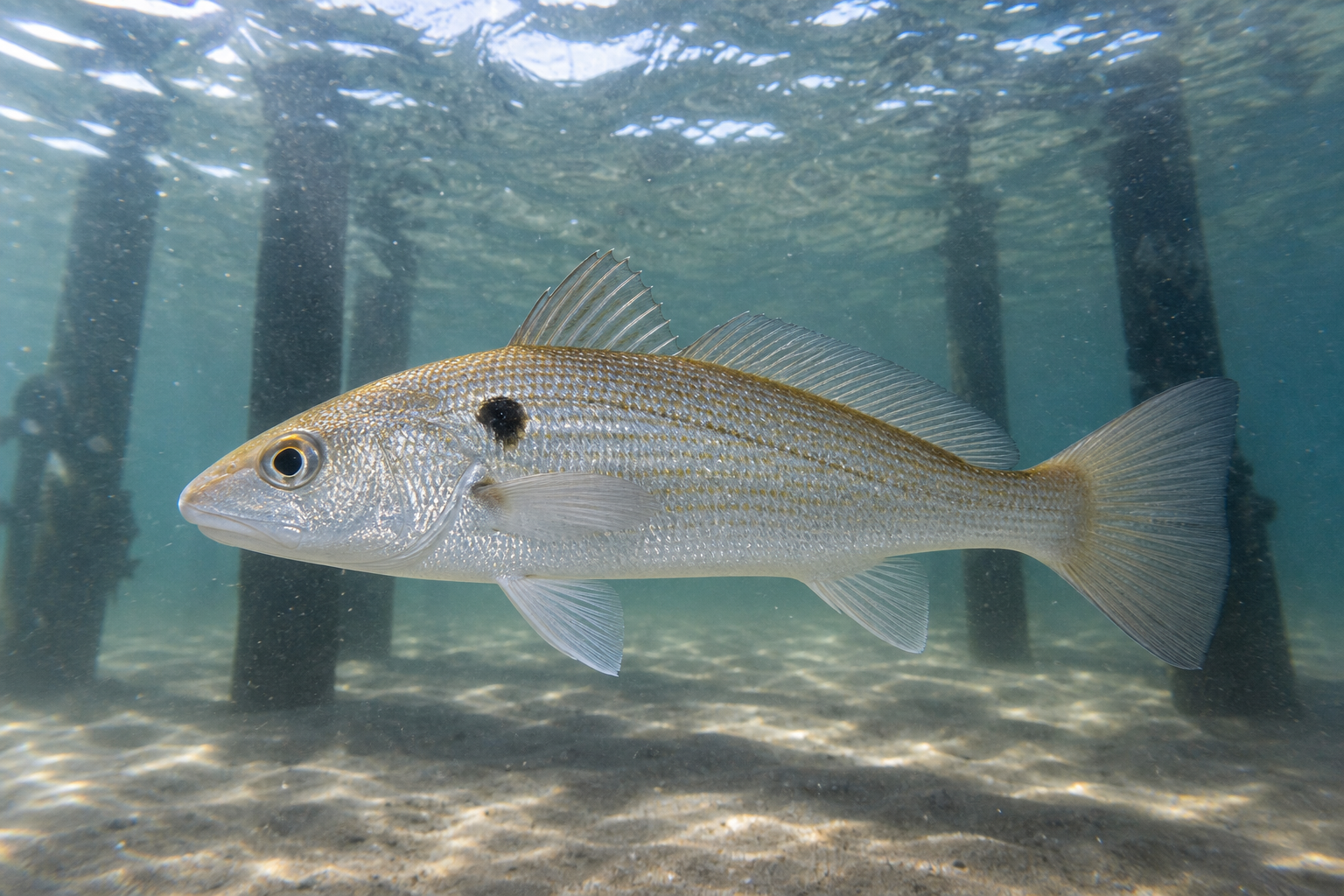
Spot
Identification
Spot are small members of the drum family (Sciaenidae), typically ranging from 8 to 12 inches and weighing under a pound. They have a deep, compressed body with a silvery-gold coloration and a distinctive dark spot located above the upper edge of the pectoral fin base — the feature that gives them their name. Their fins are pale yellow to orange, and the caudal fin is slightly forked. Juvenile spot have darker, more mottled coloration that lightens as they mature. They are often confused with small croaker but lack the barbels on the lower jaw that croaker possess.
Habitat and Behavior
Spot are bottom-dwelling fish that range from Massachusetts Bay down through the Gulf of Mexico, but they are most abundant from the Chesapeake Bay to the Carolinas. They inhabit shallow coastal waters, estuaries, and the surf zone, typically in depths less than 20 feet. Spot are schooling fish that feed by sifting through bottom sediment for small invertebrates, crustaceans, and organic matter. They are highly tolerant of a wide range of salinities, which allows them to penetrate deep into estuarine systems. In the fall, large schools of spot migrate south and offshore to wintering grounds, passing through OBX waters in massive numbers — this is the famous “spot run” that anglers eagerly anticipate each year.
Fishing Techniques
Spot are one of the easiest fish to catch from OBX piers and the surf, making them ideal for beginners and kids. The standard setup is a two-hook bottom rig (often called a “spot rig”) with small hooks (size 4 to 6) fished directly on the bottom. Use just enough weight to hold bottom — typically 1 to 2 ounces depending on current. Spot are not line-shy, so mono main line in the 10-15 lb test range is perfectly adequate. When the spot run is on, it’s not uncommon to catch two at a time on every drop. Some anglers use a float rig near pier pilings to keep bait just off the bottom and avoid crabs and skates.
Baits and Lures
Bloodworms are the undisputed king of spot baits — small pieces threaded onto a small hook are deadly. Fish Bites synthetic baits (particularly the “Bag O’ Worms” bloodworm formula) work nearly as well and stay on the hook much longer, making them a practical choice for a full day of fishing. Squid strips and small pieces of fresh shrimp will also produce. The key is using small bait pieces on small hooks — spot have relatively small mouths. Keep bait pieces to roughly the size of a nickel or smaller.
Best Times and Locations on the OBX
The legendary OBX spot run typically begins in late August and peaks in September through October. During this period, spot migrate southward past the Outer Banks in enormous schools. Avalon Pier in Kill Devil Hills, Nags Head Pier, and Jennette’s Pier are all top producers during the fall run. Oregon Inlet and the catwalks beneath the Bonner Bridge are also excellent spots (pun intended). In the surf, any beach from Kitty Hawk to Hatteras can produce limits of spot during the fall run, particularly on the sound side and near inlets where fish funnel through. Early morning and late afternoon bites tend to be strongest, and an incoming tide often improves the action. Fall spot fishing is a beloved OBX tradition — when the run is on, anglers line the rails of piers shoulder to shoulder filling coolers.
Regulations
Spot are managed by the NC Division of Marine Fisheries. There is no closed season and no minimum size limit. The recreational daily bag limit is 50 fish per person combined with other unregulated sciaenids. Always check the current NC DMF regulations and size limits before heading out, as rules can change seasonally.