Stone Crab
Identification
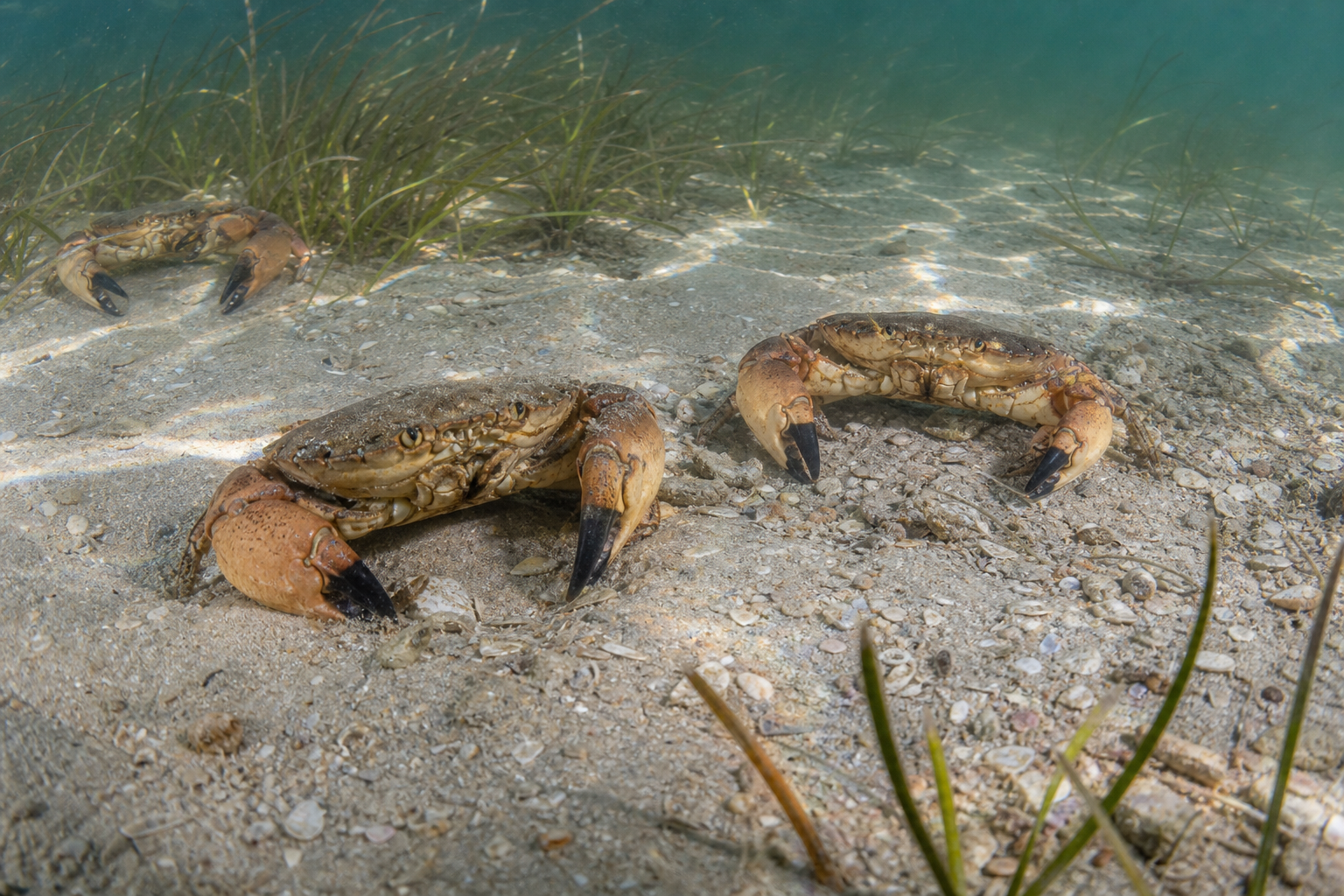
The stone crab (Menippe mercenaria) is a large, heavy-shelled crab recognizable by its massive, asymmetrical claws — one oversized crusher claw and a smaller pincer claw. The carapace is brownish-red to dark purplish with light-tan mottling, and the claws are tipped with black. Adults can reach a carapace width of 5–6 inches, but the claws are the real prize: the meat is sweet, firm, and considered a delicacy rivaling blue crab. Unlike blue crabs, stone crabs cannot swim; they are purely benthic walkers that cling to hard structure.
Habitat and Behavior
Stone crabs prefer hard-bottom habitat — rocky jetties, oyster reefs, seawalls, bridge pilings, and limestone outcrops. On the Outer Banks, they are most commonly found around the rock groins at Oregon Inlet, the jetties at Hatteras Inlet, and the bulkheading around marinas in Wanchese and Oregon Inlet fishing centers. They are nocturnal feeders, emerging from crevices at night to hunt oysters, small fish, and other crabs. During the day they tuck deep into rock crevices, making them difficult to access without traps. Stone crabs are more cold-tolerant than blue crabs and can be harvested well into the winter months when blue crabs have moved offshore or buried in mud.
Harvesting Techniques
The most effective method for harvesting stone crabs on the OBX is using crab traps (pots) set adjacent to hard structure. Standard wire crab pots baited with fish heads or mullet chunks work well, though stone crabs are less likely to enter a pot than blue crabs — patience and soak time matter. Place pots right against jetty rocks or along bulkheaded shorelines. Some harvesters use drop nets or hand-collection by turning rocks at low tide, but this is labor-intensive and stone crabs can pinch with tremendous force. In Florida, the sustainable practice is to remove only one claw and release the crab alive; this practice is less common in NC but is a good conservation approach for recreational harvesters who want to maintain local populations.
Best Times and Locations on the OBX
Stone crabs are most active from October through April when water temperatures cool and they move shallower to forage. The Oregon Inlet rock groin and jetty system is the premier stone crab spot on the northern OBX. The Hatteras Inlet jetties, the rock revetments around the Bonner Bridge, and the bulkheaded areas in Wanchese harbor are all productive. Around Ocracoke, the rock walls at the inlet and the ferry terminal pilings hold stone crabs. Set traps in 3–10 feet of water adjacent to structure, and let them soak overnight for best results. Calm weather periods make checking traps easier and safer near inlet rocks.
Regulations
Stone crabs fall under NC Division of Marine Fisheries crab regulations. Recreational crab pots are limited to two pots per person without a license (with a Recreational Commercial Gear License, up to five pots). There is no specific stone crab size or bag limit distinct from general crab regulations in NC, but harvesters should check current NCDEQ rules as regulations can change. Always avoid harvesting egg-bearing females. The claw-only harvest practice (removing one claw and releasing the crab) is recommended for sustainability, though it is not mandated in NC as it is in Florida.