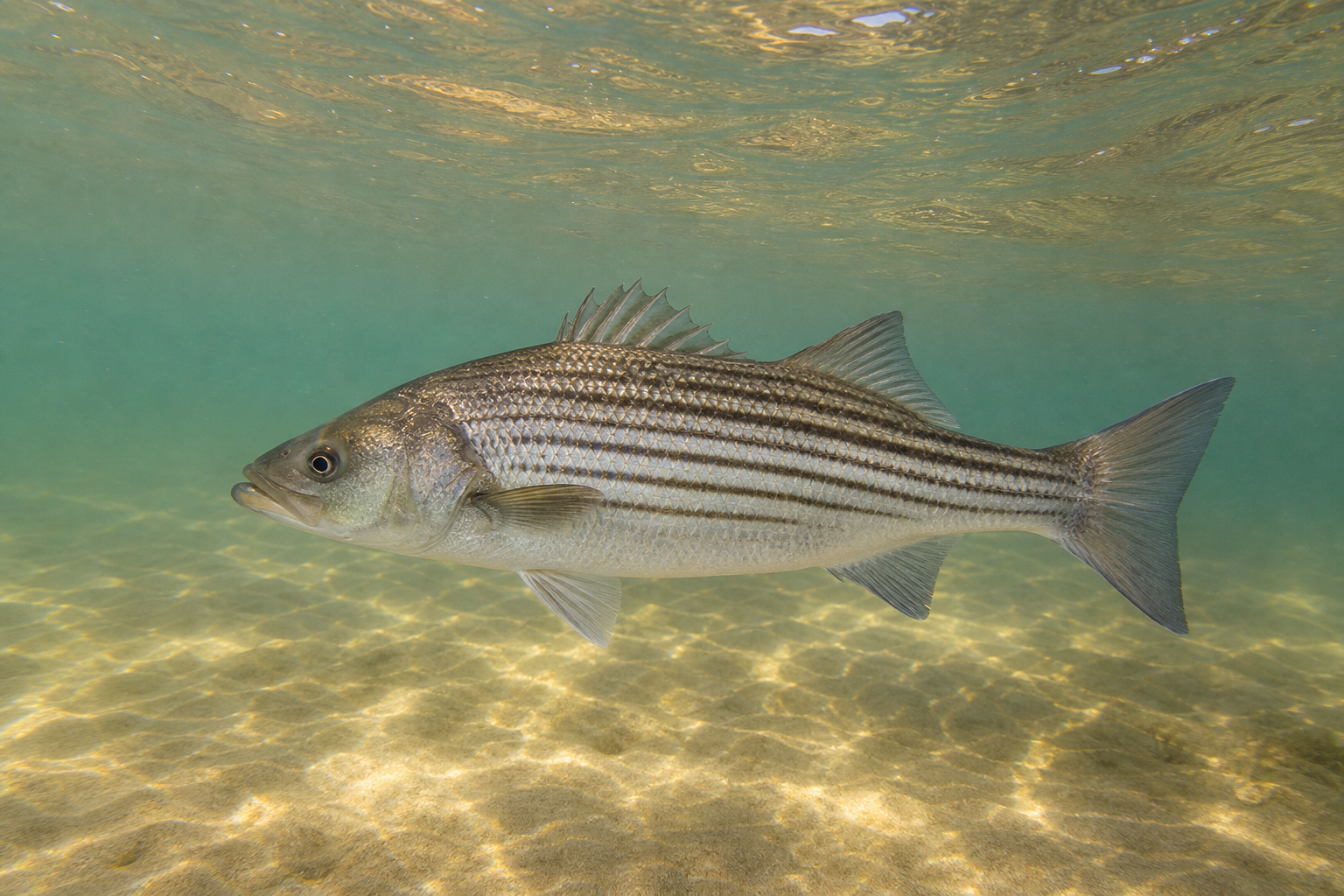
Striped Bass (Morone saxatilis)
Striped bass — “rockfish” to locals — are the premier winter game fish on the Outer Banks. While the OBX is famous for summer species, the winter striped bass fishery draws dedicated anglers who know that the coldest months produce some of the largest striped bass on the East Coast. The area around Oregon Inlet is a winter striped bass destination of national renown.
Identification
Striped bass have an elongated, silvery-green body with a white belly and the characteristic dark horizontal stripes running from the gills to the tail — usually seven or eight distinct lines. They have two separate dorsal fins, a spiny first and soft second, and a robust forked tail. Adults on the OBX typically range from 10 to 40 pounds, but trophy fish exceeding 50 pounds are caught every winter. The state record striped bass was caught in Oregon Inlet.
Habitat and Behavior
Striped bass are anadromous fish that spend the majority of their adult life in saltwater and move into estuaries and rivers to spawn. On the Outer Banks, the winter fishery centers around Oregon Inlet and the nearby surf, where migrating striped bass from the Chesapeake and Hudson river systems gather to feed on menhaden, spot, and other prey. They favor water temperatures between 42°F and 55°F and are most active during tide changes and overcast days.
Striped bass are structure-oriented ambush predators that hold in inlet current seams, along channel edges, behind shoals, and in the wash zone of the surf. They feed most actively at dawn and dusk and during periods of moving water.
Fishing Techniques
Casting: Casting swim shads, bucktails, and metal lip swimmers from the surf near Oregon Inlet is one of the most productive winter techniques. A 5–6 inch swim shad in white or chartreuse worked slowly in the current will draw strikes from feeding striped bass. Focus on the last two hours of falling tide.
Trolling: Trolling mojos, umbrella rigs, and Stretch 25 plugs along the channel edges of Oregon Inlet and the bridge is the standard boat technique. Run lures at varying depths and speeds to find what the fish want. This method produces the largest striped bass of the season.
Live Eel Fishing: Drifting a live eel through Oregon Inlet on a moving tide is one of the most effective techniques for trophy striped bass. Use a single 8/0 circle hook through the eel’s lip and a fish-finder rig with enough weight to keep the eel near the bottom. This method catches big fish when nothing else works.
Baits and Lures
Live eels are the premier bait for winter striped bass on the OBX. Eels can be purchased at tackle shops in Nags Head and Manteo during the winter season. Rig them on a fish-finder rig with a 6/0–8/0 circle hook and fish them in inlet current seams.
Cut bait — fresh menhaden, spot, or mullet chunks — fished on the bottom in the surf near Oregon Inlet will produce striped bass, particularly during falling tides.
Swim shads in the 5–7 inch range are the top surf fishing lure. Tsunami and Bass Assassin swim shads in white, chartreuse, or pearl are consistent producers. Rig them on a 1–2 oz jig head and work them slowly along the bottom in the current.
Tackle Recommendations
- Rod: 9–11 foot heavy surf rod for surf fishing; 7-foot medium-heavy boat rod for trolling and eeling
- Reel: 5000–8000 size spinning reel with 30–50 lb braid for surf; conventional reel with 40–65 lb braid for boat
- Leader: 50–80 lb fluorocarbon or monofilament leader
- Hook: 6/0–8/0 circle hook for live eels; 1–2 oz jig heads for swim shads
Best Times and Locations on the OBX
Striped bass season on the Outer Banks runs November through March, with peak action in December and January. Best locations include:
- Oregon Inlet — the epicenter of winter striped bass fishing on the OBX
- Oregon Inlet bridge pilings — trolling and live eeling around the bridge structure
- Bodie Island surf — accessible beach fishing near Oregon Inlet
- Hatteras Inlet — secondary location for winter striped bass
- Nearshore waters off Kitty Hawk and Kill Devil Hills — trolling during mild winter days
Regulations
Striped bass regulations in North Carolina are complex and can differ between ocean and sound waters. The current recreational bag limit is 1 per person per day with a minimum size of 28 inches total length. Ocean and Albemarle Sound management areas may have different seasons — always check current NC DMF regulations before fishing. Striped bass are a managed species under the Atlantic States Marine Fisheries Commission, and regulations can change mid-season based on quota. Compliance is critical to the recovery and sustainability of the striped bass fishery. When releasing striped bass, handle fish gently, support their body, and revive them in moving water before release.