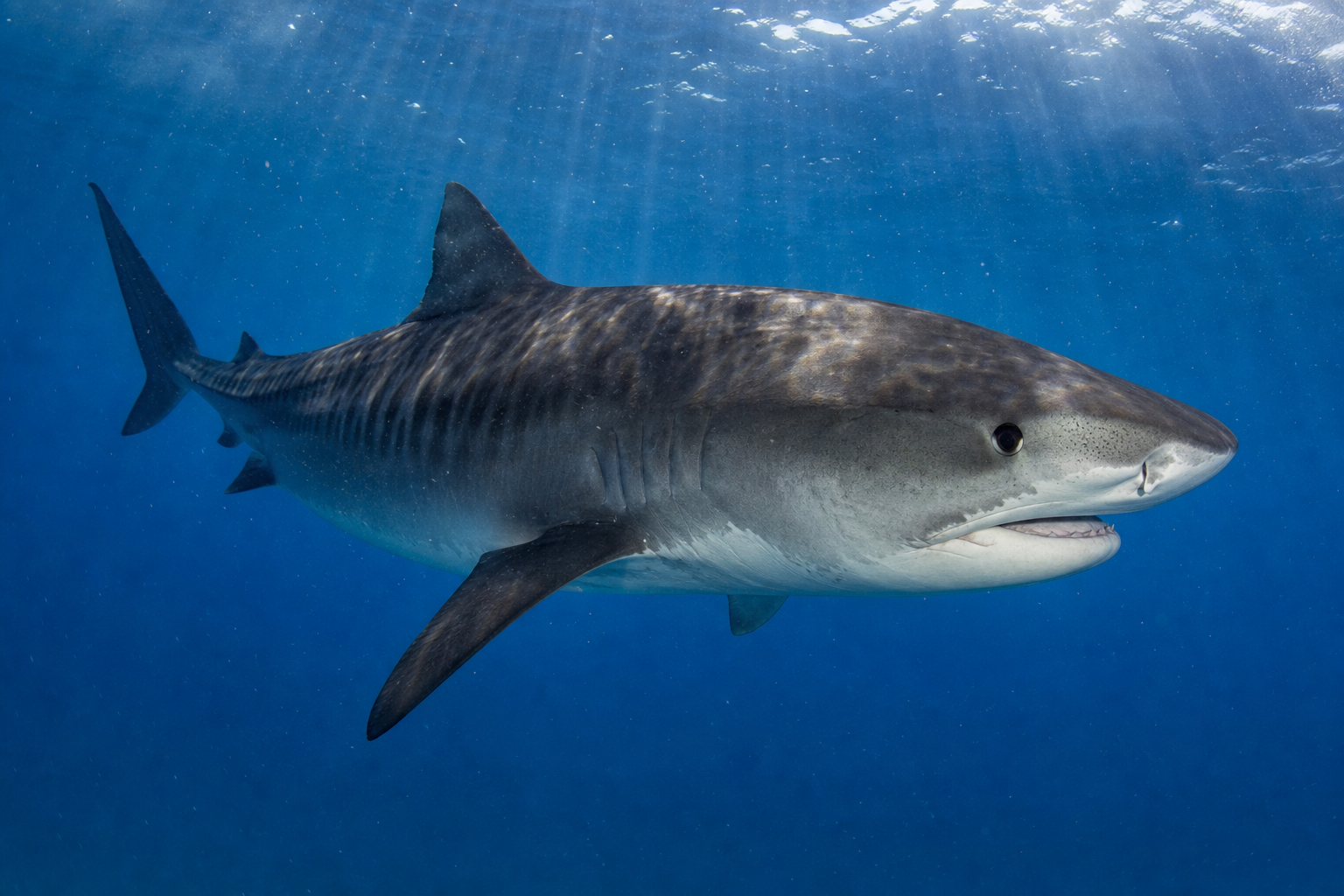
Tiger Shark
Identification
The tiger shark is one of the largest sharks encountered on the Outer Banks, capable of reaching 12 to 14 feet and over 800 pounds. The body is robust and heavy, with a blunt, squared-off snout and a broad head. The most distinctive feature is the dark vertical stripes or bars on the back and sides, which are most pronounced in younger animals and fade in larger, older specimens. The dorsal fin is tall and distinctly sickle-shaped. The tail is long and powerful, with a long upper lobe. Tiger sharks are unmistakable when encountered — their sheer size and distinctive markings set them apart from all other OBX shark species.
Habitat and Behavior
Tiger sharks are nomadic apex predators that roam the warm waters of the OBX from early summer through fall. They favor deeper nearshore waters, inlet mouths, and the outer sandbars where baitfish and other sharks congregate. Tigers are opportunistic feeders with a notoriously broad diet that includes fish, rays, sea turtles, seabirds, and other sharks. They are primarily nocturnal hunters, becoming most active from dusk through the night. Tiger sharks are known for their curiosity and will investigate almost anything in their path. On the OBX, they are most frequently encountered at Cape Point and the outer bars of Hatteras Island.
Fishing Techniques
Targeting tiger sharks from the OBX surf is the pinnacle of land-based shark fishing. This requires specialized heavy gear — a 13 foot or longer surf rod, a large conventional reel (Penn Senator 6/0 or equivalent) or heavy spinning setup, 50-80 lb braid main line, and a heavy wire cable leader of 150 lb minimum. Use a fishfinder rig with 8-12 oz of lead to hold bottom in strong currents. The standard approach is kayak delivery of large baits past the outer sandbar into deeper water. This is a team effort — one person paddles the bait out while the angler manages the line. Fish at night for the best chance at a tiger. For charter fishing, drifting or anchoring with large baits in deep water near the beach or in inlet channels produces tiger shark encounters.
Baits and Lures
Tiger sharks require large, fresh baits. A whole fresh bunker, a live bluefish, or a large mullet is the standard offering. The bigger the bait, the better — tigers are drawn to substantial meals. Fresh tuna or bonito chunks, when available from charter catches, are excellent. The scent trail from a large, bloody bait is what attracts a tiger shark from a distance. Baits should be fished on the bottom or suspended just above it. Use a 10/0 to 12/0 circle hook rigged on a heavy cable leader. Avoid using frozen or stale bait — freshness is critical for attracting these large, wary predators.
Best Times and Locations on the OBX
Tiger sharks are summer and fall visitors to the OBX, most commonly encountered from June through October. Cape Point at Hatteras is the premier location for land-based tiger shark fishing on the entire East Coast. The unique geography of the point, where the Gulf Stream swings close to shore, creates the deep-water access that tigers require. Hatteras Inlet and the southern Hatteras Island beaches also produce tigers. Ocracoke Island’s outer bars can hold tigers during peak summer conditions. Fish from late evening through the night, especially around the new moon when darkness is greatest. Tide changes during the night are the most productive periods.
Regulations
Tiger sharks are prohibited from recreational harvest in NC state waters — catch and release only. They are managed as a prohibited species under the federal shark management plan. If you are fortunate enough to hook a tiger shark, handle it with extreme care. Keep the shark in the water at all times — never drag a large tiger onto the beach. Use a dehooker or cut the leader as close to the hook as possible. Support the shark’s body in the water, allow it to recover, and let it swim away under its own power. Large tiger sharks can take 15 minutes or more to revive properly. Tag and report data to NOAA if the shark is already tagged.