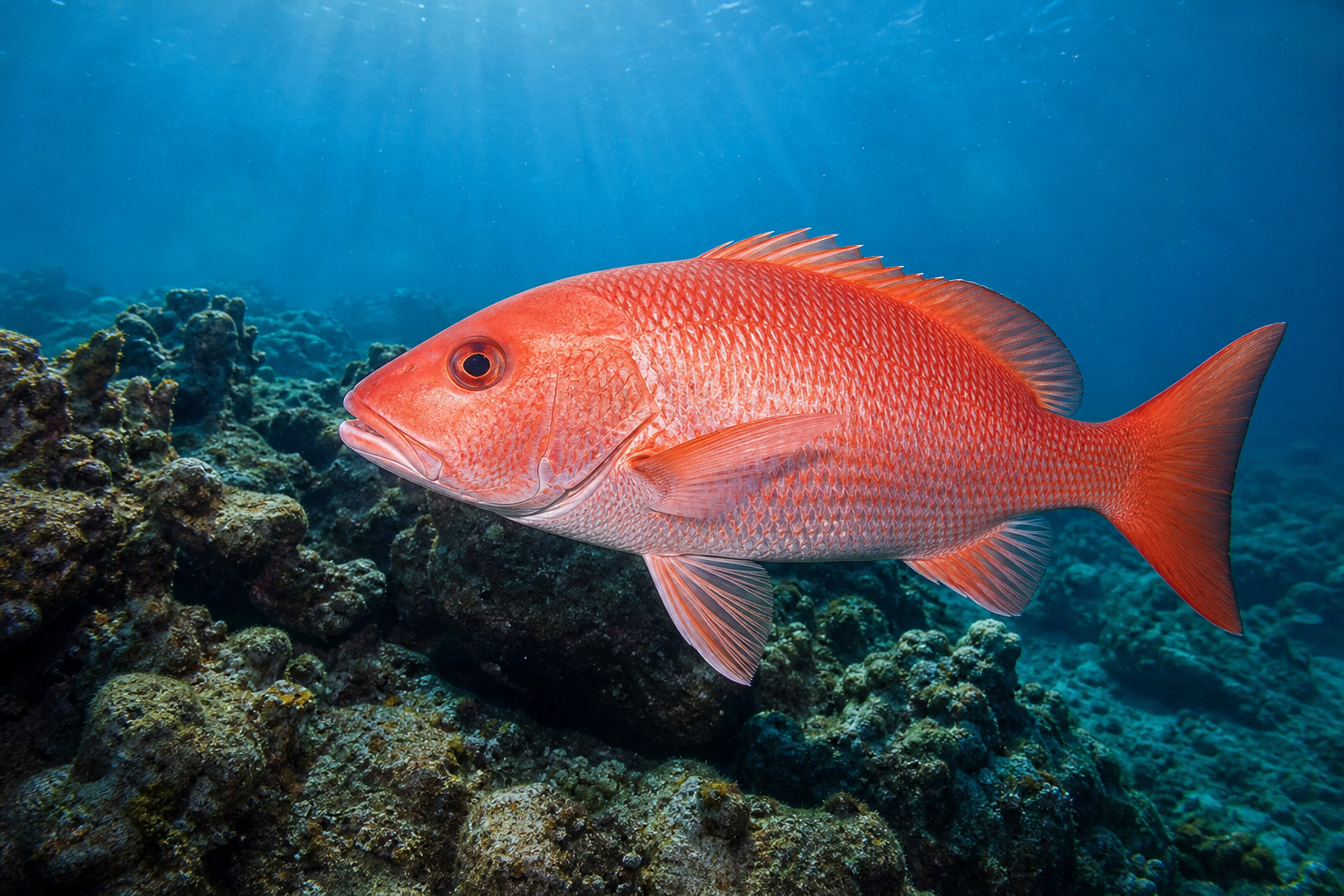
Vermilion Snapper
Identification
Vermilion snapper, commonly called “beeliners” by OBX anglers, are a small, colorful snapper species. They have a vermilion-red body with narrow yellow or gold stripes running along the sides. The belly is lighter, often pinkish. The tail is deeply forked, and the dorsal fin has a dark margin. Beeliners typically run 1 to 3 pounds, with exceptional fish reaching 5 pounds. Their small size is more than made up for by their excellent table quality and the sheer numbers that can be caught on good structure.
Habitat and Behavior
Vermilion snapper are schooling fish found over hard bottom, wrecks, reefs, and artificial structure in 60 to 300 feet of water. Unlike many bottom fish that hold tight to structure, beeliners often suspend in the water column above the structure in large schools. They are aggressive feeders that compete with each other for food, which makes them easy to catch once a school is located. Vermilion snapper feed on small fish, shrimp, squid, and other invertebrates. They are a primary food source for larger predators including grouper and king mackerel.
Fishing Techniques
Bottom fishing with multi-hook rigs (chicken rigs or two-hook bottom rigs) is the standard beeliner technique. Small hooks (size 2 to 2/0) on 30-40 lb leader, baited with squid strips, are lowered to the bottom and then slowly retrieved to find the depth where the school is holding. Because beeliners often suspend above the structure, finding the right depth is key. Vertical jigging with small jigs (1-2 oz) tipped with squid is also very effective. Chumming while drifting over structure can bring schools to the surface and create fast action.
Baits and Lures
Squid strips are the universal beeliner bait — easy to obtain, easy to rig, and vermilion snapper love them. Cut bait (menhaden, sardine chunks) also works. Small live baitfish, when available, produce larger fish. Small bucktail or tube jigs in pink, white, or chartreuse, tipped with squid, are effective for vertical jigging. The key with beeliners is small hooks and small pieces of bait — they have small mouths and steal large baits.
Best Times and Locations on the OBX
Vermilion snapper are available year-round, with the best action May through October. They are abundant on virtually every offshore wreck, reef, and piece of hard bottom in 60-300 feet of water. The Triangle Wrecks, the wreck of the U-1105, artificial reef sites off Oregon Inlet, and hard bottom areas along the 30-fathom curve all hold good beeliner populations. They are a primary target on “head boat” (party boat) trips from Pirate’s Cove and Hatteras Harbor, where anglers fill coolers with these delicious fish.
Regulations
Vermilion snapper are managed under the South Atlantic Fishery Management Council. The minimum size is 12 inches total length. The recreational bag limit is 10 per person per day (within the snapper aggregate, which may include vermilion, silk, queen, and other snapper species). The season is open year-round. Commercial harvest is quota-managed. Check current NC Marine Fisheries Commission and SAFMC regulations.