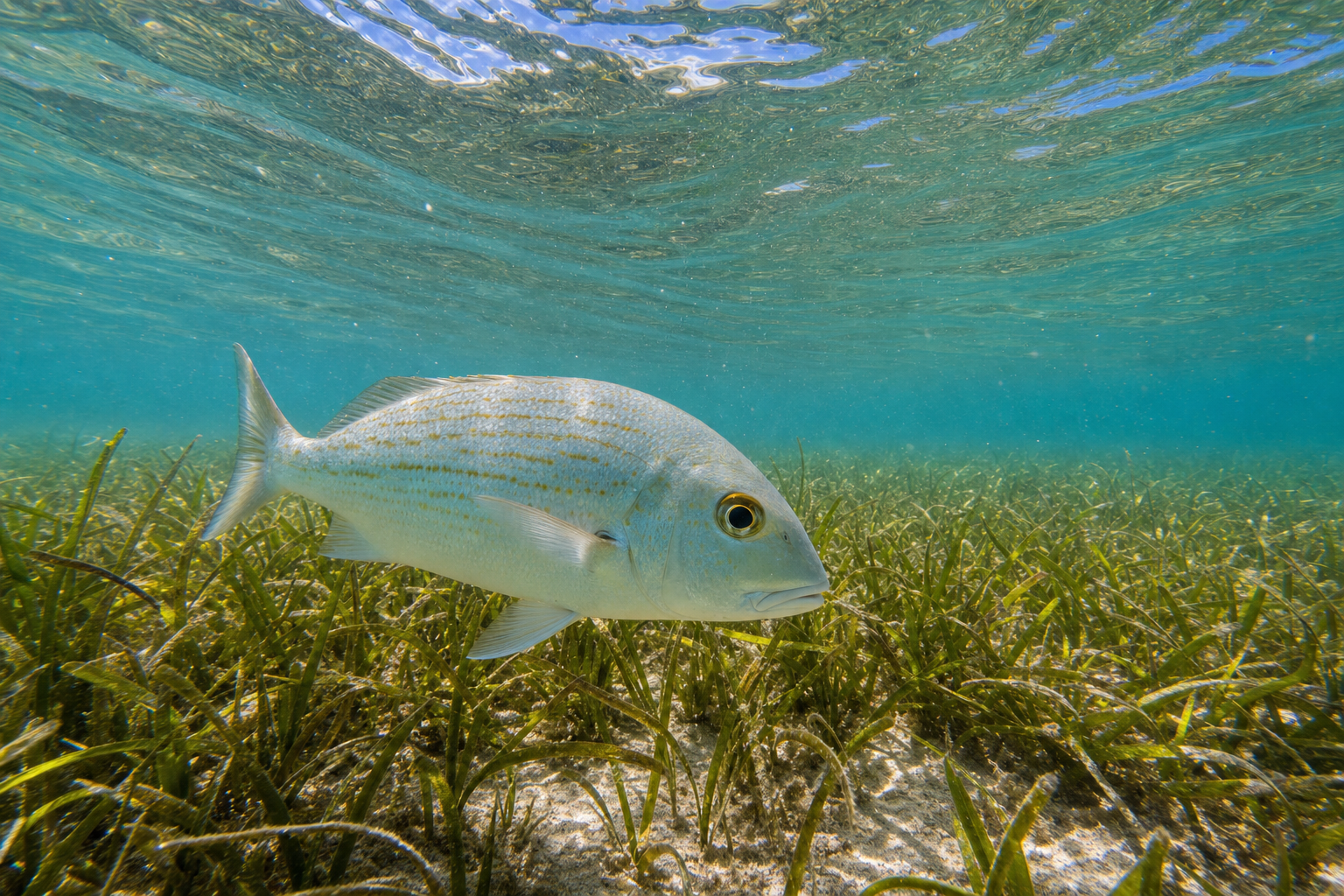
White Grunt
Identification
White Grunt (Haemulon plumieri) are a medium-sized reef fish typically 10 to 15 inches and 1 to 2 pounds, though larger specimens reach 18+ inches. They have an elongated, silvery body with a subtle yellow-bronze tint and — most distinctively — a series of narrow yellow or bronze stripes running horizontally along the sides. The inside of the mouth is notably bright red or orange, which is visible when the fish opens its mouth. They have a blunt head, small eyes, and a moderately large mouth. The name “grunt” comes from the grinding sound they make with their pharyngeal teeth when caught and held.
Habitat and Behavior
White grunt are structure-oriented fish found on hard-bottom reefs, wrecks, artificial reefs, and rocky ledges. Off the Outer Banks, they appear on the mid-shelf reefs in 60 to 130 feet of water, often mixed in with porgy, triggerfish, and sea bass. They are schooling fish that congregate around structure, and when you find a school, the action can be fast and furious. Grunt are primarily nocturnal feeders in their natural range but readily bite during the day on OBX reef trips. They feed on small crustaceans, shrimp, crabs, small fish, and polychaete worms, foraging along the bottom near structure.
Fishing Techniques
A standard two-hook bottom rig with a 3- to 5-ounce sinker is the primary setup. Hooks in size 1 to 2/0 suit the grunt’s medium-sized mouth. Circle hooks work well and reduce deep-hooking. Fish the rig straight down over structure — grunts hold tight to the bottom and around reef pieces. Drift fishing over wrecks and hard bottom is effective. White grunt are not particularly leader-shy, so standard 30–40 lb monofilament or fluorocarbon leaders work fine. When the bite is on, you can catch them two at a time on a double-hook rig.
Baits and Lures
Squid strips are the universal grunt bait and work as well as anything. Fresh shrimp is equally effective and sometimes preferred when grunt are the primary target. Cut bait (mullet or menhaden strips) and bloodworms also produce. Keep bait pieces moderate in size — grunts have good-sized mouths for reef fish but still benefit from properly sized offerings. Tip small jigs with squid for a slightly different presentation that can trigger aggressive strikes.
Best Times and Locations on the OBX
White grunt are primarily a warm-water species on the OBX, most common from May through October. They are more frequently encountered on the southern OBX reefs off Hatteras and Ocracoke than on the northern reefs off Oregon Inlet, as they are near the northern edge of their common range. The wrecks and hard-bottom areas in 70–120 feet off Hatteras Inlet are prime grunt territory. Party boats running bottom trips out of Hatteras regularly catch white grunt as part of the mixed reef catch, especially during the heat of summer.
Regulations
White grunt do not have a specific federal bag limit in the South Atlantic region but are managed as part of the NC unclassified reef fish category. There may be aggregate or state-specific regulations. Always check current NC DMF regulations for the latest size and bag limits before fishing, as rules for reef fish species are periodically updated.