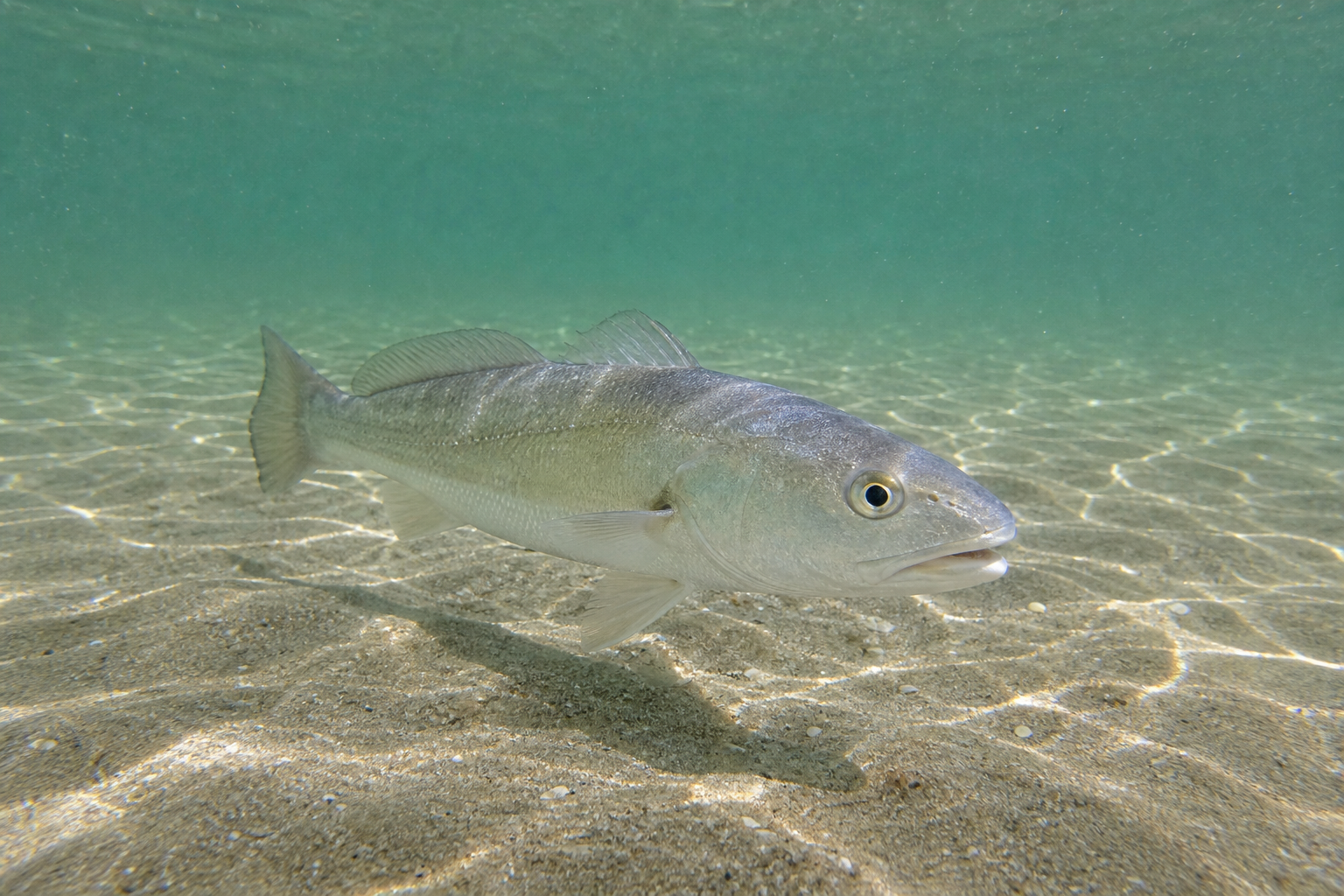
White Hake
Identification
White Hake (Urophycis tenuis) is a deep-water cod species with an elongated, somewhat eel-like body that is reddish-brown to olive-brown on top, fading to a pale silvery belly. They have a distinctive barbel (whisker) on the chin, two dorsal fins — the first short and tall, the second long and continuous — and a long anal fin. White hake can grow quite large, commonly 20 to 30 inches and 3 to 8 pounds on the OBX shelf, with larger specimens exceeding 15 pounds. They resemble red hake but are generally larger, have a more compressed body, and prefer deeper water. The pelvic fins are modified into thin, thread-like filaments.
Habitat and Behavior
White hake are a cold-water, deep-water species found on the outer continental shelf and shelf break. Off the Outer Banks, they inhabit the deeper mud-bottom zones in 300 to 600+ feet of water, typically at the edge of the shelf where the seafloor drops away into the abyss. They are most common during the winter months when cold water extends further south and onto the shelf. White hake are bottom-dwelling predators that feed on a mix of fish, squid, crustaceans, and polychaete worms. They are not structure-oriented like reef fish — they prefer soft mud and sand bottom where they can forage along the seafloor.
Fishing Techniques
White hake are a deep-drop species, requiring heavy tackle and significant weight to reach the bottom in 300+ feet of water. Electric reels (Diawa Tanacom, Lindgren-Pitman) are commonly used for this type of fishing. A single or double-hook bottom rig with 16 to 32 ounces of lead is standard, depending on depth and current. Use strong hooks (size 4/0 to 7/0) and heavy leaders (80–130 lb) to handle the depth, pressure, and the size of the fish. Drift fishing is typical since anchoring in these depths is impractical. The key is keeping the bait on the bottom — if you’re not touching bottom, you’re not fishing for hake.
Baits and Lures
Squid is the primary bait for white hake and is fished either as large strips or whole small squid. Cut bait from mackerel, herring, or bonito is also effective, and whole small fish can produce larger hake. Clam baits will catch hake but are less preferred than fish-based baits. Baits should be substantial — this is big-fish fishing in deep water, and small bait pieces will be picked apart by the abundance of small deep-water species before a hake finds them. A large strip of squid or a chunk of mackerel on a 5/0 hook is a solid starting point.
Best Times and Locations on the OBX
White hake are strictly a winter and early spring species on the OBX, available from November through April when cold water conditions push them onto the mid-Atlantic shelf. They are targeted on the deepwater drops at the shelf edge off the central and northern OBX — areas in 300–600 feet that are typically accessed on dedicated deep-drop trips out of Oregon Inlet or Hatteras Inlet. These are not routine party boat targets; they require specialized full-day or overnight trips with experienced captains who know the shelf-edge drops. Calm winter days with manageable current provide the best conditions for this demanding fishery.
Regulations
White hake do not have a species-specific recreational bag limit in North Carolina but are subject to general finfish regulations. The New England Fishery Management Council manages the commercial fishery, and federal rules may apply in offshore waters. Always check current NC DMF and NOAA Fisheries regulations before targeting deep-water species, as rules for shelf-edge fish can be complex and are periodically updated.