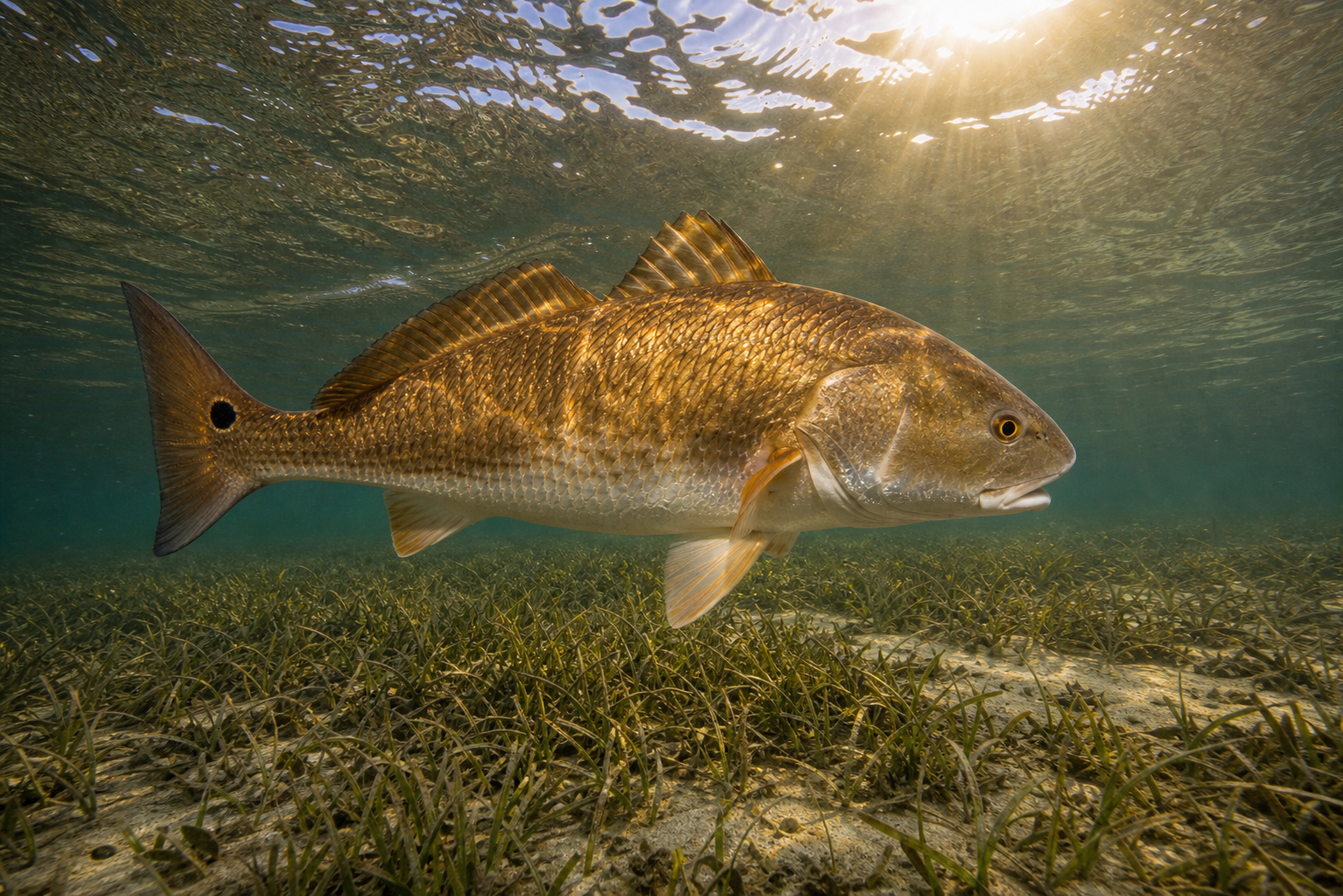
The Outer Banks is a year-round fishery, but knowing when to go — and what to target — can make the difference between a banner day and a skunking. This month-by-month guide breaks down what’s biting, water temperatures, and the best techniques for every month along the OBX coast.
January — Cold Water, Big Drum
Water temps bottom out in the mid-40s to low 50s°F. Most fair-weather anglers stay home, but dedicated surf fishermen know January can produce some of the best red drum action of the year. Massive schools of bull drum cruise the Hatteras Island surf, and a well-placed cut mullet or crab bait can land you a 40-inch-plus fish.
Species: Red drum, striped bass (catch-and-release), sea mullet, dogfish Techniques: Bottom fishing with cut bait, surf fishing near Hatteras and Ocracoke inlets Water temp: 45–55°F
February — Holdover Drum and Sea Mullet
February is the quietest month on the OBX, but persistent anglers still find action. Sea mullet (whiting) provide steady table fare in the surf, and the occasional striped bass shows up around Oregon Inlet. If you can handle the cold, the beaches are yours alone.
Species: Sea mullet, red drum (puppy drum), dogfish, skates Techniques: Bottom fishing with bloodworms, fresh shrimp Water temp: 45–52°F
March — Spring Stirrings
As water temps creep into the mid-50s, the first signs of spring appear. Puppy drum become more active in the surf, and bluefish start trickling in. March is unpredictable — you might hit a 70°F day or a 40°F blow — but the fish are waking up.
Species: Red drum (puppy drum), bluefish, sea mullet, tautog around structure Techniques: Bottom fishing, surf fishing with cut bait and bloodworms Water temp: 52–60°F
April — Spring Run Begins
April is when the OBX truly comes alive. Water temps push into the 60s, and migratory species begin showing up in force. Bluefish blitz the surf, Spanish mackerel appear near the beach, and the first cobia sightings are reported near Hatteras. It’s one of the best months for pier fishing — check out Jennette’s Pier or Nags Head Pier.
Learn more in our spring fishing guide.
Species: Bluefish, Spanish mackerel, sea mullet, puppy drum, first cobia Techniques: Surf fishing, pier fishing with Gotcha plugs and cut bait Water temp: 60–68°F
May — Cobia Season Ignites
May is cobia month on the OBX. Cobia migrate north and begin showing up along the beaches, particularly around Cape Point at Hatteras. Sight-casting for cobia from the beach or a boat is one of the most exciting fisheries on the East Coast. Meanwhile, the surf lights up with bluefish, Spanish mackerel, and the first flounder.
Species: Cobia, bluefish, Spanish mackerel, flounder, sea mullet, black drum Techniques: Sight casting for cobia, bottom fishing for flounder, trolling for Spanish Water temp: 68–74°F
June — Summer Pattern Sets In
By June, the summer pattern is locked in. Water temps are in the 70s, and the full spectrum of species is available. Offshore boats target mahi-mahi, wahoo, and billfish. Nearshore, Spanish mackerel and bluefish are thick. Flounder fishing peaks in the inlets and around structure.
Species: Cobia, flounder, Spanish mackerel, bluefish, mahi-mahi, wahoo, sea mullet, sheepshead Techniques: Bottom fishing, trolling, pier fishing, sight casting Water temp: 72–78°F
July — Peak Season
July is the busiest month on the OBX — for tourists and fish alike. Offshore, yellowfin tuna, mahi-mahi, and billfish are the targets. Inshore, flounder, speckled trout, and puppy drum keep light-tackle anglers busy. Spanish mackerel are thick near the beach, and king mackerel show up on the piers. See our summer fishing guide for the full breakdown.
Species: Mahi-mahi, yellowfin tuna, wahoo, marlin, cobia, flounder, Spanish mackerel, king mackerel, speckled trout Techniques: Offshore trolling, kite fishing, bottom fishing, pier fishing Water temp: 76–82°F
August — Hot Water, Big Fish
August water temps peak in the low 80s. Offshore fishing is red-hot for mahi-mahi and billfish. Inshore, early-morning and late-evening trips are key — the midday heat can slow the bite. Tarpon make appearances in Pamlico Sound, and the first hint of a fall pattern begins late in the month.
Species: Mahi-mahi, wahoo, marlin, tarpon, king mackerel, flounder, Spanish mackerel, sharks Techniques: Offshore trolling, inshore casting, night fishing for tarpon Water temp: 80–84°F
September — Fall Transition
September is one of the best months to fish the OBX. The crowds thin, water temps start dropping, and the fall mullet run begins. Red drum start their big fall push — this is when the bull drum return to Hatteras Inlet and Cape Point. Flounder fishing improves as fish fatten up before winter. Spanish and bluefish are still thick.
Learn more in our fall fishing guide.
Species: Red drum (bulls and puppies), flounder, Spanish mackerel, bluefish, king mackerel, false albacore Techniques: Surf fishing, sight casting for drum, bottom fishing for flounder, jigging Water temp: 74–80°F
October — The Month of the Drum
October is drum month on the Outer Banks. Bull red drum — fish over 40 inches — invade the surf and inlets. Cape Point at Hatteras becomes one of the best shore-based fishing spots on the planet. Flounder fishing peaks, and false albacore provide light-tackle blitzes near the beach. If you can only fish one month on the OBX, make it October.
Species: Red drum (bulls!), flounder, false albacore, bluefish, sea mullet, striped bass (late month) Techniques: Surf fishing with cut mullet and crab, sight casting, pier fishing Water temp: 68–76°F
November — Striped Bass Arrive
November brings the striped bass migration. Surf and inlet fishing for rockfish heats up as water temps drop into the 50s. Red drum are still around early in the month but begin tapering off. Sea mullet provide consistent surf action. The weather gets dicey, but the fishing can be outstanding.
Species: Striped bass, red drum (early), sea mullet, tautog, bluefish Techniques: Surf fishing, inshore casting with swim baits, bottom fishing Water temp: 56–66°F
December — Winter Setting In
December is quiet but productive for hardy anglers. Striped bass continue through the inlets, sea mullet are steady in the surf, and the occasional puppy drum still shows up. The beaches are empty, and the fish that remain are catchable if you dress for it. See our winter fishing guide for tips.
Species: Sea mullet, striped bass, puppy drum, tautog Techniques: Bottom fishing with bloodworms and shrimp, surf fishing near inlets Water temp: 48–58°F
Planning Your Trip
The best time to fish the Outer Banks depends entirely on what you want to catch:
- Cobia: May–June
- Red drum (bulls): September–October
- Flounder: June–September
- Spanish mackerel: April–September
- Offshore pelagics (mahi, tuna, marlin): June–September
- Striped bass: November–December
- Surf fishing variety: April–October
Check the NC saltwater fishing regulations before you go, and always verify size and bag limits — they can change mid-season. For real-time conditions, visit our conditions page.
No matter when you visit, the Outer Banks delivers some of the best saltwater fishing on the East Coast. Tight lines.