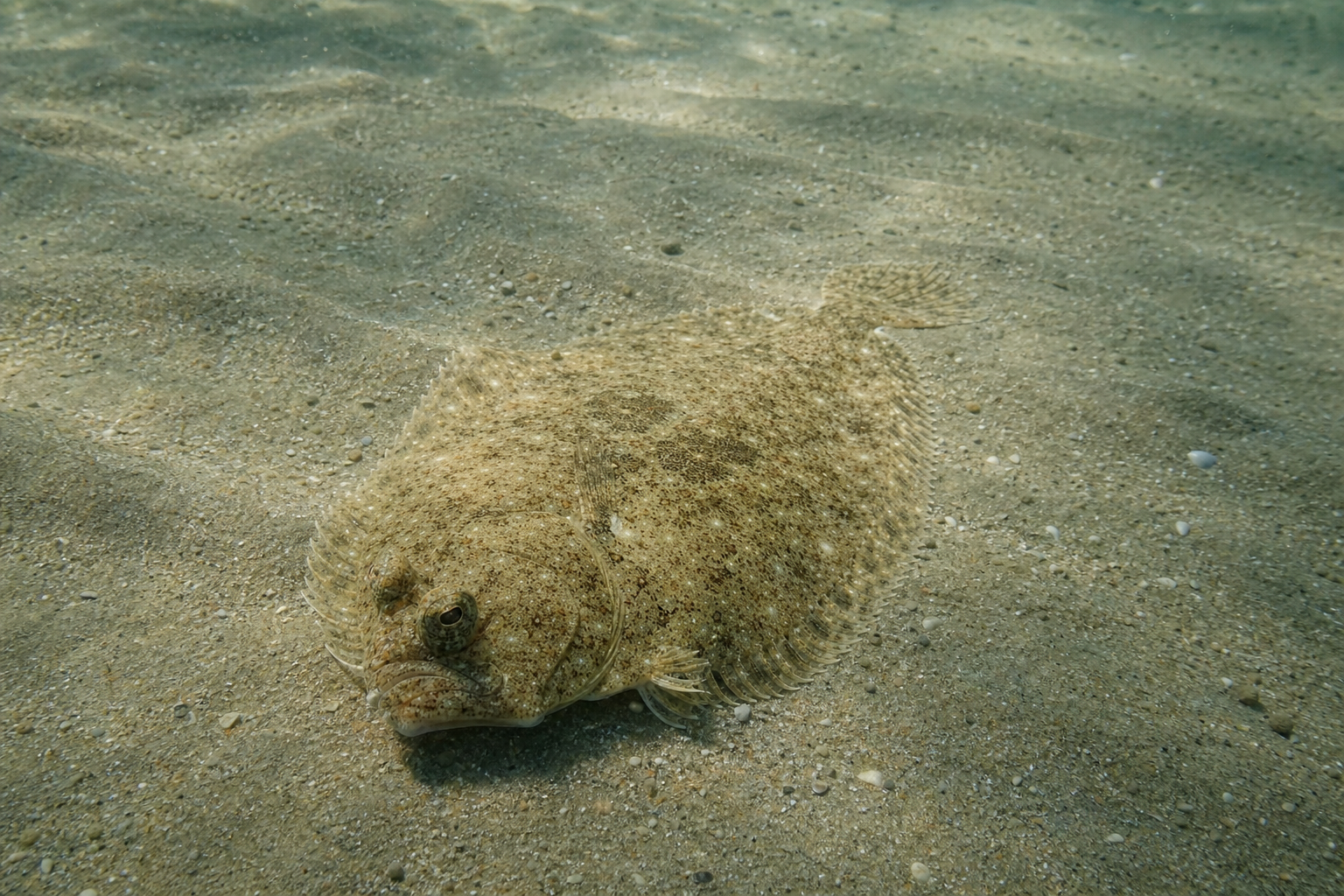
Flounder (Paralichthys dentatus)
Summer flounder — known simply as “flounder” on the Outer Banks — are one of the most popular and delicious inshore species on the OBX. These flatfish are prized for their excellent table fare and are accessible to anglers fishing from piers, kayaks, small boats, and the shore. Flounder fishing on the OBX is a relaxed, rewarding experience that’s perfect for anglers of all skill levels.
Identification
Summer flounder are flat, oval-shaped fish with both eyes on the left side of their body. They can change color to match their surroundings, ranging from sandy brown to dark olive with scattered spots and blotches. The underside is white. Adults typically range from 14 to 24 inches, with larger “doormat” flounder exceeding 24 inches and weighing 5+ pounds.
The scientific name Paralichthys dentatus translates roughly to “parallel-fish toothed,” referring to their well-developed teeth. Summer flounder are distinguishable from other flounder species by their large mouth, toothy jaw, and the eye placement on the left side. Southern flounder (Paralichthys lethostigma) are also present in OBX waters but are less common; they have eye placement on the left side as well but fewer spots.
Habitat and Behavior
Flounder are ambush predators that lie flat on the bottom, partially buried in sand or mud, waiting to strike at passing prey. They are structure-oriented fish, congregating around pier pilings, dock supports, creek mouths, channel drop-offs, and any bottom irregularity that provides cover and a feeding lane.
On the Outer Banks, flounder inhabit the sounds (Currituck, Roanoke, and Pamlico) from spring through fall. They move into the sounds as water temperatures rise in spring and return to ocean waters (through the inlets) in fall. The best flounder fishing is typically from May through October.
Flounder feeding behavior is distinctive: they lie in wait, then explode upward to grab a passing baitfish or crustacean, then return to the bottom to swallow. This means anglers must be patient — when you feel a bite, wait a few seconds before setting the hook to allow the fish to fully take the bait.
Fishing Techniques
Bottom Fishing with Live Bait: The most productive flounder technique. Use a bottom rig ( Carolina rig or fish-finder) with a live mud minnow, spot, or croaker. Drift along channel edges, around pier pilings, or across flat bottoms. When you feel a bite, wait 5–10 seconds before setting the hook.
Jigging with Soft Plastics: Use a jig head (1/4–3/8 oz) tipped with a Gulp! swimming mullet or other soft plastic. Cast and retrieve slowly along the bottom, bouncing the jig off structure. This is effective around piers, docks, and channel edges.
Drift Fishing: Drift across sound flats and channels with a bottom rig or jig setup. The moving boat covers more water and is the most efficient way to locate flounder. Use a drift sock to slow the drift in windy conditions.
Kayak Fishing: Kayaks are ideal for flounder fishing in the sounds. Paddle along channel edges, around pier pilings, and through creek mouths. Cast jigs or live bait rigs and work them slowly along the bottom.
Pier Fishing: Fish around the pilings of OBX piers with live bait or jigs. The structure attracts baitfish, which in turn attract flounder. Fish the down-tide side of pilings for best results.
Baits and Lures
Live mud minnows are the #1 flounder bait on the OBX. Available at most tackle shops, they can be fished on a Carolina rig or jig head. Hook them through the lips for a natural presentation.
Live spot or croaker (small ones, 2–4 inches) are excellent big-flounder baits. Use them live on a fish-finder rig.
Gulp! swimming mullet in chartreuse, new penny, or white is the top artificial bait. Rig on a 1/4–3/8 oz jig head and work slowly along the bottom.
Bucktail jigs tipped with a strip of squid or cut bait are effective for larger flounder. The hair adds bulk and attraction.
Squid strips on a jig head or bottom rig are a reliable fallback, especially for smaller fish.
Tackle Recommendations
- Rod: 6.5–7.5 foot medium-action spinning rod
- Reel: 2500–4000 size spinning reel with 10–15 lb braid
- Leader: 20–30 lb fluorocarbon (flounder have sharp teeth and can abrade lighter leaders)
- Jig head: 1/4–3/8 oz depending on depth and current
- Hook: 2/0–3/0 Kahle or circle hook for live bait; jig head hook for plastics
Best Times and Locations on the OBX
Flounder season on the Outer Banks runs from May through October, with the best fishing in late summer (August–September). Key locations include:
- Currituck Sound (Corolla, Duck, Kitty Hawk): Channel edges and grass beds hold flounder
- Roanoke Sound (Nags Head): Pier pilings and creek mouths are productive
- Pamlico Sound (Hatteras, Ocracoke): Vast flats and channels with good flounder populations
- OBX Piers (Avalon, Nags Head, Jennette’s): Pilings attract baitfish and flounder
- Oregon Inlet and Hatteras Inlet: Inlet channels and structure produce larger flounder
Regulations
Summer flounder are managed by both federal and state regulations. In North Carolina, the recreational bag limit is 4 per person per day with a minimum size of 15 inches total length. The season may be subject to adjustment — check current NC DMF regulations before fishing. Size and bag limits can change based on stock assessments and quota management.
Flounder fishing on the Outer Banks is a relaxing, rewarding experience that’s perfect for anglers of all levels. The combination of accessible fishing locations, good numbers of fish, and excellent eating quality makes flounder one of the most enjoyable species to target on the OBX. Whether you’re drifting a sound flat or jigging around a pier, flounder provide steady action and great meals.