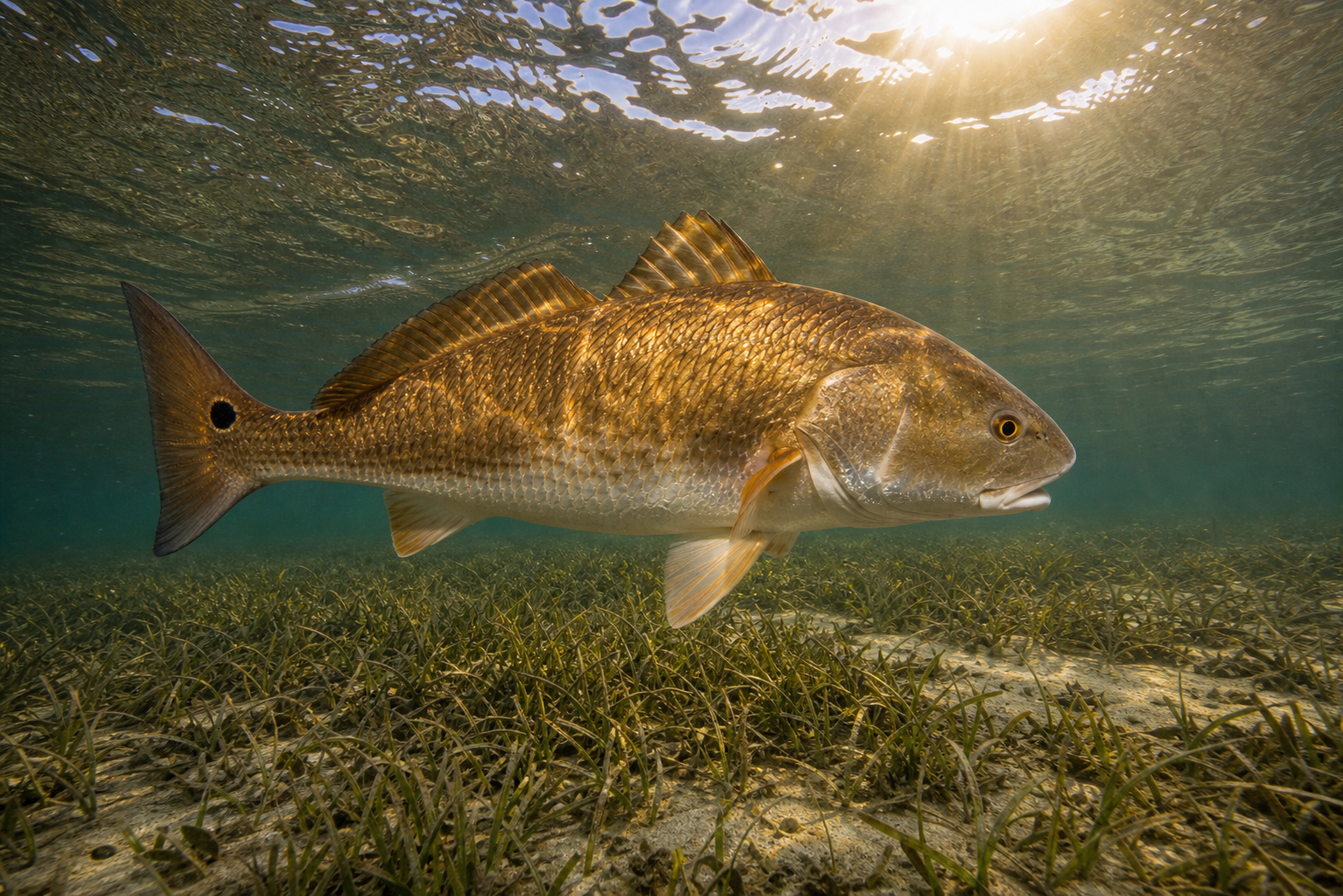
Red Drum (Sciaenops ocellatus)
Red drum — also known as channel bass, redfish, or spottail bass — are the iconic game fish of the Outer Banks and the North Carolina state saltwater fish. The fall red drum run at Cape Hatteras is legendary, drawing anglers from across the country. Red drum are prized for their fighting power, accessibility from shore, and the thrill of sight-casting to them in shallow water.
Identification
Red drum are easily identified by their copper-bronze coloration and the distinctive black spot (or spots) at the base of the tail. Juvenile drum (called “puppy drum”) are typically 14–27 inches and have a more spotted pattern. Adult drum (called “bull drum”) can exceed 40 inches and weigh over 50 pounds. As drum grow larger, their coloration tends to darken, and the spots may fade.
The species name Sciaenops ocellatus refers to the ocellated spot (eye-like marking) on the tail. This spot is believed to confuse predators into attacking the tail rather than the head, giving the drum a chance to escape. Red drum are members of the drum family (Sciaenidae), which also includes speckled trout, black drum, and croaker.
Habitat and Behavior
Red drum are incredibly adaptable fish found in a wide range of habitats. On the Outer Banks, they inhabit the surf zone, inlets, sounds, estuaries, and shallow grass flats. Puppy drum (sub-adults) are commonly found in the sounds and marshes year-round, while larger bull drum migrate along the ocean beaches, particularly during the fall.
Red drum are primarily bottom feeders that use their chin barbels and sensory pores to detect food in sand and mud. They feed on crabs, shrimp, mullet, menhaden, and other small fish. Their feeding behavior often creates visible “tailing” or “waking” in shallow water, making them ideal for sight-casting.
The fall drum run on the OBX is triggered by cooling water temperatures and migration patterns. Large schools of bull drum move along the beaches, particularly at Cape Hatteras point, where the sandbar structure concentrates fish. This run typically peaks in October and November.
Fishing Techniques
Surf Fishing: The most popular method for catching bull drum on the OBX. Use a fish-finder rig with a circle hook (5/0–8/0) baited with fresh mullet chunks or cut bunker. Cast just beyond the first sandbar into the slough. Fish at dawn, dusk, and at night for the best results. The fall run at Cape Hatteras point is as good as surf drum fishing gets.
Sight Casting (Kayak/Skiff): Puppy drum in the sounds can be sight-cast in shallow water. Look for tails, wakes, or mud boils. Cast a soft plastic (Gulp! swimming mullet, Z-Man paddletail) or a spoon ahead of the fish. A quiet approach is essential — drum spook easily in shallow water.
Pier Fishing: Piers along the OBX produce drum, particularly during fall runs. Use a fish-finder rig with cut bait and fish at night when drum are most active.
Charter Fishing: Inshore charter captains can put you on bull drum in the inlet and along the beaches. This is a good option for anglers without 4WD access to the point.
Baits and Lures
Fresh mullet chunks are the #1 surf bait for drum. Use chunks about the size of a silver dollar on a circle hook. Fresh is critical — frozen mullet works but fresh catches more fish.
Cut bunker (menhaden) is equally effective, especially for bull drum. Use larger chunks for bigger fish.
Live mud minnows are excellent for puppy drum in the sound. Fish them on a jig head or under a float rig.
Blue crabs, halved or quartered, are a natural drum food source and can be deadly in the sound and surf.
Soft plastics (Gulp! swimming mullet in chartreuse or new penny, Z-Man paddletails) are the top artificial lures for sight-casting and sound fishing.
Spoons (gold Johnson spoons, silver spoons) are effective for sight-casting and trolling for drum.
Tackle Recommendations
Surf Fishing for Bull Drum:
- Rod: 11–13 foot heavy surf rod
- Reel: Conventional or spinning with 20–30 lb braid
- Leader: 50–80 lb monofilament or fluorocarbon shock leader
- Weight: 4–8 oz pyramid sinker
- Hook: 6/0–8/0 circle hook
Sound Fishing for Puppy Drum:
- Rod: 7–8 foot medium spinning rod
- Reel: 3000–4000 size spinning reel with 10–15 lb braid
- Leader: 20–30 lb fluorocarbon
- Lure: 1/4–1/2 oz jig head with soft plastic
Best Times and Locations on the OBX
Red drum are caught year-round on the Outer Banks, but the peak season is September through November during the fall run. Key locations include:
- Cape Hatteras Point: The #1 bull drum surf fishing spot on the East Coast
- Ocracoke Beaches: Remote, low-pressure drum fishing in the fall
- Nags Head Surf: Productive sloughs for the fall run
- Pamlico Sound: Year-round puppy drum in the grass flats and channels
- Oregon Inlet and Hatteras Inlet: Drum concentrate in inlet currents
- All OBX Piers: Fall drum runs produce fish from Avalon, Nags Head, and Jennette’s piers
Regulations
Red drum are managed under a slot limit in North Carolina: only fish between 18 and 27 inches total length may be harvested. The daily bag limit is 1 fish per person. Possession of red drum over 27 inches is prohibited — these large breeding fish must be released. This regulation protects the spawning stock and ensures the sustainability of the fishery. Always check current NC DMF regulations before fishing, as rules may change.
Red drum fishing on the Outer Banks is a bucket-list experience. The fall run at Cape Hatteras is something every serious surf angler should experience at least once. Whether you’re casting to tails in the sound or fighting a 40-inch bull drum in the surf, red drum offer some of the best fishing the OBX has to offer.